Don't miss our new customer offer - up to 8% OFF! ( Code: kineo8off )

Motorcycle Wheels: The Complete Guide to Every Type, Brand & Application

Look, your motorcycle’s wheels are probably the most underrated upgrade you can make. Most riders obsess over exhaust systems and suspension. They drop thousands on a new ECU flash. But wheels? Wheels touch everything.
They affect how your bike accelerates. How it stops. How it corners. How it feels over bumps. Even how far you can go on a tank of gas.
I’ve seen riders transform their motorcycles just by switching wheels. Not just the looks—though yeah, a nice set of wheels can make a mediocre bike look incredible. I’m talking about actual performance. The kind you feel immediately.
This guide covers everything. Types of wheels. Materials. Brands worth your money and brands that aren’t. Sizing. How to pick the right wheels for your bike and riding style.
Whether you’re replacing damaged stock wheels or chasing every tenth of a second on track, this is the resource I wish I had years ago.
Let’s get into it.
What Are Motorcycle Wheels?
Motorcycle wheels are the rotating assemblies that mount your tires and connect them to the motorcycle’s chassis through the axles.
That’s the boring definition.
Here’s what actually matters: your wheels are part of your suspension. People forget that. They’re unsprung mass—weight that moves up and down with every bump, independent of the rest of the bike. And that matters more than most riders realize.
Wheels started as simple wire-spoke designs. Wood rims with steel spokes. They worked, mostly. Then cast alloy wheels showed up in the 1970s and changed everything. Suddenly you could run tubeless tires. Maintenance dropped. Weight came down. Performance went up.
Now we’ve got forged aluminum, magnesium, carbon fiber. Racing technology that trickles down to street bikes. The evolution hasn’t stopped.
But here’s what hasn’t changed: your wheels still determine how your bike handles. Every input goes through them. Every road imperfection hits them first.
Key Components of a Motorcycle Wheel
Every wheel has the same basic parts. Knowing them helps when you’re shopping or diagnosing problems.
The rim is the outer hoop that holds the tire. This is where your bead seats. Where you mount weights for balancing. The rim takes most of the abuse from potholes and impacts.
The hub is the center section. It houses your wheel bearings and mounts to your axle. Sprocket carrier or brake rotor mounts attach here too. The hub transfers all your engine’s power to the road—or all your braking force away from it.
Spokes or disc structure connect the rim to the hub. Wire wheels use tensioned spokes. Cast and forged wheels use solid sections, usually in some variation of a multi-spoke design. This is where wheel designs differ most.
Bearings sit inside the hub. They allow the wheel to spin freely on the axle. Bad bearings cause wobble, noise, and drag. They’re serviceable on most bikes.
Valve stem is for inflation. Seems obvious. But placement matters for balancing, and quality matters for air retention.
How Motorcycle Wheels Affect Performance
This is where it gets interesting.
Your wheels are unsprung mass. That’s weight your suspension has to control but can’t really dampen effectively. Lighter unsprung mass means your suspension responds faster. It tracks the road better. It settles quicker after bumps.
Acceleration improves with lighter wheels because you’re spending less energy spinning up rotational mass. Physics. A pound saved on your wheels has more impact than a pound saved almost anywhere else on the bike.
Braking gets better for the same reason. Less rotational inertia means you can slow that spinning mass faster. Your brakes work more efficiently.
Cornering improves because lighter wheels let your suspension do its job better. You get more feedback. More grip. Quicker direction changes.
Suspension response is the big one. Heavy wheels fight your suspension. They want to keep moving in whatever direction they were going. Light wheels follow the road surface. They stay planted.
Fuel efficiency goes up slightly with lighter wheels. Not dramatically, but it’s measurable.
Ride comfort actually improves too. Again, it’s about unsprung mass. Your suspension can absorb impacts instead of fighting wheel momentum.
Types of Motorcycle Wheels
Not all wheels are created equal. Different construction methods create different characteristics. Different trade-offs.
What’s best depends on what you’re doing with your bike. A race wheel would be terrible off-road. A dirt bike wheel would be dangerous at 150 mph on pavement.
Here’s what’s out there.
1. Spoke Wheels (Wire Wheels)
Wire spoke wheels are the original design. Steel or stainless spokes lace from the hub to the rim under tension.
The spokes can flex. That’s actually the point. When you hit a rock or a pothole, the wheel absorbs some of that impact. The spokes give, then spring back.
Advantages:
- Better impact absorption
- Easier to repair—you can replace individual spokes
- Stronger for off-road use
- Can be trued when bent
- Classic look that suits certain bikes
Disadvantages:
- Require maintenance—spokes loosen over time
- Most need tubes because the spoke nipples penetrate the rim
- Heavier than comparable cast wheels usually
- Less precise than cast or forged wheels
Best for: Adventure bikes, dual-sport motorcycles, dirt bikes, vintage bikes, any serious off-road riding.
If you’re going off-road with any regularity, spoke wheels are the answer. The flexibility keeps them from cracking on impacts that would destroy a cast wheel. And you can fix them trailside with basic tools if you have to.
2. Cast Wheels (Alloy Wheels)
Cast wheels are poured as molten aluminum (or sometimes magnesium) into molds. Most modern street motorcycles come with cast wheels from the factory.
The casting process is relatively cheap. You get consistent results. Complex designs are possible.
Advantages:
- Low maintenance—no spokes to tighten
- Tubeless tire compatible out of the box
- Lighter than steel
- Cost-effective to manufacture
- Clean modern appearance
- Consistent quality
Disadvantages:
- Less forgiving on big impacts—they can crack
- More expensive to repair than spoke wheels
- Can’t be straightened if bent severely
- Heavier than forged wheels
Best for: Street bikes, sport bikes, cruisers, touring motorcycles, commuters.
Cast wheels handle everything most street riders need. They’re the default choice for a reason. Tubeless tires are more convenient. Less maintenance is nice. And the cost is reasonable.
Just don’t expect them to survive what a spoke wheel would off-road.
3. Forged Wheels
Forging is different from casting. Instead of pouring liquid metal into a mold, you take a solid billet of aluminum (or magnesium) and shape it under extreme pressure and heat.
This aligns the metal’s grain structure. Makes it denser. Stronger. You can use less material for the same strength, which means less weight.
Advantages:
- Strongest wheel construction available
- Lightest aluminum wheels possible
- Best performance characteristics
- More durable than cast
- Higher impact resistance than cast
Disadvantages:
- Expensive—often 2-3x the cost of cast
- Limited design options compared to casting
- Still not ideal for serious off-road
Best for: Racing, track days, high-performance sport bikes, premium builds.
If you’re chasing lap times, forged wheels make sense. The weight savings are real. Marchesini, OZ Racing, and Carrozzeria make excellent forged wheels. You’ll pay for them. But you’ll feel the difference on track.
For street riding? Honestly, most people won’t notice enough to justify the cost. But if you want the best and budget allows, forged is the way.
4. Carbon Fiber Wheels
Carbon fiber wheels are the exotic option. Woven carbon fiber laid up in molds, cured under pressure. Incredibly light. Incredibly expensive.
We’re talking weight savings of 40-50% over cast aluminum. That’s significant. On a superbike, that can mean 10+ pounds saved just on wheels.
Advantages:
- Extremely lightweight—lighter than anything else
- Stunning appearance
- Maximum performance gains
- Reduced gyroscopic effect for quicker steering
Disadvantages:
- Very expensive—$5,000+ for a set
- Can be brittle in certain impacts
- Difficult or impossible to repair
- Limited availability
Best for: Racing, superbikes, ultra-premium builds.
BST, Dymag, and Rotobox dominate this space. The performance is undeniable. But the cost is serious. And if you crack a carbon wheel, you’re not repairing it. You’re buying a new one.
For most riders, carbon fiber is overkill. For professional racers or well-funded track enthusiasts? It’s the ultimate upgrade.
5. Billet Wheels
Billet wheels are machined from solid blocks of aluminum on CNC machines. This allows intricate, unique designs impossible with other methods.
They’re more about looks than performance. Custom chopper and cruiser territory.
Advantages:
- Completely custom designs possible
- Strong construction
- Premium appearance
- Unique—your wheels can be one of a kind
Disadvantages:
- Heavy—all that metal adds up
- Expensive
- More about style than performance
- Limited to certain motorcycle types
Best for: Custom builds, cruisers, show bikes, choppers.
If you’re building a show bike or a custom cruiser, billet wheels make a statement. Performance riders should look elsewhere. But for the custom crowd, nothing else has the same visual impact.
Motorcycle Wheel Materials Explained
Material matters. It determines strength, weight, cost, and durability. Here’s what you need to know.
Aluminum Alloy Wheels
Most motorcycle wheels are aluminum alloy. It’s the sweet spot of cost, weight, and performance for the majority of riders.
Different alloy compositions exist. Higher-quality wheels use better aluminum alloys with optimized strength-to-weight ratios. Cheaper wheels use inferior alloys and compensate with more material (more weight).
Aluminum resists corrosion reasonably well. Not perfectly—it can oxidize over time—but it doesn’t rust like steel.
For most riders, aluminum alloy wheels are the practical choice. Good performance. Reasonable cost. Acceptable weight. You don’t have to baby them.
Magnesium Alloy Wheels
Magnesium is lighter than aluminum. About 35% lighter by volume. Racing teams use magnesium for this reason.
But magnesium has issues. It corrodes more easily. It’s more expensive. It requires more careful handling and maintenance.
Magnesium wheels show up on some high-end OEM bikes and in the racing world. Ducati has used them. MotoGP teams use them.
For street use, the maintenance headaches usually outweigh the weight savings. Unless you’re serious about racing or you have a bike that came with them from the factory, aluminum makes more sense.
Steel Wheels
Steel is heavy. Really heavy. But it’s cheap and nearly indestructible.
You’ll find steel wheels on some entry-level motorcycles. Also on vintage bikes. And on some utilitarian machines where weight doesn’t matter and cost does.
If you’re restoring a classic, steel might be period-correct. Otherwise, there’s almost no reason to choose steel over aluminum today.
Carbon Fiber Composite
Carbon fiber isn’t metal. It’s woven carbon fibers set in resin, cured under heat and pressure. The result is a material that’s stronger than steel and lighter than aluminum.
Manufacturing carbon fiber wheels requires specialized equipment and expertise. That’s why they cost so much. The material itself isn’t cheap either.
Carbon fiber’s weakness is impact from certain angles. It can crack or shatter in ways metal won’t. That said, modern carbon wheels are engineered to handle real-world conditions. They’re not fragile. Just less forgiving than metal in specific failure modes.
The future probably includes more carbon fiber as costs come down and manufacturing scales up. For now, it’s a premium option for those who want the absolute best.
Motorcycle Wheel Sizes and Specifications
Getting wheel size wrong can ruin your bike’s handling. Or worse—compromise safety. Here’s how to understand what you’re looking at.
Understanding Wheel Diameter
Diameter is measured in inches. Most motorcycles run 16″, 17″, 18″, 19″, or 21″ wheels.
The diameter affects handling characteristics significantly.
Smaller diameter wheels (like 17″) change direction faster. They have less gyroscopic stability but more agility. Sport bikes almost universally use 17″ front and rear.
Larger diameter wheels (like 21″ front) roll over obstacles better. More stability. Slower steering. Adventure bikes typically run 19″ or 21″ fronts. Dirt bikes usually run 21″ front and 18″ rear.
Common diameter pairings:
- Sport bikes: 17″/17″
- Adventure bikes: 19″ or 21″ front, 17″ or 18″ rear
- Cruisers: 16″-21″ front, 15″-18″ rear
- Dirt bikes: 21″ front, 18″ or 19″ rear
Wheel Width Explained
Width matters for tire fitment. You can’t mount a 200mm tire on a narrow wheel. Well, you can. But you shouldn’t.
Width is measured rim edge to rim edge, usually in inches (like 3.50″ or 6.00″).
Wider wheels support wider tires. They provide more stability. But they also add weight and can affect turn-in.
Narrower wheels with narrower tires steer quicker. Less contact patch, but more agility.
Tire manufacturers specify acceptable wheel width ranges for each tire size. Stay within those ranges. Going too narrow or too wide affects tire profile and can be dangerous.
Offset and Alignment
Offset is how the wheel’s centerline sits relative to the mounting surface. It affects how far the wheel sits inside or outside the swingarm.
This matters for chain or belt alignment. For brake clearance. For proper handling balance.
Most riders never change offset. But if you’re fitting aftermarket wheels, or switching to a different size, offset becomes important. Wrong offset can cause chain contact with the tire. Or brake caliper clearance issues. Or weird handling.
Always verify offset specs when buying aftermarket wheels.
Reading Wheel Specifications
Wheel specs look like this: MT3.50×17
Here’s what that means:
- MT = Motorcycle tire type
- 3.50 = Width in inches
- 17 = Diameter in inches
Sometimes you’ll see additional markings for offset, load rating, or manufacturer codes.
Your motorcycle’s manual lists stock wheel specs. Stick to those unless you know exactly what you’re changing and why.
Top Motorcycle Wheel Brands
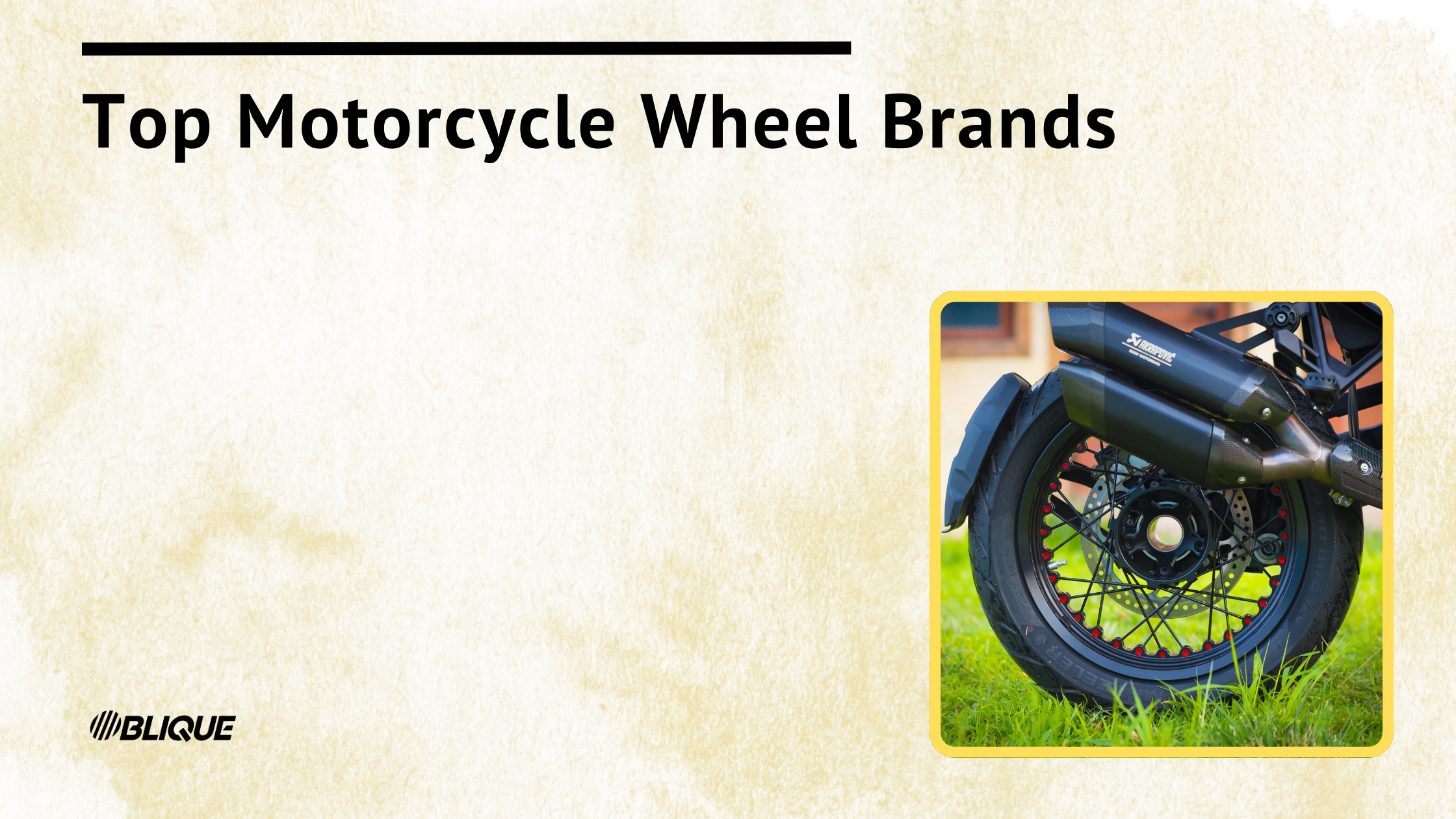
Not all wheel brands are equal. Some have racing heritage. Some focus on specific markets. Some are just relabeled generic products.
Here’s who actually matters.
1. Marchesini
Italian. Premium. Expensive. Worth it.
Marchesini makes forged aluminum and magnesium wheels for racing and high-performance street use. They’ve been in MotoGP, World Superbike, and just about every other form of motorcycle racing.
Their wheels are genuinely light. Genuinely strong. And genuinely beautiful.
Expect to pay: $2,500-$4,500+ for a set
Best for: Serious track riders, premium sport bike builds, people who accept nothing but the best.
2. OZ Racing
Another Italian company with deep motorsports roots. OZ makes both forged and cast wheels.
Their forged lineup competes with Marchesini. The cast options offer good quality at lower prices. OZ is popular because they cover more price points while maintaining quality standards.
Expect to pay: $1,200-$3,500+ depending on line
Best for: Track days, sport bikes, riders who want quality without maximum expense.
3. BST (Black Stone Tek)
South African company that pioneered carbon fiber motorcycle wheels. BST wheels have been used in MotoGP, WorldSBK, and road racing globally.
Their weight savings are dramatic. Like, pick-up-the-wheel-with-two-fingers light. The quality is exceptional.
Expect to pay: $4,000-$6,000+ for a set
Best for: Racing, weight-obsessed performance builds, riders with deep pockets.
4. Excel
Different market entirely. Excel specializes in spoke wheel rims for off-road and adventure bikes.
They make the rims, not complete wheels. Quality is excellent. Durability is proven in desert racing, motocross, and adventure touring.
If you’re building a spoke wheelset, Excel rims are the standard that others are measured against.
Best for: Dirt bikes, adventure bikes, dual-sport, any spoke wheel application.
5. Carrozzeria
Japanese forged wheel manufacturer. Excellent quality. Often slightly more affordable than Italian options.
Carrozzeria V-Track wheels are popular in club racing and track day communities. Light. Strong. Good value for forged wheels.
Expect to pay: $1,500-$2,500 for a set
Best for: Track riders, sport bikes, budget-conscious performance seekers.
6. Dymag
British company making carbon fiber and hybrid (carbon/magnesium) wheels. Innovative designs. Racing pedigree.
Dymag has been around since the 1970s. They know carbon fiber. Their wheels offer serious weight savings with proven durability.
Expect to pay: $3,500-$6,000+ for a set
Best for: Racing, superbikes, premium builds.
7. Rotobox
Another carbon fiber specialist. Croatian manufacturer with a growing reputation.
Rotobox wheels offer excellent weight savings at prices slightly below BST and Dymag in some cases. Quality has proven solid.
Expect to pay: $3,000-$5,000 for a set
Best for: Carbon fiber on a (relatively) tighter budget.
8. Alpina
Traditional European spoke wheel manufacturer. Quality tubeless-compatible spoke wheels and conventional spoke options.
Alpina is popular for adventure bikes, classics, and anything requiring spoke wheels with high quality standards.
Best for: Adventure bikes, classic restorations, BMW GS owners.
9. Warp 9
American spoke wheel builder. Custom wheelsets for adventure, supermoto, and dual-sport applications.
Warp 9 builds complete wheels to order. Good quality at reasonable prices. Popular for supermoto conversions.
Best for: Supermoto builds, adventure bike upgrades, custom spoke wheelsets.
10. Stock OEM Wheels (Honda, Yamaha, Kawasaki, Suzuki, Ducati, BMW)
Don’t sleep on factory wheels.
Modern OEM wheels are good. Really good. They’re designed specifically for your bike. They’re tested extensively. They meet safety standards.
For most street riders, OEM replacement wheels make sense. They fit perfectly. They’re warrantied. They’re often cheaper than equivalent aftermarket options.
Upgrade if you want. But don’t assume aftermarket is automatically better. For casual street riding, factory wheels are usually just fine.
Motorcycle Wheel Applications by Bike Type
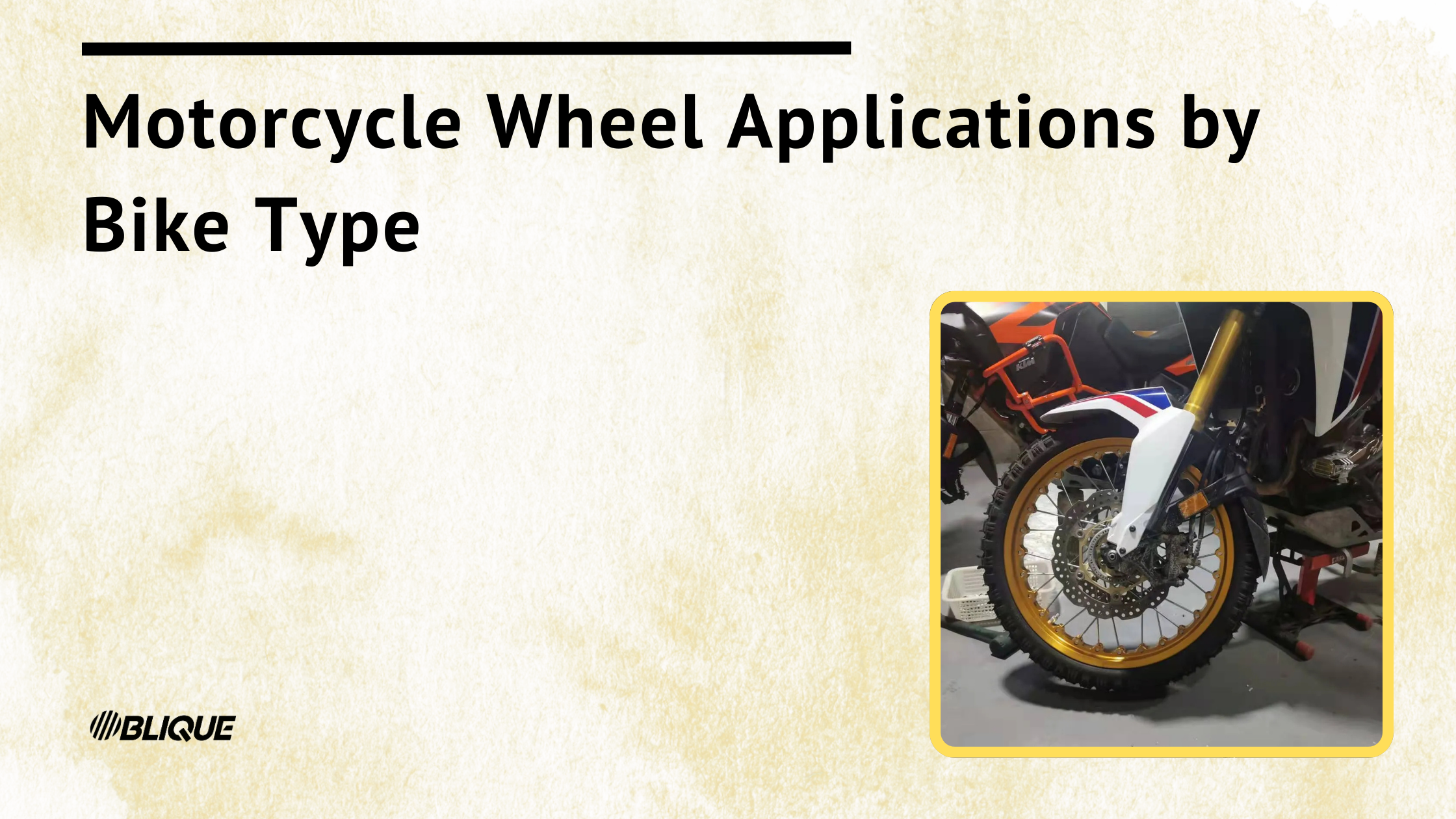
Different bikes need different wheels. Here’s what works for each category.
Sport Bike Wheels
Sport bikes run 17″ front and rear almost universally. Lightweight cast wheels come standard. Forged or carbon fiber wheels are common upgrades.
Priorities: light weight, quick steering response, tubeless compatibility.
The difference between stock cast wheels and quality forged wheels is most noticeable on sport bikes. Reduced rotating mass transforms how the bike changes direction.
Best wheel types: Forged aluminum, cast aluminum, carbon fiber Popular brands: Marchesini, OZ Racing, Carrozzeria, BST
Cruiser Wheels
Cruisers prioritize style alongside function. Larger diameter fronts (19″-21″) are common. Rear wheels vary widely.
Cast wheels dominate. Billet wheels show up on customs. Spoke wheels appear on heritage-style cruisers.
Chrome and custom finishes matter here more than on other bikes. Aesthetics are part of the cruiser identity.
Best wheel types: Cast, billet, spoke (for certain styles) Popular considerations: Finish options, custom designs, wide rear tire compatibility
Adventure & Dual-Sport Wheels
Here’s where spoke wheels earn their keep.
Adventure bikes need wheels that handle pavement and dirt. Spoke wheels flex to absorb off-road impacts. Larger front diameters (19″-21″) roll over obstacles better.
Tubeless-compatible spoke wheels exist—brands like Alpina and Excel make rims that seal properly. This gives you tubeless convenience with spoke flexibility.
If you’re actually going off-road, don’t compromise. Get spoke wheels. Cast wheels crack when you hit that rock you didn’t see.
Best wheel types: Spoke wheels (tubeless-compatible preferred) Popular brands: Excel, Alpina, Warp 9, stock OEM spokes
Touring Motorcycle Wheels
Touring bikes prioritize durability and load capacity. These wheels carry rider, passenger, and hundreds of pounds of luggage over thousands of miles.
Cast wheels make sense here. Low maintenance matters when you’re crossing the country. Reliability matters more than saving two pounds.
Most touring riders stick with OEM or OEM-equivalent replacements. If it ain’t broke, don’t fix it.
Best wheel types: Cast aluminum Priorities: Durability, load rating, reliability
Off-Road & Dirt Bike Wheels
Spoke wheels only. Period.
Dirt bikes need wheels that survive constant impacts. Rocks, roots, ruts, jumps. Cast wheels would shatter.
Lightweight matters because rotating mass affects how quickly the bike changes direction. And you’re picking the bike up a lot—overall weight matters.
21″ front and 18″ or 19″ rear is standard. Excel rims with quality hubs and spokes are the go-to setup.
Best wheel types: Spoke wheels exclusively Popular brands: Excel, Dubya, Tusk
Supermoto Wheels
Supermoto conversions need 17″ wheels to fit street tires on a dirt bike chassis.
This is where Warp 9 and similar builders shine. Complete wheelsets purpose-built for supermoto applications.
Some riders run spoke wheels. Others use cast supermoto-specific wheels. Quick-change systems let you swap between supermoto and dirt setups.
Best wheel types: Cast or spoke in 17″ diameter Popular brands: Warp 9, stock supermoto wheels, various aftermarket options
Custom & Chopper Wheels
Anything goes here. Billet wheels with intricate machining. Wide rear wheels for fat tires. Spoke wheels for classic looks.
Custom builders choose wheels based on the look they’re creating. Performance is secondary to style for most show bikes.
Just make sure the structure is sound. Pretty wheels that can’t handle the load aren’t worth anything.
Best wheel types: Billet, custom spoke, whatever fits the vision Considerations: Rake and trail, overall stance, tire clearance
How to Choose the Right Motorcycle Wheels
Buying wheels isn’t complicated if you approach it methodically. Here’s how to think through the decision.
Assess Your Riding Style
Be honest with yourself.
If you ride to work and occasionally hit a twisty road, you don’t need carbon fiber racing wheels. Stock cast wheels are fine.
If you’re doing track days regularly and chasing lap times, wheel upgrades make real differences you’ll feel.
If you’re adventure touring and hitting dirt roads, you need spoke wheels. No exceptions.
Think about what you actually do, not what you wish you did. Buy accordingly.
Consider Your Budget
Wheels vary from “reasonable” to “I need a second mortgage.”
Budget cast wheels: $300-600 per wheel. Functional. Not exciting.
Quality cast wheels: $400-800 per wheel. Better materials and construction.
Forged aluminum: $800-2,000+ per wheel. Serious performance upgrade.
Carbon fiber: $2,000-4,000+ per wheel. Maximum performance and maximum cost.
More money generally means less weight and better quality. But diminishing returns kick in fast. Going from stock cast to quality forged is a bigger difference than going from forged to carbon.
Match Wheels to Your Motorcycle Type
This should be obvious but people still get it wrong.
Don’t put spoke wheels on a sport bike. Don’t put 17″ cast wheels on a serious adventure bike that goes off-road.
Check fitment specs. Ensure your new wheels match your bike’s required dimensions, brake rotor mounting, sprocket carrier, axle size, and bearing sizes.
Most aftermarket wheel companies provide fitment guides. Use them.
Weight Considerations
Lighter is better. Up to a point.
For track riding, every pound matters. Rotating weight matters even more than static weight. Light wheels transform how a sport bike handles.
For street riding, weight differences are less noticeable. You might feel a 10-pound savings. You probably won’t feel a 2-pound savings.
For off-road, light wheels help. But durability can matter more.
Decide how much weight savings actually matters for your use case before paying premium prices for minimal gains.
Tubeless vs. Tube-Type Compatibility
Tubeless tires are more convenient. Slower leaks when punctured. Easier tire changes usually. Plug repairs are possible roadside.
Cast and forged wheels support tubeless tires. Most spoke wheels require tubes unless specifically designed for tubeless.
If you want tubeless capability with spoke wheels, look at Alpina, Excel’s tubeless rims, or similar products. The rim must seal completely—no spoke nipple penetrations.
Aesthetic Preferences
Yeah, looks matter. Don’t let anyone tell you otherwise.
Your bike should make you happy when you look at it. If a certain wheel design does that, it’s valid.
Finish options include polished, powder-coated, anodized, raw machined, chrome, and carbon weave (for carbon fiber wheels).
Match your wheels to your bike’s overall aesthetic. Or don’t. Your bike.
Motorcycle Wheel Balancing
Unbalanced wheels cause vibrations. Vibrations are annoying at best and dangerous at worst. Balance your wheels properly.
Static vs. Dynamic Balancing
Static balancing uses a simple stand and gravity. The heavy spot rotates to the bottom. Add weight to the opposite side until the wheel rests level in any position.
Dynamic balancing uses a spinning machine to detect imbalances in multiple planes. It’s more precise but requires specialized equipment.
For most motorcycle applications, static balancing works fine. Dynamic balancing is overkill unless you’re racing or have persistent vibration issues.
Balance wheels whenever you mount new tires. Also when you notice new vibrations. Weights can fall off. Tires can shift on rims.
DIY Wheel Balancing
You can balance wheels at home with a simple static balancer. A decent one costs $50-150.
Process:
- Mount wheel on balancer
- Let wheel rotate freely—heavy spot settles to bottom
- Add weight opposite the heavy spot
- Repeat until wheel stays stationary in any position
- Test ride and adjust if needed
It’s not hard. It just takes patience. Start with small weights and work up.
For complicated issues or if vibrations persist, visit a shop with professional balancing equipment.
Common Motorcycle Wheel Problems and Solutions
Wheels don’t last forever. Here’s what goes wrong and what to do about it.
Bent or Damaged Rims
Hit a bad pothole? Clipped a curb? Rims bend.
Small bends can sometimes be straightened by professionals with hydraulic equipment. This depends on the material and severity.
Large bends usually mean replacement. Especially on cast or forged wheels. The metal work-hardens when bent, making it weaker. Straightening can leave residual stress that leads to cracking later.
If you bend a rim, have it professionally inspected before riding again. A cracked wheel at highway speed is catastrophic.
Cracked Wheels
Cracks are non-negotiable. A cracked wheel must be replaced immediately.
Cracks grow. Heat cycling and stress from riding make them worse. Eventually, the wheel fails completely.
Inspect your wheels regularly. Look at the spoke areas, mounting surfaces, and any sharp transitions in the design. Cracks often start at stress risers.
No repair. Replace.
Spoke Issues (Loose, Broken)
Spokes loosen over time. This is normal with spoke wheels. It’s why they require maintenance.
Symptoms of spoke problems: clicking sounds, visible looseness, wheel out of true.
Tighten loose spokes with a spoke wrench. Work gradually around the wheel. Don’t overtighten—you’ll pull the rim out of true.
Broken spokes should be replaced promptly. One broken spoke puts extra stress on neighbors. Soon you have multiple broken spokes.
If multiple spokes break or the wheel won’t stay true, it’s time for a complete rebuild with new spokes.
Corrosion and Finish Damage
Aluminum corrodes. It’s not like steel rust—it’s oxidation that forms a dull film. Usually cosmetic.
Deep corrosion can weaken the structure. Especially on magnesium wheels, which corrode faster than aluminum.
Prevent corrosion by cleaning regularly, avoiding harsh chemicals, and waxing or coating the surface. Fix chips and scratches before they spread.
If corrosion is pitting the metal deeply, have the wheel inspected for structural integrity.
Wobble and Vibration
Multiple causes here:
- Wheel out of true (bent rim, loose spokes)
- Out of balance
- Bad wheel bearings
- Bent axle
- Warped brake rotor
Diagnose by process of elimination. Check balance first—it’s the easiest fix. Then check for obvious rim damage. Spin the wheel off the bike to check bearings and true.
Persistent wobble after basic checks means professional diagnosis. Don’t ride with significant wobble—it affects handling and can indicate serious problems.
How much do motorcycle wheels cost?
Depends on type and brand.
- Basic cast wheels: $200-500 per wheel
- Quality cast wheels: $400-800 per wheel
- Forged aluminum: $800-2,000+ per wheel
- Carbon fiber: $2,000-4,000+ per wheel
Rear wheels usually cost more than fronts (larger size). Budget for mounting, balancing, and potentially new bearings or hardware.
Can I change my motorcycle wheel size?
Sometimes. It’s complicated.
Going up or down a size affects speedometer accuracy, gearing, handling, and ground clearance. Plus-sizing (larger diameter or width) might require fender modification. Minus-sizing affects ground clearance and could interfere with brakes.
ABS systems may not tolerate wheel size changes—the sensor calibration depends on wheel circumference.
Minor changes (like 180 rear tire instead of 190) usually work. Major changes require careful planning or shouldn’t be done at all.
Consult your manufacturer specs and a knowledgeable mechanic before changing sizes significantly.
How long do motorcycle wheels last?
With normal use, quality wheels can last the life of the motorcycle.
What shortens lifespan: crashes, impacts, corrosion, poor maintenance (on spoke wheels), manufacturing defects.
Inspect wheels annually at minimum. Look for cracks, corrosion, damage, and trueness. Check spoke tension if applicable.
No fixed replacement interval exists. Replace when damaged or inspections reveal problems.
Are lighter wheels worth it?
Depends on how you use the bike.
For track riding: absolutely. You’ll feel the difference in handling response.
For spirited street riding: probably, if budget allows.
For commuting and casual riding: unlikely to notice much difference.
The more aggressively you ride, the more you’ll appreciate weight savings. Recreational riders often won’t feel the difference enough to justify the cost.
Can damaged wheels be repaired?
Sometimes.
Small bends: Often repairable by specialists. Large bends: Usually not safe to repair. Cracks: Never repairable. Replace immediately. Cosmetic damage: Usually repairable (refinishing, polishing). Spoke wheels: Usually repairable (new spokes, truing).
When in doubt, get professional assessment. Wheels are safety-critical. Don’t guess.
What’s the difference between forged and cast wheels?
Manufacturing process.
Cast: Liquid metal poured into molds. Cheaper. Heavier for equivalent strength.
Forged: Solid metal shaped under extreme pressure. More expensive. Lighter and stronger.
Forged wheels can be thinner while maintaining strength because the forging process aligns the metal grain. This allows weight reduction that cast can’t match.
For track or high-performance use, forged is worth the premium. For street riding, cast is usually adequate.
Do I need to balance motorcycle wheels?
Yes. Always balance wheels when mounting new tires.
Unbalanced wheels cause vibration. Vibration causes fatigue (yours and the bike’s components). High-speed vibration can affect handling.
Most motorcycle tires need small amounts of balancing weight—1-2 ounces typically. Some high-quality tires balance nearly perfectly.
If you notice new vibrations, check balance first. It’s an easy fix.
Can I install wheels myself?
If you’re comfortable with:
- Brake caliper removal and reinstallation
- Axle removal and torque specs
- Chain or belt adjustment
- Speedometer sensor positioning
Then yes. Wheel changes aren’t complicated.
But wheels are safety-critical. If you’re unsure about any step, have a shop do it. Improper axle torque, brake installation, or alignment can cause catastrophic failures.
First-timers should watch, learn, then do—or just pay a mechanic. The consequences of mistakes are too severe.