Don't miss our new customer offer - up to 8% OFF! ( Code: kineo8off )

Best Wheels for BMW R1250 GS and GS Adventure

Choosing wheels for an R1250 GS is more complicated than it should be. BMW gives you options from the factory. Cast or cross-spoked. Each has trade-offs. Then there’s the aftermarket, which opens up even more decisions.
Whether you’re riding the standard GS or the Adventure model, your wheel choice affects everything. Off-road capability. On-road handling. What happens when you pick up a nail 200 miles from anywhere. Maintenance. Long-term reliability.
Here’s the reality. Factory cast wheels work great for most riders. Factory cross-spoked tubeless wheels work even better if you’re actually going off-road. And premium aftermarket options from companies like Kineo or Woody’s take things further for riders who demand more.
The right choice depends on how you actually ride. Not how you imagine riding. A GS that spends 90% of its life on pavement needs different wheels than one doing Trans-America trails or African overlanding.
This guide covers factory options versus aftermarket upgrades, the tubeless versus tubed debate, and how your riding style determines what makes sense.
Why Wheel Choice Matters for Your R1250 GS
The R1250 GS is a dual-sport machine at heart. It wants to do everything reasonably well. Wheels play a critical role in whether that actually happens.
Unsprung weight and handling. Your wheels are unsprung mass. The suspension has to control them over bumps without help from the chassis. Lighter wheels respond faster. Heavier wheels feel more planted but less agile.
Puncture resistance and repairability. This matters enormously for adventure riding. Tubeless setups let you plug and ride in minutes. Tubed wheels mean pulling the tire off the rim trailside. Big difference when you’re alone in the middle of nowhere.
Off-road vs. on-road performance balance. Spoked wheels flex and absorb impacts. Cast wheels are stiffer and more precise on pavement. Neither is wrong. Just optimized differently.
Maintenance requirements. Cast wheels need almost nothing. Traditional spoked wheels need periodic tension checks. Modern tubeless spoked wheels from quality manufacturers eliminate that hassle.
Long-term durability. Cast wheels rarely fail unless abused badly. Spoked wheels can take bigger hits and survive. Individual spokes can be replaced. Cast wheels that crack are garbage.
The R1250 GS platform is versatile. Your wheels should match your intended use. If 90% of your riding is street, that’s one answer. If you’re doing genuine 50/50 dual-sport riding, different answer. Serious off-road and expedition work? Different answer again.
Best Aftermarket Tubeless Spoked Wheels
Premium aftermarket wheels combine classic spoked aesthetics with modern tubeless technology. You get the adventure bike look, the durability of spokes, and the convenience of plugging flats without removing the wheel.
Several manufacturers do this well. Each has a different approach and price point.
Kineo Tubeless Spoked Wheels
Kineo wheels are the premium choice for R1250 GS owners who want the best. Italian manufacturing. Attention to detail that shows.
Their proprietary tubeless sealing technology works. No spoke tensioning required over the life of the wheel. This isn’t marketing speak. The design genuinely eliminates periodic maintenance that traditional spoked wheels need.
TÜV certified and street-legal. This matters in Europe especially, but it’s also validation that the engineering is sound.
Customization options are extensive. Rim colors include black, silver, gold, red, blue, white, brown, and orange. Hub colors can be specified. Spoke configurations too. You can build wheels that look exactly how you want.
The rims are 7000-series aluminum. Hubs are forged. Quality materials throughout.
Compatible with both R1250 GS and Adventure models. Kineo designed these as plug-and-play. You reuse your OEM brake discs, spacers, and screws. No modification needed.
One clever detail: their unique nipple design allows individual spoke replacement without removing the tire. If you damage a spoke on a trip, you can fix it trailside without breaking beads.
Build time runs 3-4 weeks typically. Two-year warranty. Worldwide shipping available.
Riders who’ve upgraded report immediate handling improvements. Reduced rotational mass. Tighter cornering. The weight savings are real and noticeable.
Price is premium. These aren’t budget wheels. But quality costs money, and Kineo delivers.
Woody’s Wheel Works Superlite Wheels
Woody’s builds wheels in America with decades of experience in off-road and adventure applications. Different focus than Kineo. These are built for abuse.
Their construction goes from Superlaced to Superlite hub designs, paired with Excel Takasago rims. Options include:
- 21×2.15″ front for serious off-road (upgrade from stock 19″)
- 19×3.00″ OEM-size front
- 19×2.50″ narrower front for off-road focus
- 17×4.50″ rear
Stronger than OEM construction. Built expecting you’ll hit rocks and roots and drops that would worry lesser wheels.
Sealed for tubeless use. Custom color options for hubs. Hand-laced and built to your order.
Build time is 2-4 weeks typically. Rim color choices include silver, black, and gold.
Compatible with R1200GS LC, R1250GS, R1250GS Adventure, and even R1300GS models. You can retain OEM tire sizes or customize based on your riding.
Woody’s also offers conversion services for existing wheels. $99-150 per wheel to seal them for tubeless use.
The focus here is durability over weight savings. If you’re planning serious off-road or expedition riding, Woody’s reputation is earned. Popular among riders doing Trans-America, Africa, and other remote adventures.
Pricing falls in the mid-to-high range. Not the cheapest. But you’re paying for proven off-road construction and American craftsmanship.
KKE Racing Tubeless Wheels
KKE (also branded VMX) offers a budget-friendly alternative. Professional manufacturing from China with solid quality-to-price ratio.
CNC machined 6082T6 aluminum hubs with anodized finishes. Tubeless sealed rims. Common configuration is 19×3.0″ front with 17×4.5″ rear.
Compatible with R1200GS 2013-2020 and R1250GS 2019-2024.
Customization includes black hub standard, with gold, silver, or black rim options. Spoke color choices available too.
Pricing typically runs $2,000-2,500 for a complete wheelset. That’s roughly half what premium brands charge.
One-year manufacturer warranty. Available through eBay and direct channels.
Rear wheel includes cush drive system. User feedback on quality-to-price ratio has been positive.
This is the budget-friendly option without sacrificing tubeless benefits. If you want tubeless spoked wheels but can’t justify Kineo or Woody’s pricing, KKE makes sense. Just understand you’re trading some refinement for significant cost savings.
Alpina Tubeless Spoked Wheels
Alpina has manufactured wheels since the 1930s. Italian heritage. OEM supplier to European manufacturers. The quality pedigree is legitimate.
Their tubeless sealing uses individual spoke nipple sealing with O-ring systems. This allows spoke tension adjustment while maintaining the tubeless seal. Useful if you ever need to true the wheel.
Construction uses 6082-T6 aluminum throughout.
Build time runs longer than some competitors. 8-10 weeks typically. Plan accordingly.
TÜV approved. Compatible with R1200GS and R1250GS LC models. You can reuse original brake discs and components.
Conversion kit available for BMW’s RDC tire pressure monitoring system.
Primarily available through European distributors like King-Wheels. Premium quality and heritage brand positioning comes with premium pricing.
Unit Garage Spoked Wheels
Italian designed and handmade. Unit Garage brings boutique craftsmanship to the R1250 GS market.
Specifications run 3.00×19 front and 4.50×17 rear. 48 spokes using steel 304 silver. Hubs are 6082-T6 aluminum CNC billet machined.
Standard finish is matt black. Custom colors available on request.
ETRTO European standard approved. Fully interchangeable with original wheels. Reuse your existing brake discs and hardware.
They require motorcycle documents for compatibility verification before building.
Italian craftsmanship and exclusivity. Premium pricing reflects the boutique nature of the product.
Comparing Spoked vs. Cast Wheels for R1250 GS
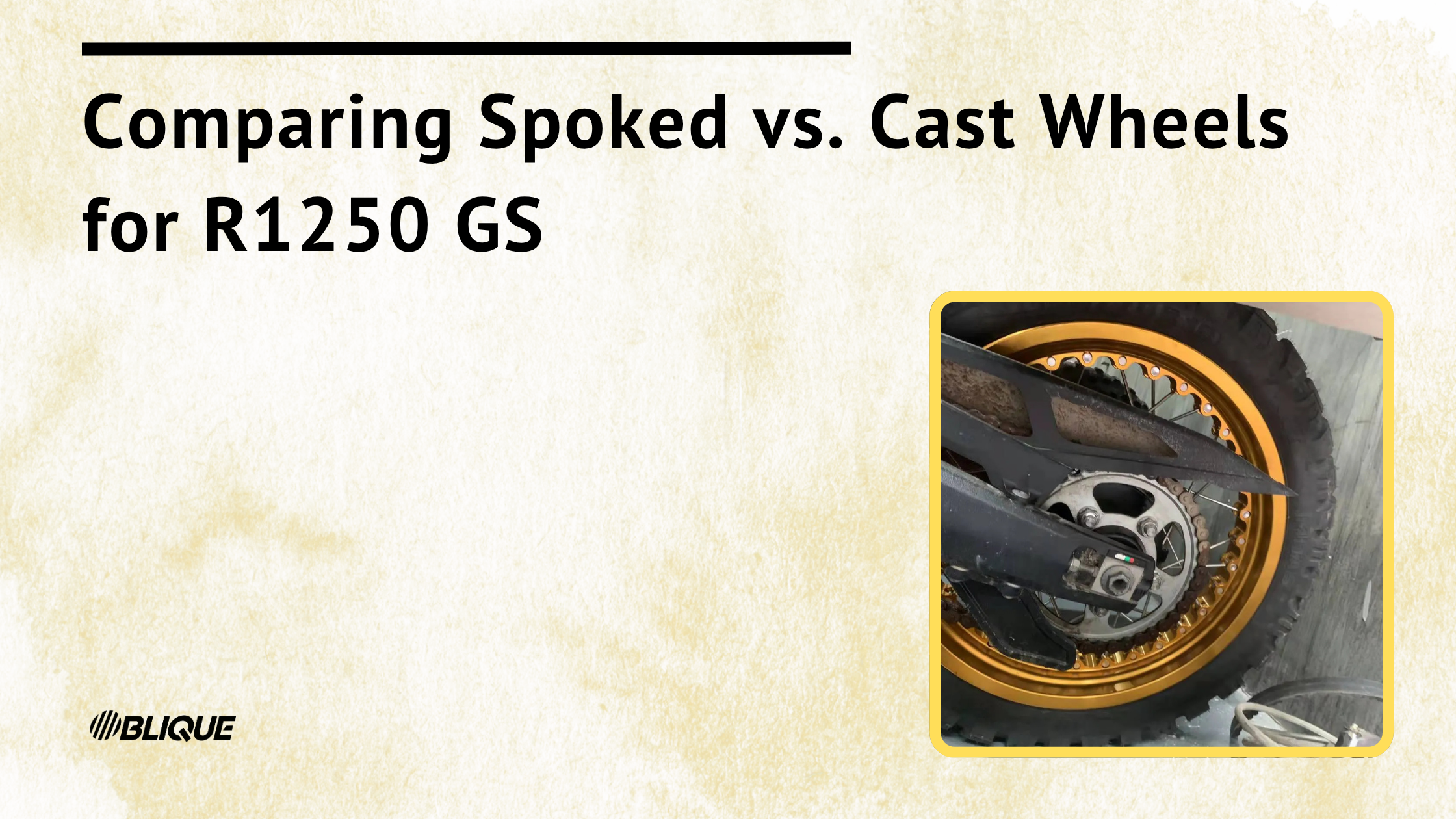
The fundamental choice comes down to spoked versus cast. Each has legitimate strengths. Neither is universally better.
Performance Differences: On-Road vs. Off-Road
Cast wheels offer lighter rotational mass typically. Quicker turn-in response. Better for sport-touring applications. Excellent pavement handling. Stiffer construction with less flex.
Spoked wheels are more flexible and shock-absorbent. Better for rough terrain and impacts. They can bend rather than crack or break. Traditional adventure bike feel. Slightly slower turn-in due to weight in most cases.
Here’s something worth knowing: tire selection often matters more than wheel type for street performance. The difference between a sport-touring tire and an adventure tire is bigger than the difference between cast and spoked wheels.
Real user experiences consistently show minimal handling difference for most riders on pavement. You adapt quickly either way.
Durability and Damage Resistance
Different wheels fail differently.
Cast wheels can warp or crack under severe impact. When they fail, failure is often catastrophic. You’re stranded. But they’re incredibly strong under normal use. Rarely fail on maintained roads. Excellent choice for 90% street riding.
Spoked wheels flex and absorb impacts. Can often be straightened if damaged. Individual spokes are replaceable. Better for remote and expedition riding. Insurance policy for off-road abuse. May require periodic spoke tensioning, though modern tubeless spoked wheels like Kineo eliminate this requirement.
Real-world context matters. Cast wheels are tough. They rarely fail unless you’re doing serious off-road abuse. For most GS riders, they’re more than adequate.
Maintenance Requirements
Cast wheels need minimal maintenance. Easy to clean. No spoke tension checks required. Simpler long-term ownership. This is a major advantage for riders who don’t want to think about their wheels.
Spoked wheels traditionally require periodic tension checks. Modern tubeless spoked wheels from quality manufacturers like Kineo don’t require tensioning at all. More difficult to clean regardless. Dirt accumulates around spokes. Baby wipes or GT85 spray help. Figure roughly 10 minutes per wheel for thorough cleaning.
Weight Comparison and Handling Impact
Unsprung and rotational weight differences exist. But context matters.
Cast wheels are typically lighter, though this varies by specific model. Reduced rotational mass improves acceleration and braking response. Sharper handling feel.
Spoked wheels are traditionally heavier. Modern premium options can be weight-competitive. Some aftermarket spoked wheels are actually lighter than OEM options.
Weight at the wheel matters more than static weight. A spinning wheel’s mass affects handling more than the same mass elsewhere on the bike.
Handling differences are often imperceptible to average riders. Rider skill matters far more than wheel weight. Fast riders are fast on any wheels.
Tubeless vs. Tubed: Understanding the Difference
This distinction matters enormously for adventure riding. It’s the difference between a minor inconvenience and a potential trip-ending situation.
What Makes a Wheel Tubeless-Ready?
Technical requirements are straightforward. The rim must be airtight. No holes for air to escape.
Spoke nipples must be sealed or positioned outside the air chamber. Methods include:
- Welded or sealed rim construction
- External nipple mounting
- O-ring individual sealing
- Vulcanized rubber bands
- Polymer or epoxy sealing
BMW’s factory cross-spoked wheels use sealed construction with nipples positioned away from the air chamber. They’re tubeless from the factory.
Traditional spoked wheels have nipples penetrating the rim. They require tubes.
Proper tubeless wheels also need correct bead seats and safety humps meeting ETRTO or MT standards. This keeps the tire on the rim under pressure changes.
Benefits of Tubeless Tires for Adventure Riding
Why tubeless matters so much:
Safety. Air loss is slower on puncture because the object often stays in the tire, partially sealing the hole. You can often ride 50+ miles on a slow leak to reach help. Reduced blowout risk compared to catastrophic tube failures.
Repairability. Plug and ride in minutes. No wheel removal needed. Same repair as a car tire. Plug kits are compact and simple to carry. CO2 cartridges or portable compressors get you going quickly.
Performance. Better heat dissipation without tube friction. Tire can conform better to terrain. Lower rotating weight without the tube.
Longevity. Reduced pinch flat risk. No tube deterioration issues over time. Sealant options available for added protection.
Critical for remote riding, overlanding, and solo adventure touring. When you’re alone in the Moroccan desert or Alaskan wilderness, tubeless convenience becomes tubeless necessity.
Can You Convert Tubed Wheels to Tubeless?
Options exist, but results vary.
DIY sealing methods require rims with MT safety beads (tubeless-ready construction). You seal spoke nipples with sealants or tapes. Results vary widely. Some leak persistently. Some work perfectly. TPMS monitoring helps check for slow leaks. The Adventure Motorcycling Handbook covers various approaches.
Professional sealing services:
- Woody’s Wheel Works: $99-150 per wheel, no guarantee (honest about limitations)
- BARTubeless: polymer system with 4-year guarantee, permanent seal
- CWC Airtight: vulcanized rubber band system
- Haan Wheels: taped and sealed system
Proprietary systems:
- Tubliss liner: not ideal for touring or overlanding applications
- Outex tubeless conversion: another option worth researching
Important: only attempt conversion with MT-spec rims. Understand the limitations. Professional sealing is recommended for reliability in critical applications.
How to Choose the Best Wheels for Your Riding Style
Decision framework based on actual use. Not aspirational use.
Best Wheels for 90% Street / 10% Light Off-Road
Recommendation: OEM cast wheels or retain factory cast if you have them.
Reasoning: Lighter weight. Easier maintenance. Excellent pavement performance. Sufficient for gravel roads and light trails. Cost-effective. Much easier to clean.
Upgrade option: If you want the adventure aesthetic, Kineo tubeless spoked wheels deliver looks plus performance without compromise.
Most GS owners fall into this category whether they admit it or not. Be honest about your riding patterns.
Best Wheels for 50/50 Street and Off-Road
Recommendation: Factory BMW cross-spoked tubeless wheels OR premium aftermarket tubeless spoked from Kineo or Woody’s.
Reasoning: Tubeless convenience for street use. Spoked durability for trails. Balanced performance across surfaces. Easier flat repairs. TPMS compatibility maintained.
This is the sweet spot for true adventure riding. The combination works whether you’re commuting Monday or trail riding Saturday.
Best Wheels for Serious Off-Road and Expedition Use
Recommendation: Woody’s Superlite with 21″ front upgrade OR Kineo custom build OR quality tubeless spoked.
Reasoning: Maximum durability. The 21″ front provides better obstacle clearance. Proven off-road construction. Repairability in remote areas. Spoke replacement capability. Stronger than OEM.
Consider: Woody’s 21×2.15″ front paired with 17″ rear. Excel Takasago rims. Hand-built quality.
Budget option: KKE Racing for cost-conscious expedition preparation.
Best Budget-Friendly Options
OEM used wheels are readily available. Front spoked wheels start around $500. Complete sets with rotors run $1,500-2,000. Check ADVrider forums and R1200GS-specific forums. Wheels interchange between R1200GS LC (2013+) and R1250GS.
New budget option: KKE/VMX wheelsets at $2,000-2,500. Solid value.
Conversion services: Woody’s can seal your existing wheels for tubeless use.
Wheel swaps are common in the GS community. Cast to spoked swaps are popular. BMW’s upcharge for spoked wheels is roughly $400-500 on new bikes. Factory wheels hold value well on the used market.
Installation and Compatibility Considerations
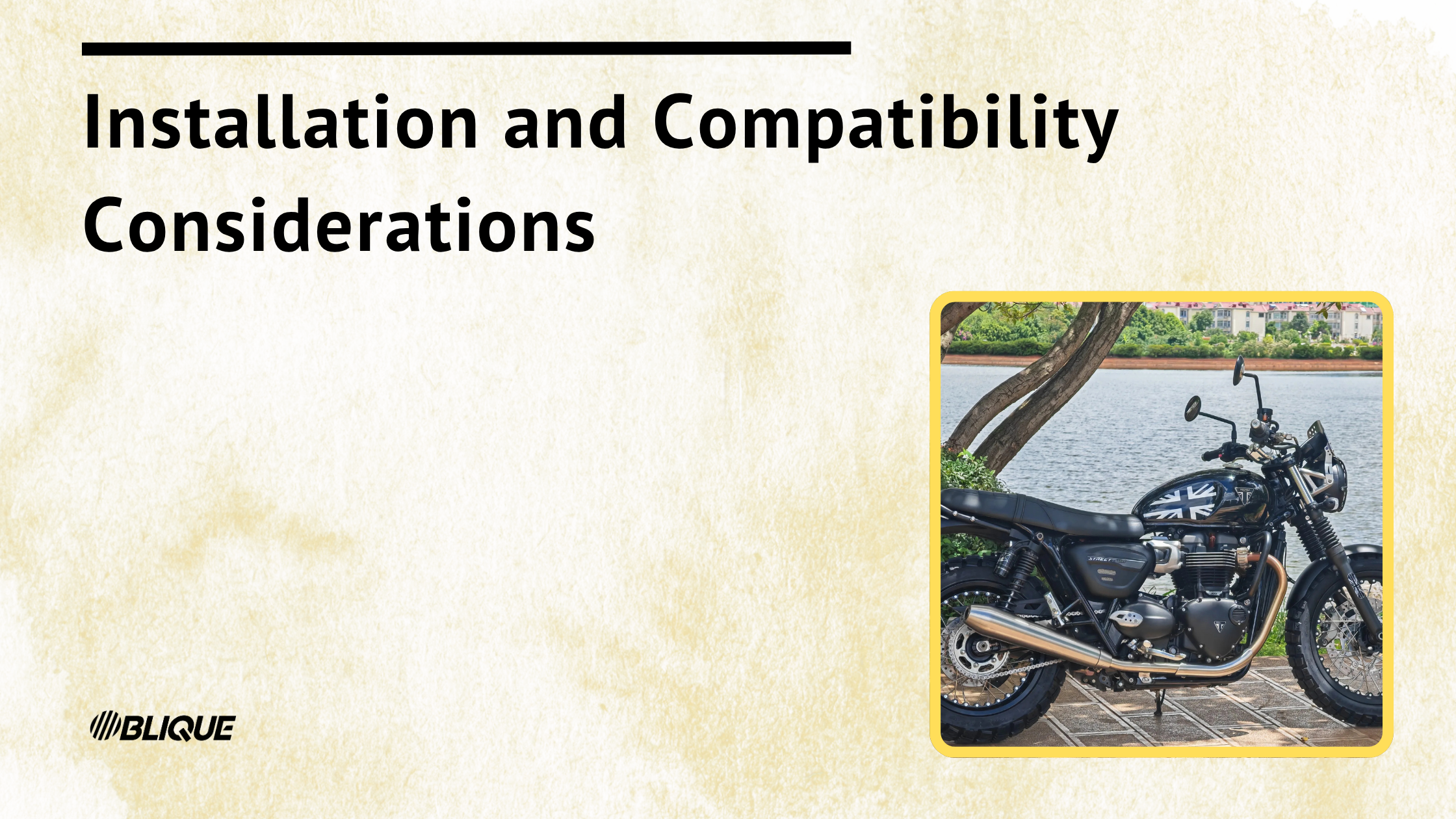
Technical requirements matter when swapping wheels or upgrading.
Fitment Compatibility Across R1250 GS Models
Which wheels fit which bikes:
- R1200GS LC (2013-2018) wheels fit R1250GS with potential bolt length differences
- R1250GS (2019+) and R1250GS Adventure are interchangeable
- R1300GS compatibility with R1250 wheels requires manufacturer confirmation
- Oil-cooled versus liquid-cooled GS models are NOT interchangeable
Hardware requirements:
Rear wheel bolt lengths differ between cast and spoked. M10 x 1.25 x 53mm for spoked. M10 x 1.25 x 40mm for cast. Easy to overlook. Don’t.
Brake discs and ABS rings transfer directly. Spacers are reusable. TPMS sensors are compatible.
Reusing OEM Components
What transfers to aftermarket wheels:
- Brake discs (dual front, single rear)
- ABS sensor rings
- Wheel bearings (some aftermarket wheels include new ones, others reuse OEM)
- Wheel spacers
- Axle hardware (sometimes requires new bolts)
- Cush drive components for rear wheel
Premium aftermarket wheels from Kineo, Alpina, and Unit Garage are designed as plug-and-play. They’re engineered to use your existing components.
Confirm bearing sizes and positions match OEM design before ordering.
TPMS Integration
Tire Pressure Monitoring System considerations:
OEM wheels come with TPMS capability. Aftermarket wheels vary. Kineo supports TPMS. Some other brands require adapters.
BMW’s RDC system integration requires compatible sensors and proper programming. A GS911 tool handles this.
Maintaining TPMS functionality is important. You avoid error codes and retain safety monitoring.
Wheel Balancing
Balancing aftermarket wheels:
Front wheels are straightforward with standard balancers.
Rear wheels on the single-sided swingarm may require adapters. Especially with asymmetric designs like Kineo.
The Marc Parnes static balancer is popular in the GS community. Some riders DIY balance successfully.
Professional balancing is recommended for best results. Tubeless spoked wheels can be more challenging to balance than cast wheels.
Can I swap cast wheels for spoked on my R1250 GS?
Yes. Direct swap with some considerations.
Wheels are compatible between R1250 GS and Adventure (2019+). Rear wheel bolts are different lengths for cast versus spoked. Brake discs and ABS rings transfer directly. TPMS is compatible. Wheel spacers reuse. Axle hardware may need replacement.
Used OEM spoked wheels are readily available. Expect $1,500-2,000 for a complete set.
Aftermarket options work too.
Confirm year compatibility. Professional installation is recommended for proper torque specifications and alignment.
Many owners swap successfully. Common upgrade path.
Are tubeless spoked wheels worth the cost?
Depends entirely on riding style.
Yes, worth it if: You ride off-road frequently. You do long-distance touring or overlanding. You ride solo in remote areas. You value the convenience of tubeless repairs. You want adventure aesthetics with modern performance. Your budget allows for quality upgrades.
Maybe not worth it if: You ride 90%+ on pavement. Cast wheels make more sense. Budget is tight. OEM options are sufficient. You don’t ride aggressively off-road. Primarily urban or commuting use.
Most owners who upgrade don’t regret it. Many consider tubeless spoked wheels the single best modification they’ve made to their GS. Weight savings and handling improvements are secondary benefits to the safety and convenience factors.
How long do aftermarket wheels take to build?
Typical lead times:
- Kineo: 3-4 weeks standard, expedited possible
- Woody’s: 2-4 weeks typical, can stretch to 4-8 weeks during busy seasons
- Alpina: 8-10 weeks
- Unit Garage: 4-6 weeks estimated
- KKE: Stock items ship faster, custom builds take longer
Plan ahead for scheduled trips and seasonal preparation. Allow buffer time.
Lead times vary based on component availability, customization complexity, season and demand, and shipping or customs for international orders.
Order early. Waiting until a month before your trip invites disappointment.
Do I need to run tubeless tires with tubeless wheels?
No, but you should.
Tubeless wheels can run tubes if desired. Some riders do this for extreme off-road as an insurance policy. But it defeats the main tubeless benefits: convenience, weight savings, and repair simplicity.
Most riders prefer tubeless-only operation. Use TL-rated tires for best results.
Tube options make sense for: extreme off-road (backup insurance), temporary repair if tubeless seal is damaged, or when a specific tire is only available in tube-type.
Recommended approach: use tubeless tires to maximize your wheel investment. You can always add heavy-duty tubes later for gnarly terrain if you decide you need the extra security.
Which brand offers the best quality-to-price ratio?
Value comparison by category:
Premium/Best Quality: Kineo. Most refined. Italian craftsmanship. Premium price is justified by the product.
Heritage Quality: Alpina. OEM supplier pedigree. Proven over decades.
Best Durability: Woody’s. Off-road proven. Expedition-grade. American-made.
Best Budget: KKE Racing. Solid quality at roughly half the premium price. Good user reviews.
Best OEM Alternative: Used BMW factory wheels. Proven. Readily available. Affordable.
Best all-around recommendations:
- Kineo for splurge-worthy upgrade
- Woody’s for serious off-road focus
- KKE for budget-conscious builds
- OEM wheels for most riders
Consider your intended use, budget, riding style, aesthetic preferences, and acceptable lead times. No single answer fits everyone.