Don't miss our new customer offer - up to 8% OFF! ( Code: kineo8off )

How to Choose the Right Adventure Motorcycle Tire and Wheel Combination

Picking tires and wheels for an adventure bike is genuinely complicated. More complicated than most riders expect when they start researching.
You’ve got terrain variables. Riding style preferences. Bike weight to consider. Wheel types that interact differently with different tire constructions. And everyone online has opinions, but those opinions assume their riding matches yours. Usually it doesn’t.
The real challenge is that adventure riding means different things to different people. Some riders say “adventure” and mean a gravel road twice a year. Others mean serious single track in remote areas where a flat tire becomes a real problem. Your perfect setup depends on honest assessment of where you actually ride, not where you imagine riding someday.
At KineoShop, we’ve seen this decision-making process play out hundreds of times. Riders wrestling with puncture concerns, terrain variety, how long their tires will last, and whether performance trade-offs make sense for their situation. Our expertise in tubeless spoked wheels gives us a specific perspective. These wheels solve real problems for adventure riders who need durability off-road without sacrificing roadside repair convenience. But the wheel is only half the equation. Matching the right tire to the right wheel on the right bike for the right terrain? That’s where things get interesting.
Understanding Adventure Motorcycle Wheel Types
Before you can pick tires intelligently, you need to understand what’s underneath them. Wheel type determines what tires you can run and how you’ll deal with punctures.
Three main categories exist. Each has genuine advantages. Each has real limitations. None is universally best.
Cast/Alloy Wheels
Cast aluminum wheels come standard on many adventure bikes. Especially the road-oriented ones.
They’re manufactured as single pieces. No spokes penetrating the rim. This makes them inherently tubeless-ready. Air stays inside without special sealing because there’s nothing to leak through.
Characteristics worth knowing: typically lighter than spoked alternatives, common on sport-touring adventure bikes like the Multistrada or certain Versys models, optimized for high-speed road riding.
Advantages: Easy tubeless tire mounting. TPMS sensor compatibility without modification. Clean, modern appearance. Puncture repair with a plug takes five minutes roadside.
Disadvantages: Less durable when things get rough. A hard hit on a rock can crack a cast wheel. Once cracked, it’s done. No repair. And replacement costs hurt.
Best for riders running 80/20 or 70/30 road-biased adventures. If pavement dominates your riding with occasional gravel roads, cast wheels make sense. Push into technical terrain regularly and you’re gambling with expensive consequences.
Traditional Spoked Wheels (Tubed)
Wire-spoked wheels have been around forever. There’s a reason.
How they work: individual spokes connect the hub to the rim, tensioned through nipples that penetrate the rim’s inner surface. Those penetration points create potential air leak paths. So you run inner tubes to hold air instead of relying on the rim itself.
Advantages: Superior durability for off-road abuse. Spoked wheels absorb impacts that would destroy cast wheels. They flex under stress rather than cracking. If you bend a rim, a skilled wheel builder can often straighten it. If you break a spoke, you replace that spoke. Repairable beats replaceable.
Disadvantages: Puncture repair requires pulling the wheel off the bike, breaking the bead, removing the tube, patching or replacing it, reassembling everything, and reinflating. Sixty minutes minimum if you’re practiced. Longer if you’re not. Also heavier than tubeless setups because tubes add weight. More maintenance overall with spoke tension checks.
Best for serious off-road and dirt-focused adventure riding where durability matters more than convenience. If you’re regularly hitting terrain that punishes wheels, traditional spoked makes sense. Accept the tube hassle as the cost of staying intact.
Tubeless Spoked Wheels
Here’s where technology solved a genuine problem. Tubeless spoked wheels combine benefits of both worlds.
Several sealing methods exist. BMW’s GS bikes use outboard spoke flanges that move the nipples outside the air chamber. Works, but limits which tires fit properly. Some companies use sealed tape systems. Kineo takes a different approach with proprietary sealing at each spoke nipple.
Kineo’s Italian-manufactured tubeless spoked wheels carry TÜV approval. That certification matters for legal road use and confirms the engineering meets safety standards. The 7000-series aluminum construction provides strength without unnecessary weight. And the sealing technology means fully adjustable spokes without compromising the airtight seal. No tape. No sealants. Just works.
Advantages: Quick puncture repair with plugs, same as any tubeless tire. No tube replacement costs adding up over years of riding. Better heat management because no tube friction. Lighter than tubed setups by a meaningful amount. And you can run either tubeless or tubed tires depending on situation.
KineoShop specializes in these premium wheels with plug-and-play fitment. No vehicle modifications required. The investment is higher upfront, but the long-term value calculation favors serious riders who actually use their adventure bikes for adventures.
Wheel Size and Its Impact on Performance
Rim diameter changes how your bike rides. Not subtly. Noticeably. Understanding these differences helps you pick a setup that matches your terrain priorities.
17-Inch Wheels
Standard sizing for sport bikes. Also appears on street-focused adventure machines.
Characteristics: best pavement performance of any adventure wheel size. Sharp, responsive handling. Quick turn-in. And the widest tire selection for road use because this size dominates the sport and sport-touring markets.
Trade-offs exist though. Less ground clearance means obstacles become problems sooner. Rough terrain unsettles smaller wheels more easily. The geometry just doesn’t favor off-road work.
Common setup: 17-inch front and rear on street-oriented adventure bikes. Think Multistrada, some Tiger models, bikes designed primarily for road touring with adventure styling.
When to choose 17s: daily commuting where handling matters. Sport-touring with minimal dirt expectations. Riders who honestly prefer pavement but like the adventure bike ergonomics and capability image.
18-Inch Wheels
The middle ground. Shows up on dual-sports and light adventure bikes, often as the rear wheel.
Many adventure bikes pair an 18-inch rear with a 19-inch or 21-inch front. This combination balances road stability with off-road capability reasonably well.
Tire availability is good in 18-inch sizing. Plenty of 50/50 options. Solid 60/40 choices. You won’t struggle finding rubber that works.
Best for riders wanting versatility without extreme off-road demands. If your dirt time involves forest roads and moderate trails rather than technical single track, 18-inch rear wheels serve well.
19-Inch Wheels
Popular front wheel size for mid-weight adventure bikes. BMW’s F-series uses this setup. So do several other manufacturers in the middleweight category.
Advantages: Better obstacle rollover than 17-inch wheels. Rocks and ruts don’t upset the front end as easily. Maintains reasonable road manners unlike larger sizes. Good tire selection across multiple categories.
Often paired with 17-inch rear for touring-focused ADVs. Gives you improved ground clearance and dirt capability up front while keeping road handling reasonable in back.
Characteristics worth noting: balanced handling sits between sport-bike sharp and dirt-bike stable. Works for riders who want genuine dual-purpose capability without going full off-road.
21-Inch Wheels
The off-road enthusiast’s choice. If you’re serious about dirt, this is your front wheel.
Advantages: Excellent obstacle clearance. The wheel rolls up and over terrain features that would stop smaller diameters. Reduces front-end diving in soft terrain like sand. Tracks straighter through rough stuff.
Trade-offs are real though. Slower steering response on pavement. Can feel vague at highway speeds. Limited tire options compared to smaller sizes. You’re committing to off-road priority with this choice.
Common pairing: 21-inch front with 18-inch rear. This combination appears on dirt-capable adventure bikes like the KTM 890 Adventure R, Honda Africa Twin, and similar machines designed for serious trail work.
Best for 50/50 or dirt-biased adventure riders. If half your miles happen off pavement, 21-inch front wheels make sense. If you’re mostly road riding with occasional gravel, you’ll probably find the handling compromise frustrating.
Worth noting: smaller wheels have less rotational mass. Quicker acceleration response. The 21-inch front wheel takes slightly more energy to spin up and slow down. Matters for aggressive riding.
Adventure Motorcycle Tire Types Explained
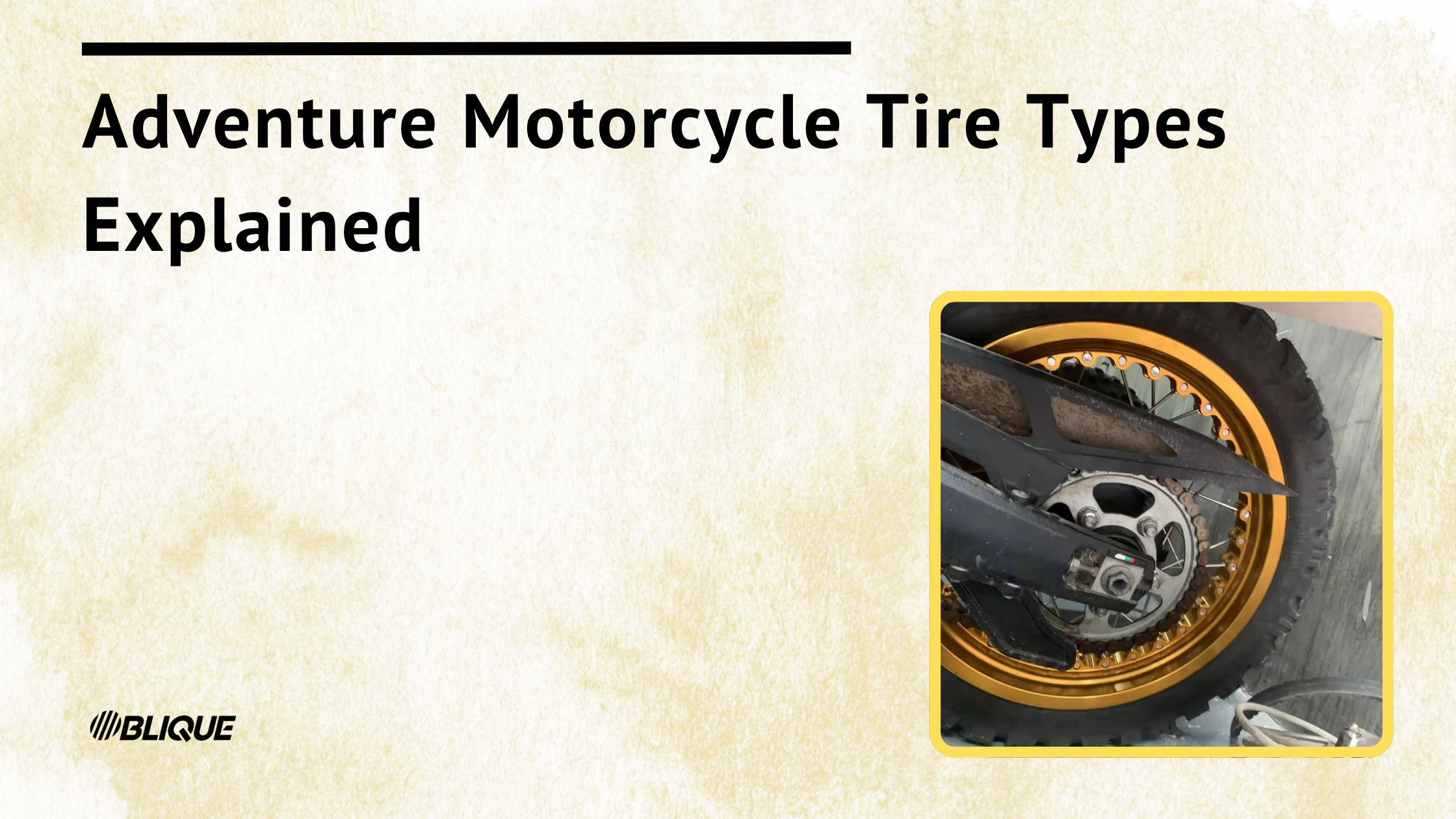
Tire categories get described with road/dirt bias ratings. You’ve seen them: 90/10, 80/20, 60/40, 50/50, 40/60. These percentages supposedly indicate on-road versus off-road capability.
Reality check: these numbers aren’t standardized. One manufacturer’s 50/50 is another’s 60/40. Use them as rough guidelines, not precise specifications. Actual performance depends on tread pattern, compound, and your specific conditions.
Road-Biased Adventure Tires (90/10 or 80/20)
These are basically sport-touring tires with adventure bike sizing. And that’s fine if it matches your riding.
Characteristics: Tight tread patterns maximize contact patch. Larger rubber-to-void ratio. Harder rubber compounds optimize for pavement longevity.
Performance: Excellent wet and dry pavement grip. Confident cornering on asphalt. Long tread life, typically 10,000-15,000+ miles depending on riding style.
Examples worth considering: Continental TrailAttack 3, Bridgestone A41, Pirelli Scorpion Trail II. All excellent road tires that happen to fit adventure bikes.
Off-road limitations are significant. Limited traction on loose surfaces. Poor mud performance. These tires assume pavement with occasional packed gravel at most.
Best for riders who mostly tour on pavement with occasional gravel roads. Be honest about your riding. If 90% happens on asphalt, road-biased tires make your life better in nearly every way.
Balanced 50/50 Tires
The true adventure tire compromise. These try to do everything adequately rather than anything excellently.
Characteristics: Block tread patterns with center ribs for stability. Moderate knob depth. Compounds formulated for versatility rather than optimizing either direction.
Performance: Adequate road grip. Not sport-touring good, but confidence-inspiring on pavement. Capable off-road traction on typical adventure terrain. Moderate longevity around 8,000-12,000 miles on the rear.
Examples: Heidenau K60 Scout, Motoz Tractionator GPS, Continental TKC 70, Mitas E-07. Each has personality differences, but all occupy this middle space.
Best for riders who genuinely split time between pavement and dirt. If your riding actually divides between surfaces rather than heavily favoring one, 50/50 tires reduce compromise in either direction.
Note: some riders mix tire aggressiveness for optimal performance. Knobby front with milder rear. We’ll cover this strategy later.
Off-Road-Biased Tires (60/40 or 40/60)
When dirt matters more than road, these tires deliver.
Characteristics: Aggressive knob patterns. Open tread design with significant void space. Softer compounds that grip unpaved surfaces.
Performance: Excellent dirt traction. Self-cleaning tread sheds mud. Superior grip on rocks, sand, and loose terrain. These tires do what adventure riding marketing promises.
Trade-offs are substantial on pavement. Noisy at highway speeds. Faster wear on asphalt, typically 3,000-6,000 miles on the rear depending on road percentage. Vague cornering feel on pavement. They work on roads. They just don’t inspire confidence there.
Examples: Continental TKC 80, Dunlop Trailmax Raid, Mitas E-09. Serious rubber for serious dirt.
Best for adventure riders prioritizing off-road capability over road manners. If you tolerate pavement to reach trails rather than the reverse, these tires match your priorities.
Key Factors to Consider When Choosing Your Combination
Decision time. Here’s what actually matters when selecting your setup.
Your Primary Riding Terrain
Be ruthlessly honest here. Not aspirational. Actual.
Mostly Pavement (80%+): 17-inch or 19-inch wheels work well. Road-biased tires maximize your experience. Tubeless setup for easy puncture management.
Mixed Terrain (50/50): 19-inch or 21-inch front paired with 17-inch or 18-inch rear. True 50/50 tires that compromise in both directions. Tubeless spoked wheels are ideal here. You get off-road durability with roadside repair convenience.
Off-Road Focused: 21-inch front, 18-inch rear. Aggressive tires that prioritize dirt performance. Tubed or tubeless spoked wheels. Cast wheels risk damage on technical terrain.
Emphasizing this because I see it constantly: match wheel size and tire aggression to your actual riding. Not the riding you imagine doing. Not the riding you did once three years ago. What you actually do regularly.
Bike Weight and Load Capacity
Tire load ratings exist for reasons. Ignoring them creates problems.
How to read tire markings: width/aspect ratio-diameter load_index speed_rating. Example: 90/90-21 54Q. That “54” indicates load capacity. That “Q” indicates speed rating. Both matter.
Choose tires rated for combined weight of bike plus rider plus gear. Remember both tires share the load, but weight distribution isn’t equal. Rear typically carries more with luggage loaded.
Large adventure bikes need different tire characteristics than lightweight dual-sports. A BMW R1250GS weighs nearly 600 pounds wet before you add rider and gear. A KTM 350 EXC-F weighs half that. Same tire won’t perform the same on both machines.
Heavier bikes require stiffer tire construction and higher pressures. Running pressures appropriate for a light bike on a heavy bike leads to squirm, poor handling, and potential bead unseating.
Tire Longevity vs Performance
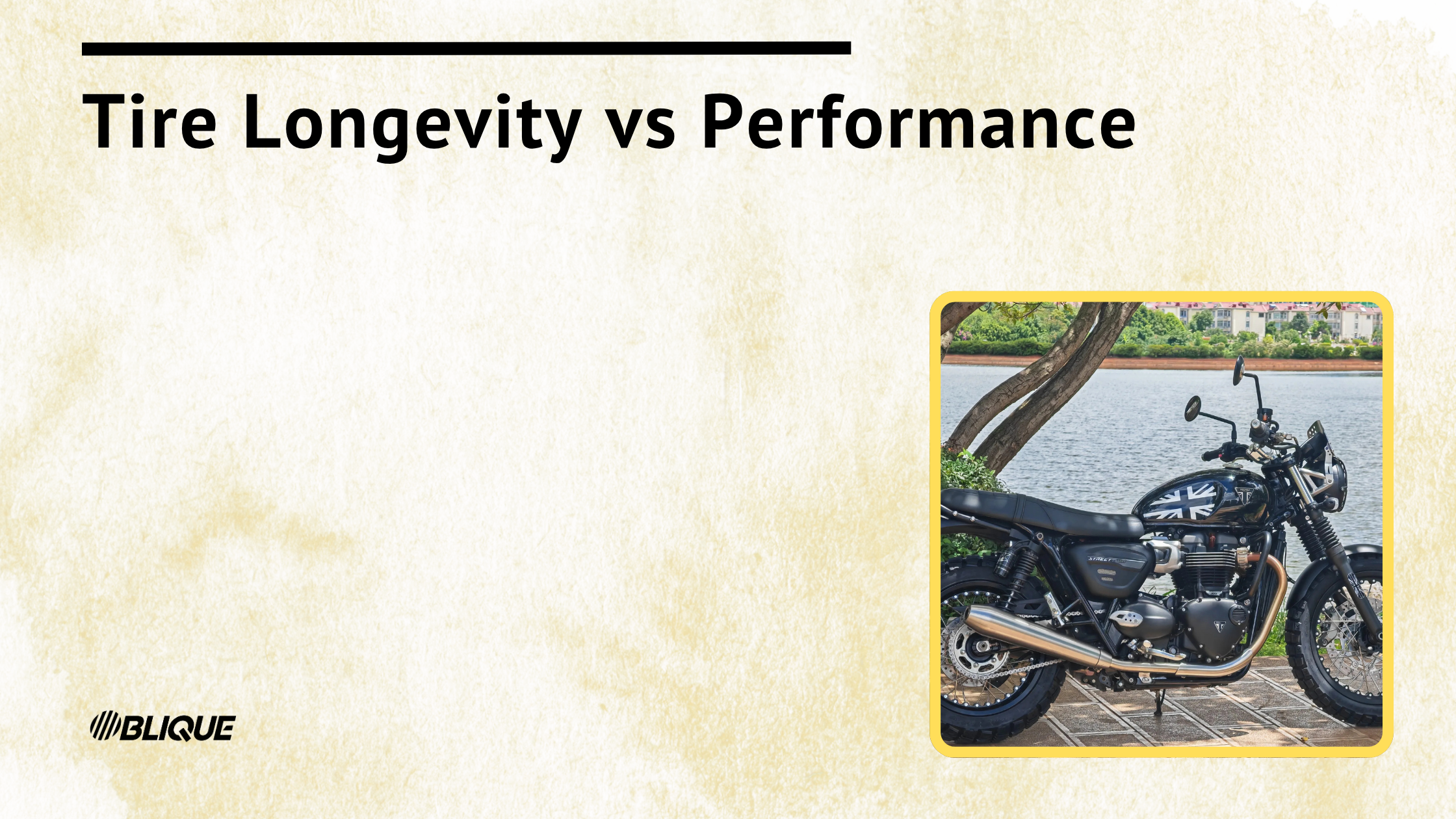
The trade-off is real and inescapable.
Aggressive off-road tires wear quickly on pavement. 3,000-5,000 miles on the rear is typical. Sometimes less with spirited riding. That soft compound gripping dirt also grinds away on asphalt.
Road-focused tires last longer but sacrifice dirt capability. 10,000-15,000 miles is reasonable. Harder compound resists wear but doesn’t grip unpaved surfaces.
Factors affecting wear: riding style (aggressive acceleration and braking chew rubber), tire compound (softer wears faster), terrain mix (pavement kills knobs), proper pressure maintenance (underinflation destroys tires).
Budget considerations matter. Frequent tire changes with knobbies adds up. Extended life with road tires costs less over time. Factor this into your decision unless money is irrelevant.
Front tires typically last twice as long as rear tires. The rear does the work. Plan your purchases accordingly.
Tire Pressure Optimization
Proper pressure varies by terrain, bike weight, tire construction, and even temperature. No single number works everywhere.
General guidelines exist as starting points:
Start with manufacturer recommendations for your specific bike and tire combination. Adjust based on conditions.
Lower pressure for off-road improves traction and comfort. The tire conforms to terrain better. 18-20 psi works for many situations. But not below 18 psi on large ADV bikes with tubeless wide rims. The bead can unseat.
Higher pressure for road prevents rim damage and improves stability. 30-36 psi is typical for highway riding. Reduces squirm and improves fuel economy.
Risks of running too low: Pinch flats with tubes. Rim damage from impacts. Tire spinning on rim separate from the wheel (tubed setups). Bead unseating (tubeless setups). All bad outcomes.
Tubeless setups on wide rims need higher minimum pressures than you might expect. The bead sealing relies on pressure. Too little and it fails.
Experiment in 2-3 psi increments to find your sweet spot. Note how the bike feels at different pressures on different terrain. Your preferences will emerge.
Mixing Tire Types Front and Rear
Common strategy among adventure riders. Worth considering.
Popular combination: Aggressive knobby front (TKC 80, Karoo 3) paired with milder rear (Tourance, Trailmax Mission, or similar 50/50).
Reasoning behind this approach:
Most braking happens at the front wheel. 70-90% depending on conditions. Front grip matters most for stopping.
The front tire provides steering input in dirt. Knobby front tracks better through loose terrain.
Front tires last longer regardless of compound. You’re not burning them up with drive forces.
Rear tires wear faster no matter what. Running aggressive rear rubber means frequent replacement. A milder rear extends service intervals.
Benefits: Better front-end grip off-road without sacrificing rear longevity. More cost-effective over time. Many experienced adventure riders settle on this approach.
Considerations: Ensure both tires meet load and speed requirements for your bike and riding. Compatible sizes maintain proper geometry. Test handling characteristics before committing to long trips. Some combinations feel unbalanced.
The Kineo Advantage for Adventure Riders
This section covers what makes KineoShop’s offerings specifically relevant to adventure riding applications.
Italian Engineering Meets Adventure Performance
Kineo’s tubeless spoked wheel technology represents serious engineering, not just marketing claims.
The proprietary design creates airtight spoke nipples. No rim tape needed. No sealants that dry out or fail. Each nipple seals individually while remaining fully adjustable for spoke tension. This matters because you can true the wheel without compromising the tubeless seal. Traditional sealed rim approaches don’t allow this.
TÜV-approved certification confirms the engineering meets European safety standards. Legal for road use. Insurance-compliant. Not some garage modification hoping for the best.
7000-series aluminum construction provides excellent strength-to-weight ratio. Strong enough for off-road impacts. Light enough to improve handling and acceleration response.
Compatibility spans major manufacturers: BMW, KTM, Honda, Yamaha, Ducati, Triumph. Plug-and-play fitment means no vehicle modifications required. Bolt on and ride.
The classic spoked wheel aesthetic appeals to many riders. Modern tubeless performance appeals to practical riders. Kineo delivers both simultaneously.
Why Tubeless Spoked Wheels Are the Ultimate Adventure Setup
Combining benefits matters when you’re far from help.
Durability of spoked wheels for off-road impacts. When you clip a rock wrong, spoked wheels flex and survive where cast wheels crack and fail.
Convenience of tubeless repair on remote roads. Five-minute plug repair versus sixty-plus minutes of tube wrestling. When you’re alone on a mountain trail, this difference matters enormously.
Weight savings versus tubed setup. Tubes add weight. Removing them reduces rotating mass. Suspension responds better. Acceleration improves. Small gains that add up over long rides.
No tube replacement costs over time. Every tire change on tubed wheels means new tubes. $20-40 per tube, twice per tire change, adds up across years of riding. Tubeless eliminates this entirely.
Real-world advantages are substantial:
Five-minute puncture repair versus sixty-plus minutes for tube changes. Continue riding with a plug repair rather than limping to a shop. Carry a plug kit instead of spare tubes and tire irons. Reduced risk of pinch flats because there’s nothing to pinch.
Investment value calculation: Higher initial cost offset by long-term reliability and convenience. For riders who actually use their adventure bikes in demanding conditions, the math favors tubeless spoked wheels.
Custom builds available from KineoShop via Oblique Racing with worldwide shipping. Professional fitment guidance ensures compatibility with your specific motorcycle.
Frequently Asked Questions
Can I run tubeless tires on traditional spoked wheels?
Short answer: not reliably without modification.
Traditional spoked wheels have air leak points at every spoke nipple. Air escapes through those penetrations. Running a tubeless tire on a traditional spoked rim means dealing with slow leaks at best, rapid deflation at worst.
Workarounds exist. Sealing with rim tape and sealant works sometimes. DIY reliability varies wildly. Professional conversion services can seal traditional rims more reliably. Or you get purpose-built tubeless spoked rims like Kineo, which solve the problem through engineering rather than workarounds.
Running tubes inside tubeless tires is possible. Works fine mechanically. But it reduces speed ratings because the tire wasn’t designed for tube heat buildup. Check ratings before assuming this approach works for your riding.
How often should I replace adventure motorcycle tires?
Depends on multiple factors. No universal answer exists.
Tire type matters most: Aggressive off-road tires wear at 3,000-6,000 miles on pavement-heavy riding. Road-biased tires last 10,000-15,000 miles typically.
Riding style affects wear: Aggressive acceleration and braking consume tires faster. Conservative riding extends life.
Terrain mix changes things: Pavement miles destroy aggressive knobs quickly. Dirt miles are gentler on tread.
Replace when: Tread depth reaches wear indicators. Sidewall damage appears. Uneven wear creates handling issues. Age exceeds 5-7 years regardless of remaining tread (rubber degrades).
Front tires typically last twice as long as rear tires. Plan purchases and inspections accordingly.