Don't miss our new customer offer - up to 8% OFF! ( Code: kineo8off )

How Tubeless Spoked Wheels Work: Complete Technical Breakdown

For decades, everyone accepted the same truth about spoked motorcycle wheels. They need tubes. The nipples poke through the rim. Air leaks out. End of story.
Except engineers figured out how to change that.
Tubeless spoked wheels combine what riders actually want. Classic spoke aesthetics. The flex and durability that spoked wheels provide. But with modern tubeless convenience. No tubes to pinch. No instant blowouts. Roadside repairs that take minutes instead of an hour.
The technology comes down to sealing. Keeping air inside a rim that traditionally had holes drilled straight through it. Different manufacturers solved this problem different ways. Some moved the nipples outside the air chamber entirely. Others welded them sealed. Some use o-rings. Some use proprietary methods they guard carefully.
The result matters more for adventure riders than almost anyone else. You’re 200 miles from the nearest town on a gravel road. You pick up a nail. With tubes, that’s potentially a serious problem. With tubeless spoked wheels, you plug it and keep riding.
This breakdown covers how the technology actually works. The engineering principles. The different sealing methods. Why it matters for real-world riding.
What Are Tubeless Spoked Wheels?
Tubeless spoked wheels are motorcycle wheels that feature traditional spoke construction but with sealed rim beds that hold air without inner tubes.
That’s the simple definition. The engineering behind it is more interesting.
Traditional spoked wheels have holes drilled through the rim where spoke nipples penetrate. Air escapes through those holes. That’s why tubes exist. They create a separate air chamber inside the tire that doesn’t care about the holes in the rim.
Tubeless spoked wheels eliminate the need for that separate chamber. Through specialized engineering, the rim itself becomes airtight. The spoke holes either don’t exist in the air chamber, or they’re sealed individually.
This is different from cast wheels, which are solid pieces of metal with no spoke holes to worry about. Cast wheels are inherently airtight. But they don’t flex. They crack under impacts that spoked wheels would absorb.
Tubeless spoked wheels sit in between. Spoke construction for strength and flexibility. Sealed rims for tubeless convenience.
The Problem with Traditional Spoked Wheels
Traditional spoked wheels have holes drilled through the rim. That’s where the spoke nipples penetrate, allowing the spokes to be tensioned and the wheel to be trued.
Problem is, those holes let air escape. Every single nipple creates a potential leak path. Dozens of them around the rim.
Inner tubes solve this by creating a sealed air chamber that doesn’t touch the rim at all. The tube sits between tire and rim, holding air independently.
But tubes come with their own problems.
Weight is one. Tubes add rotational mass. Not a ton, but enough to affect acceleration and suspension response.
Pinch flats are another. During tire changes or hard impacts, tubes can get caught between tire and rim. Pinched rubber tears. Flat tire.
Tubes also rub against the rim constantly. Friction generates heat. Heat degrades rubber over time.
The worst problem is punctures. Tubes deflate fast when punctured. Sometimes instantly. A nail through a tube-type tire can leave you stranded in seconds.
Real scenario: You’re 200 miles from anywhere on a backcountry road. You hit something sharp. The tire goes flat immediately. You’re looking at a wheel removal, breaking the tire bead, extracting the tube, patching or replacing it, reassembling everything, and re-inflating. All with whatever tools you’re carrying. Hope you brought a spare tube.
The Engineering Breakthrough
Engineers eventually asked the obvious question. What if we just stopped the air from reaching the spoke holes?
The answer sounds simple. Seal the nipples. Move them outside the air chamber. Create a rim bed that’s airtight even with traditional spoke construction.
Execution took decades to perfect. Different manufacturers tried different approaches. Some worked better than others.
The breakthrough changed motorcycling for adventure riders and dual-sport enthusiasts especially. These are the riders who actually need spoke wheel durability but suffer most from tube-related problems.
BMW adopted the technology early. The R1200GS came with tubeless spoked wheels from the factory. Suddenly, serious adventure bikes could run tubeless tires without sacrificing the wheel strength needed for off-road abuse.
Now it’s common on serious adventure motorcycles. KTM, Yamaha, Triumph, Honda. The technology proved itself.
How Do Tubeless Spoked Wheels Actually Work?
The fundamental principle is creating an airtight rim bed while maintaining spoke wheel flexibility and strength.
Simple to state. Complex to engineer.
Traditional spoked wheels are built for adjustability and repairability. You can tension individual spokes. You can true a wheel that’s been knocked out of alignment. But that adjustability requires nipples that penetrate the rim.
Tubeless spoked wheels have to maintain that functionality—or find workarounds—while sealing the air chamber.
Different approaches prioritize different things. Some sacrifice spoke adjustability for simpler sealing. Others maintain full adjustability through more complex engineering.
The Core Technical Principle: Sealed Rim Construction
Traditional spoked wheels have nipples that penetrate the rim’s air chamber. The nipple threads into the spoke and sits in the rim bed, directly exposed to the air cavity.
Tubeless spoked wheels solve this by keeping nipples away from the air chamber.
Two main approaches exist.
First: put the nipples somewhere else entirely. Move them to the hub. Mount them on the outside of the rim. Anywhere that isn’t inside the air chamber.
Second: seal each nipple individually. Let them penetrate the rim bed, but weld or seal them so air can’t escape around them.
Either way, the result is the same. An airtight rim bed that holds air like a cast wheel but flexes like a spoked wheel.
This took decades to perfect because the tolerances are tight. Any leak path defeats the purpose. Manufacturing consistency matters enormously. One poorly sealed nipple means the whole wheel leaks.
Where the Spoke Nipples Sit: The Key Difference
Traditional spoked wheels: nipples poke through the rim. Look inside the rim of any tube-type spoked wheel. You’ll see nipples. Holes around them. That’s where air would escape without a tube.
Tubeless spoked wheels: nipples either sit outside the sealed chamber or are sealed individually from the air cavity.
In external nipple designs, the spokes connect at the hub end instead of the rim end. The nipple adjustments happen at the hub. The rim has no penetrations.
In sealed nipple designs, traditional rim construction is used, but each nipple is individually sealed through welding, o-rings, caps, or other methods.
The aesthetic difference is noticeable. External nipple wheels have a distinctive cross-spoke pattern. The spokes lace differently because the geometry changes when nipples move to the hub.
Sealed nipple designs look more traditional. Same spoke patterns as tube-type wheels. The sealing happens where you can’t see it.
Types of Tubeless Spoked Wheel Sealing Technologies
Different manufacturers use different sealing methods. The technology and quality varies significantly.
Not all tubeless spoked wheels are created equal. Some sealing methods are more reliable than others. Some allow easier maintenance. Some are essentially permanent.
Understanding the differences helps you choose the right wheel for your needs.
1. External Nipple Design (Hub-Mounted Nipples)
This approach moves the spoke nipples to the hub instead of the rim. Spokes attach to the rim outside the air chamber. Air never touches the nipple area because there’s no nipple there.
Mechanically simple. The rim bed is just a sealed channel. Nothing penetrates it.
The trade-off is different wheel aesthetics and spoke angles. The spokes have to cross differently to reach hub-mounted nipples. Creates a distinctive pattern.
Examples include BMW GS series and Yamaha Ténéré factory wheels. The cross-spoke design is immediately recognizable.
Advantages: reliable sealing, nothing to degrade over time, mechanically straightforward.
Disadvantages: spoke adjustments happen at the hub instead of the rim, fixed aesthetic that not everyone loves.
2. Two-Layer Rim Design
Some manufacturers create two-layer rims. Inner layer is completely airtight. Outer layer holds the nipples.
The two layers don’t communicate. Air stays in the inner chamber. Nipples stay in the outer structure.
Requires precision engineering to keep layers separated. More complex construction than single-layer rims. But effective when done right.
This approach maintains traditional spoke geometry and aesthetics while achieving airtight construction.
3. Precision Welding Method
Individual spoke nipples are sealed through precision welding. Each nipple is welded to the rim in a way that prevents air from escaping around it.
The nipples still penetrate the rim. But the welding creates an airtight seal at each penetration point.
Requires extremely high manufacturing precision. Weld quality must be consistent across every single nipple. One bad weld means a slow leak.
This method doesn’t allow spoke adjustment after welding. The wheel has to be perfectly true before the welding process. Can’t be re-trued later.
4. Sealed Caps and O-Ring Systems
Systems using rubber o-rings or sealed caps to seal each spoke nipple. The nipple penetrates the rim, but a rubber seal prevents air leakage.
Alpina’s STS (Standard Tubeless System) uses this approach. Each nipple has an o-ring that seals against the rim.
Big advantage: spoke adjustability. You can tension spokes and true the wheel without breaking the seal. The o-ring flexes to accommodate adjustment.
Potential concern: rubber degrades over time. O-rings can dry out, crack, or lose elasticity. How long this takes depends on usage and conditions, but it’s not permanent like welding.
5. Adhesive Sealant Methods (DIY & Professional)
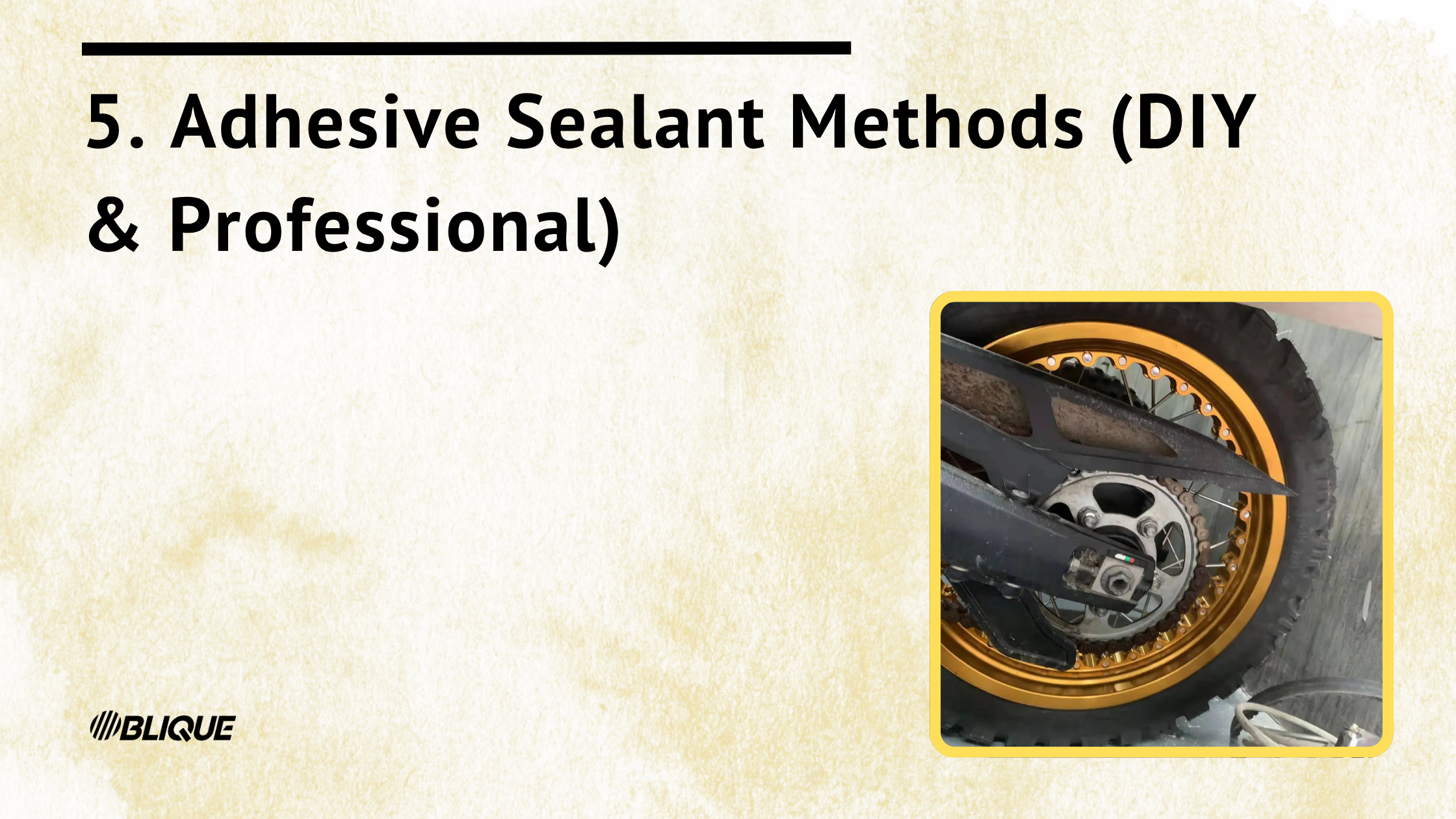
Aftermarket approach using sealants to seal spoke nipples on traditional spoked wheels. Converts tube-type wheels to tubeless.
Professional services exist specifically for this. CWC Airtight. BARTubeless. Woody’s Wheel Works. They apply sealants properly and test the results.
DIY methods use products like 3M Marine Sealant 5200, Seal-All, or silicone compounds. Apply sealant around each nipple. Let it cure. Hope it holds.
Results vary significantly. Some DIY conversions work perfectly for years. Others leak from day one. Application technique matters. Sealant choice matters. Rim condition matters.
Professional conversions are more reliable than DIY but still not as consistent as purpose-built tubeless wheels.
6. Proprietary Sealing Technologies
Brand-specific innovations that don’t fit neatly into other categories.
Kineo uses a proprietary sealing method that allows full spoke adjustability while maintaining completely airtight seals. They don’t publish the details. But wheels can be trued and re-tensioned without compromising the seal.
These proprietary methods often become industry benchmarks. When they work, they set the standard others try to match.
Key Components of Tubeless Spoked Wheels
Understanding the components helps you understand quality differences between wheels.
The Rim: Materials and Construction
Rims are made from high-grade aluminum alloys. Premium wheels use class 7000 aluminum. Strong, light, corrosion-resistant.
Manufacturing involves CNC machining from forged blanks. Not simple extrusion. Forging compresses the material, improving grain structure and strength. CNC machining creates precise dimensions.
Rim profile matters for tubeless operation. Must have proper bead profile for tubeless tire sealing.
Important distinction: “MT” (Motorcycle Tubeless) rims versus “WM” (Wire-Mount) rims. MT rims have safety beads—raised lips that keep the tire bead seated during deflation. WM rims don’t.
You can’t just seal any rim and call it tubeless. The rim profile has to support tubeless tire mounting.
The Spokes: Design and Materials
Premium wheels use aerospace-quality stainless steel spokes. Strong, corrosion-resistant, consistent.
Spoke count varies. Typically 28-36 spokes on front wheels, 32-40 on rears. More spokes distribute load across more connection points.
Straight-pull spokes are common in tubeless designs. Traditional J-bend spokes curve at the hub. Straight-pull spokes don’t. The geometry works better for some tubeless configurations.
Spokes must be perfectly straight to distribute loads ideally. Even small bends create stress concentrations. Premium spokes are manufactured to tight tolerances.
Connection methods vary by wheel type. Hub-mounted nipples require different spoke geometry than rim-mounted nipples.
The Hub: Where It All Connects
Hub construction is typically CNC machined aluminum. Same material quality as rims.
In external nipple designs, the hub houses spoke nipple adjustments. This is where you true the wheel.
Forged hubs offer better strength than cast. Same principle as rims—forging improves material properties.
The hub must accommodate whatever sealing system the wheel uses. For external nipple designs, the hub geometry is critical.
Valve Stem Configuration
Tubeless valve stems must seal through the rim. The stem creates an extension of the airtight chamber.
Different from tube-type valve stems, which just poke through a hole in the tube. Tubeless stems need an airtight seal where they penetrate the rim.
Installation must be airtight. Rubber base, proper torque, correct positioning. A leaking valve defeats the purpose of sealed nipples.
Why Tubeless Spoked Wheels Are Superior: Key Benefits
This is why people pay premium prices for tubeless spoked wheels instead of just running tubes.
1. Easier Puncture Repair
The biggest advantage. Roadside repair with a plug kit.
Pick up a nail. Pull it out. Insert plug. Inflate. Ride away.
Takes minutes. Doesn’t require removing the wheel. Doesn’t require breaking the tire bead. Doesn’t require any special tools beyond a plug kit.
Compare to tube repair. Remove wheel from motorcycle. Break tire bead. Extract tube. Find puncture. Patch or replace tube. Reassemble tire. Remount wheel. Inflate. This takes 20 minutes minimum. Often an hour or more.
Real-world scenario: You’re on a highway. Nail in the tire. With tubeless, you pull over, plug it, continue to your destination. With tubes, you’re potentially looking at a tow. Or an hour of roadside work. Or calling someone to bring you a spare tube.
2. Slow Leak vs. Rapid Deflation
Tubeless tires deflate slowly when punctured. The object often stays in the tire. Air leaks slowly around it.
You might notice the tire feels soft after 50 miles. Check pressure, see a nail, plug it. No drama.
Tubes deflate fast. Sometimes instantly. The air has a direct path out through the puncture. Nothing holding it back.
Tubeless tire construction is stiffer than tubes. Even with a puncture that can’t be immediately repaired, you can often ride slowly for miles to reach help. Tubes destroy quickly when ridden flat—the rubber bunches and tears.
3. Weight Savings
Eliminating inner tubes reduces rotational mass. Tubes aren’t extremely heavy, but they’re not nothing either.
Unsprung weight reduction improves suspension performance. The suspension can react faster to bumps. Acceleration improves. Braking improves.
Note: some tubeless spoked wheels are actually heavier than equivalent cast wheels due to sealing mechanisms and spoke construction. But they’re still lighter than a spoked wheel plus tube combination.
The weight comparison that matters: tubeless spoked wheel versus traditional spoked wheel with tube. Tubeless wins.
4. No Pinch Flats
Tubes can pinch between tire and rim. During hard impacts over rocks or curbs. During tire changes when the bead catches the tube.
Pinched rubber tears. Flat tire. Sometimes in places you can’t easily patch.
Tubeless eliminates this risk entirely. Nothing to pinch. No tube exists.
Especially important for off-road and adventure riding. Rough terrain creates exactly the impacts that cause pinch flats.
5. Better Heat Management
Tubes add friction inside the tire. The tube rubs against the tire casing constantly as the tire flexes. Friction generates heat. Heat degrades rubber. Reduces tire life.
Tubeless eliminates tube friction. The tire interior is empty except for air.
Interesting note: running tubeless tires WITH tubes (on traditional spoked wheels) can actually increase heat. Tubeless tire carcasses are stiffer. Adding a tube inside a stiff carcass increases friction compared to tube-specific tires.
6. Spoke Flexibility Maintained
Tubeless spoked wheels retain the core advantages of spoke construction. Superior shock absorption. Flexibility over rough terrain. Ability to handle impacts that would crack cast wheels.
Spokes flex individually. Forces distribute across multiple spokes. The wheel absorbs impact rather than transferring it entirely to the chassis.
Cast wheels are rigid. They either hold up or they crack. No flex.
Tubeless spoked wheels deliver both: spoke strength and flexibility, plus tubeless convenience. Best of both worlds.
Tubeless Spoked Wheels vs. Traditional Spoked Wheels: Direct Comparison
Construction Differences
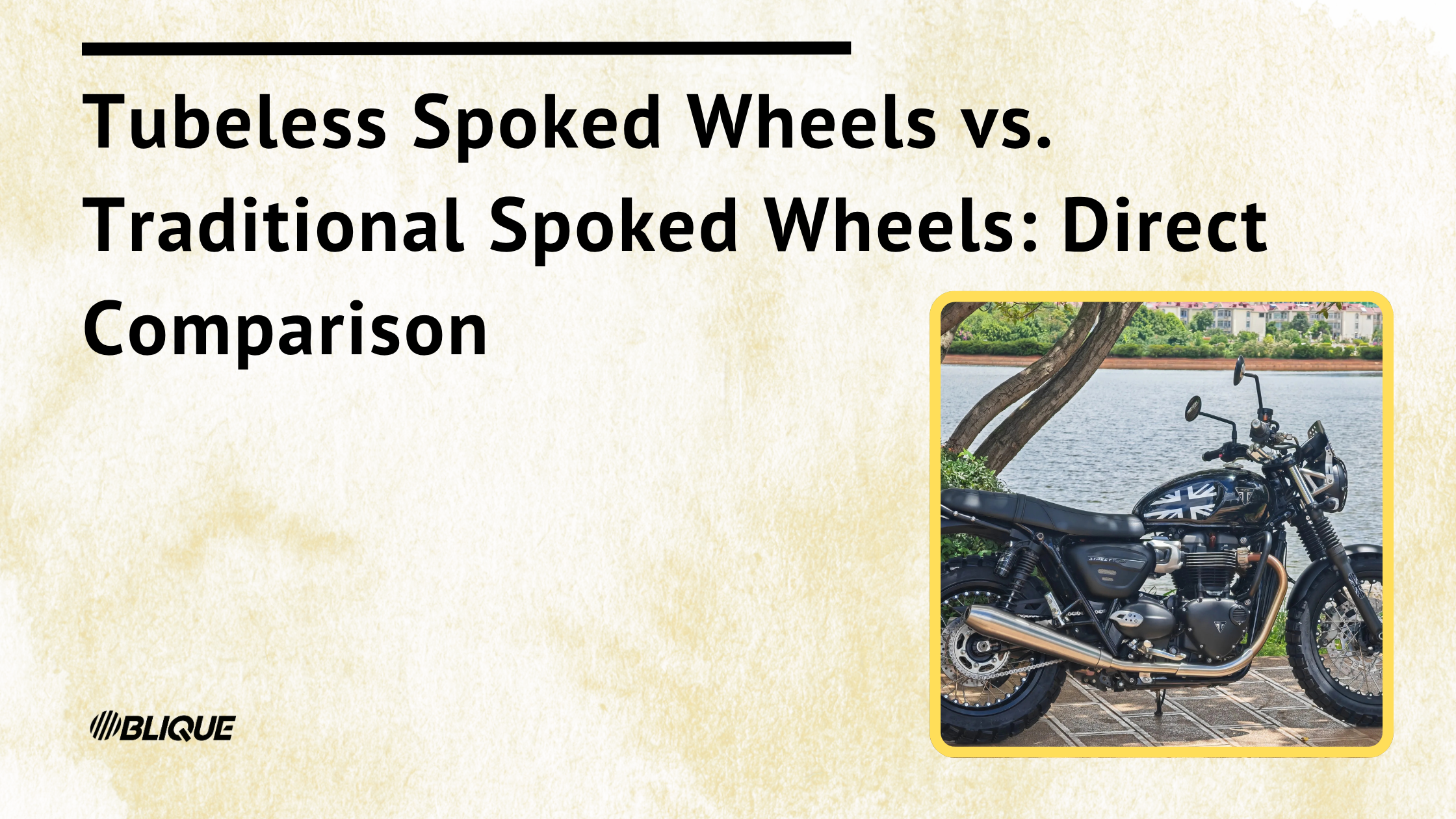
Traditional: Nipples penetrate rim. Holes visible inside rim. Requires tube to create sealed air chamber.
Tubeless: Nipples sealed outside air chamber or individually welded/sealed. No holes in air chamber. Rim bed is airtight.
Puncture Repair Comparison
Traditional: Remove wheel from bike. Break tire bead. Extract tube. Locate puncture. Patch or replace tube. Reinstall tube. Reseat tire bead. Remount wheel. Inflate. Time: 20 minutes to over an hour.
Tubeless: Insert plug. Inflate. Time: minutes. No wheel removal needed.
Weight and Performance
Traditional: Heavier due to tube. More rotational mass. Slower acceleration response. Worse braking. More unsprung weight affecting suspension.
Tubeless: Lighter without tube. Better acceleration and braking response. Improved handling. Reduced unsprung weight improves suspension performance.
Maintenance Requirements
Traditional: Tube inspection required. Tube replacement when changing tires. Rim strip maintenance. Risk of tube wear from rim friction.
Tubeless: Spoke tension checks. Seal integrity monitoring (particularly for DIY conversions). Generally less frequent intervention required.
Cost Comparison
Traditional: Lower initial cost. Tubes are inexpensive. Replacement tubes cheap and available everywhere.
Tubeless: Higher initial investment. Quality tubeless spoked wheels cost $800-$2500+ depending on brand. But saves money on potential roadside repairs, towing costs, and missed riding time.
Tubeless Spoked Wheels vs. Cast/Alloy Wheels
Strength and Durability Off-Road
Spoked wheels: Flex and absorb impacts. Individual spoke replacement possible when damage occurs. Better suited for rough terrain. Bends instead of breaking.
Cast wheels: Can crack or shatter on hard impacts. More rigid, transfers impacts to chassis. Better suited for street use. Less forgiving of abuse.
Repairability in Remote Areas
Spoked: Individual spokes can be replaced with basic tools. Local mechanics almost anywhere understand spoke wheels. Temporary repairs possible with creative solutions.
Cast: Wheel damage often requires complete replacement. Difficult to repair in the field. Crack a cast wheel in the backcountry and you’re in trouble.
Aesthetics and Style
Spoked: Classic adventure-bike look. Customizable spoke colors and finishes. Traditional motorcycle appearance. Visually complex.
Cast: Modern, sleek appearance. Multiple design options. Easier to keep clean. Simpler visual lines.
Top Manufacturers and Brands of Tubeless Spoked Wheels
Kineo Wheels (Italy)
Italian manufacturing. Proprietary sealing technology that allows full spoke adjustability while maintaining airtight seals.
High-grade aluminum alloy rims. Aerospace-quality stainless steel spokes. Hand-built wheels, individually tested.
Extensive customization options including finishes, spoke colors, and rim widths. Not just off-the-shelf wheels.
Available for BMW, KTM, Honda, Yamaha, Ducati, Triumph, and others. TÜV certified.
Premium pricing. Expect $1000+ per wheel. This is high-end stuff.
Best for: riders wanting customization and Italian craftsmanship. People who care about details.
Alpina Wheels (Italy)
Making spoked wheels since the 1930s. Serious experience.
STS (Standard Tubeless System) using o-ring seals on each nipple. Proven technology.
OEM supplier to European manufacturers. You might already have Alpina wheels without knowing it.
Stainless steel spokes, forged rims. Allows spoke tension adjustment while maintaining tubeless seal.
Available for KTMs, BMWs, some Japanese brands. Mid-to-premium pricing around $1,550 per set.
Best for: riders wanting proven OEM-level technology without experimentation.
Excel/Takasago Rims
One of the biggest names in motorcycle rim manufacturing. Japanese quality.
Sealed rim bed design. Proven technology across countless motorcycles.
Shows up on factory adventure bikes from multiple manufacturers. The safe, reliable choice.
Nothing experimental. These rims work. Have for years.
Various pricing depending on complete wheels versus rims only.
Best for: OEM-quality reliability without overthinking it.
Woody’s Wheel Works (USA)
Specializes in tubeless conversions and custom builds. American operation.
Hand-laced wheels built to custom specifications. Will build what you need.
Reputation for durability. These wheels get seriously abused by desert racers and expedition riders. They keep working.
Not the lightest wheels. Not the prettiest. But extremely tough.
Also offers sealing services for existing wheels. Around $150 per wheel. They’re honest that results aren’t guaranteed—depends on your rim condition.
Best for: serious off-road riders, desert racers, expedition riders who need wheels that survive abuse.
OEM Factory Options
Motorcycles that come with tubeless spoked wheels from the factory:
- BMW R1200GS and GS series
- Yamaha Ténéré models
- KTM adventure bikes
- Triumph Tiger series
- Honda Africa Twin (2020+ 1100)
- Suzuki V-Strom models
Pattern: usually premium European brands, though Japanese manufacturers are catching up. 21-inch front wheels are still more challenging to find tubeless. 19-inch fronts are more common.
Are Tubeless Spoked Wheels Worth It?
Depends on how you ride.
If you’re doing serious adventure riding—remote areas, questionable roads, far from help—tubeless spoked wheels pay for themselves. The first time you plug a puncture in five minutes instead of spending an hour on a tube repair, you’ll understand.
If you mostly ride pavement with occasional gravel roads, the value proposition is different. You could run cast wheels and be fine. Or tubes and accept the compromise.
The real question is risk tolerance. How much does it matter if you get a flat somewhere inconvenient? How much is peace of mind worth?
Premium tubeless spoked wheels are expensive. $1500-2500 for a quality set. That’s real money.
But so is a tow truck. So is a missed day of riding. So is a ruined trip because you’re stuck fixing flats instead of exploring.
For riders who actually use their adventure bikes for adventure, tubeless spoked wheels make sense. The technology works. The benefits are real. The peace of mind is worth something.
For everyone else, it’s a judgment call. Nice to have. Not essential.