Don't miss our new customer offer - up to 8% OFF! ( Code: kineo8off )

21/18 vs 19/17 Adventure Wheel Setup: Which Is Best for You?

Two numbers. That’s what separates road-biased adventure bikes from serious off-road machines. And it matters more than most riders realize.
21/18 versus 19/17. These wheel size configurations define how your adventure bike behaves on pavement, gravel, mud, and everything in between. Pick wrong and you’re fighting your motorcycle instead of enjoying it.
Here’s the thing. Neither setup is universally better. A Multistrada V4S with 19/17 wheels carves canyons beautifully but struggles on technical trails. A KTM 1290 Adventure R with 21/18 wheels eats up rocky terrain but feels lazy on twisty pavement. Same category of motorcycle. Completely different tools.
This guide breaks down both configurations so you can match your wheels to your actual riding. Not the riding you imagine doing. The riding you actually do.
And if you’re serious about either setup, Kineo’s tubeless spoked wheels offer a premium upgrade path. Classic aesthetics. Modern performance. Both configurations available. But we’ll get to that later.
What Do 21/18 and 19/17 Wheel Sizes Mean?
The numbers refer to wheel diameters in inches. First number is front wheel. Second number is rear wheel.
So 21/18 means 21-inch front wheel paired with 18-inch rear wheel. And 19/17 means 19-inch front with 17-inch rear.
Simple enough. But these diameter differences create significant changes in how the motorcycle handles.
Larger front wheels encounter obstacles at shallower angles. The wheel rolls up and over rather than slamming into things. This affects everything from pothole impacts to rock crawling capability.
Rear wheel size influences traction characteristics and tire availability. The 17-inch rear shares sizing with sport bikes, opening up massive tire selection. The 18-inch rear sits in adventure-specific territory.
Overall geometry shifts too. Larger wheels raise the motorcycle. They change steering characteristics. They alter weight distribution. Four inches of diameter difference between a 17-inch and 21-inch front wheel translates to meaningfully different riding experiences.
The 21/18 Wheel Setup: Off-Road Focused Configuration
This is the traditional off-road configuration. The setup dirt bikes have used for decades, adapted for larger adventure motorcycles.
21-inch front wheel. 18-inch rear wheel. Built for unpaved surfaces first, pavement second.
You’ll find this configuration on serious adventure machines. BMW R1200GS and R1250GS in base trim. KTM 1090, 1190, and 1290 Adventure R models. Honda Africa Twin base versions. Husqvarna Norden 901. Yamaha Ténéré 700.
These manufacturers chose 21/18 because their engineers understand off-road demands. When the terrain gets challenging, wheel size matters enormously.
Why Choose a 21-Inch Front Wheel?
The advantages become obvious when pavement ends.
Better obstacle clearance tops the list. That 21-inch wheel encounters rocks, roots, and ruts at a shallower angle than smaller wheels. Instead of dropping into holes, it rolls over them. Instead of slamming into obstacles, it climbs them.
Physics makes this work. Imagine rolling a basketball versus a tennis ball over a golf ball. The basketball barely notices it. The tennis ball gets deflected. Same principle with wheel diameters.
Stability on loose surfaces improves significantly. Sand, mud, gravel. The larger wheel tracks more predictably. It resists getting pushed around by terrain inconsistencies.
Off-road traction benefits too. The contact patch geometry works differently with larger diameters. More confident grip when surfaces get sketchy.
And tire options? Excellent for aggressive off-road patterns. The 21-inch size is where you find the serious knobbies. The tires designed for actual dirt performance.
Benefits of the 18-Inch Rear Wheel
The 18-inch rear provides balance. Not as extreme as a 19-inch rear would be. Not as road-focused as 17-inch.
This size works well for dual-sport use because it bridges both worlds. Wide tire selection exists across adventure and off-road categories. You can mount knobbies for serious trails or choose something more civilized for mixed riding.
Taller sidewalls compared to 17-inch wheels provide better cushioning. More air volume. More compliance over rough terrain. The tire itself becomes part of your suspension.
The 18-inch rear remains compatible with aggressive tread patterns while still handling pavement respectably. It’s a compromise, sure. But a well-considered one for motorcycles that need to do both.
Tire Options for 21/18 Setup
Tire selection leans heavily toward off-road capability.
Continental TKC 80 remains popular for aggressive dual-sport use. Excellent off-road traction with acceptable street manners. Dunlop D606 for more dirt-focused riding. Shinko 804/805 for budget-conscious riders who still want off-road performance. Pirelli MT21 for serious dirt work.
Dual-sport options exist in abundance. Heidenau K60 Scout for the long-haul crowd. Mitas E-07 for aggressive adventure touring.
Both tubeless and tubed tire options exist in these sizes. Kineo wheels support either application, giving riders flexibility based on their preferences and tire choices.
Worth noting: dirt-oriented tires are most abundant in 21/18 sizing. This is where tire manufacturers put their knobby development efforts.
Best Riding Scenarios for 21/18 Configuration
Choose 21/18 if off-road makes up 60% or more of your riding. Maybe even 50% if that off-road portion includes technical terrain.
Technical trails become manageable rather than terrifying. Rock crawling works. Sand dunes work. Muddy fire roads work. The bigger front wheel gives confidence when conditions deteriorate.
Adventure touring with serious off-pavement sections calls for 21/18. Trans-America Trail. Africa overland routes. South American adventure circuits. Places where pavement becomes optional.
Riders who prioritize off-road capability over street performance should default to this setup. The pavement compromise is real but acceptable when dirt performance matters most.
The 19/17 Wheel Setup: Road-Biased Performance
This configuration prioritizes pavement while maintaining some off-road capability. Street first, dirt second.
19-inch front wheel. 17-inch rear wheel. Built for riders who spend most miles on asphalt.
Sport-adventure and adventure-touring machines typically use this setup. Ducati Multistrada V4S. BMW S1000XR. Triumph Tiger 900 GT Pro. Yamaha Tracer 9 GT. KTM 1290 Super Adventure S.
Manufacturers choose 19/17 when they’re building adventure bikes that need to perform on twisty roads. When corner speed matters. When the rider wants sportbike reflexes with adventure ergonomics.
Advantages of the 19-Inch Front Wheel
Better on-road handling than 21-inch wheels. Noticeably so. The smaller diameter creates quicker steering response without sacrificing all off-road capability.
Turn-in happens faster. Less effort required to initiate corners. The motorcycle changes direction more willingly.
Cornering stability on pavement improves significantly. The 19-inch front feels more planted mid-corner. More confidence at lean angle. Less vague than a 21-inch front doing the same work.
Ground clearance remains decent. Not as generous as 21-inch setups, but adequate for gravel roads and light trails. You’re not giving up all unpaved capability.
Tire selection spans dual-sport and adventure categories with good variety. And the 19-inch front weighs less than its 21-inch counterpart, reducing unsprung mass and improving suspension response.
Why the 17-Inch Rear Wheel Dominates
The 17-inch rear is industry standard. Same size as sport bikes. Same size as naked bikes. This matters enormously for tire selection.
Massive tire availability. Every manufacturer makes multiple options in this size. Sport-touring compounds. Adventure patterns. High-performance rubber. Wet-weather specialists. Whatever you need, someone makes it in 17-inch.
Pavement grip reaches sport bike levels. The tire technology developed for superbikes applies directly to your adventure machine. Modern rubber compound development focuses heavily on this size.
Cornering performance benefits from lower-profile tires. Quicker transitions. More precise steering feel. The sportier handling characteristics adventure-touring riders want.
Wet-weather performance often exceeds larger sizes because this is where tire companies concentrate their rain compound development.
For highway touring, 17-inch rears provide optimal stability combined with excellent tire longevity in touring compounds.
Tire Selection for 19/17 Setup
Options multiply in this configuration.
Pirelli Scorpion Trail II for sport-touring capability. Michelin Anakee Adventure for balanced performance. Continental Trail Attack 3 for road-biased riding with light off-road capability.
50/50 dual-sport tires work too. Dunlop Trailmax Mission. Continental TKC 70. Metzeler Karoo Street. These handle gravel roads and light trails while excelling on pavement.
Sport-touring options expand your choices further. Metzeler Roadtec. Bridgestone Battlax Adventure. Premium rubber designed for fast road riding.
This configuration offers more road-biased tire technology than 21/18 setups. The development investment goes where the market demand exists.
Kineo wheels accommodate modern tubeless sport-adventure tires perfectly. No tubes required. Full access to contemporary rubber technology.
Ideal Use Cases for 19/17 Configuration
Choose 19/17 if on-road riding makes up 70% or more of your miles.
Sport-touring adventures call for this setup. Twisty canyon roads. Mountain passes. Coastal highways. Places where corner speed creates smiles.
Highway commuting with weekend dirt road exploration fits perfectly. You’re not giving up all unpaved capability. Just prioritizing where you spend most time.
Riders wanting sportbike handling with adventure ergonomics should default to 19/17. Stand up in the pegs on occasional fire roads. Attack apexes on paved curves. Best of both worlds, weighted toward pavement.
Track day capability exists too. The Ducati Multistrada Pikes Peak proves adventure bikes with this configuration can genuinely perform on racetracks.
Head-to-Head Comparison: 21/18 vs 19/17
Numbers and descriptions only go so far. Direct comparison across critical performance factors helps clarify the decision.
Off-Road Performance & Capability
21/18 wins decisively for serious off-road work.
Technical trails, rock crawling, sand, mud. The larger front wheel rolls over obstacles that would deflect a 19-inch wheel. Better ground clearance protects the chassis. More confidence in challenging conditions.
19/17 remains adequate for gravel roads and light trails. Fire roads work. Smooth dirt works. But technical terrain reveals limitations quickly. The smaller front wheel can get deflected by obstacles. Less forgiving when conditions deteriorate.
If off-road capability matters to your riding, 21/18 provides significantly more capability. Not marginal. Significant.
On-Road Handling & Cornering
19/17 excels on pavement.
Quicker turn-in. More precise steering. Better lean angle capability. Sportier overall feel. The motorcycle responds to inputs more immediately.
21/18 works on pavement. It’s fine. But steering feels slower. More effort required to change direction. Stable at speed but less aggressive through corners.
Real-world testing consistently shows 17-inch front wheels are faster on road. The Multistrada Pikes Peak models with 17-inch fronts set lap records that 19-inch versions couldn’t match.
This doesn’t mean 21/18 is dangerous on pavement. Just noticeably less sporty.
Highway Stability & Touring Comfort
Both setups handle highways competently.
21/18 provides excellent stability. Very planted feel at sustained speeds. However, may feel less secure in strong crosswinds due to the larger sail area of a 21-inch front wheel.
19/17 offers excellent highway manners with better aerodynamic stability. The smaller front wheel catches less wind. More refined feel during long highway stints.
Honestly? Tire selection matters as much as wheel size for touring comfort. Good touring rubber on either configuration works well for distance riding.
Both configurations successfully complete adventure tours worldwide. Route selection matters more than wheel size for determining which setup serves you better.
Weight & Handling Dynamics
21-inch wheels weigh more. Typically 4-10 pounds more than comparable smaller wheels. This affects handling.
Increased rotational mass requires more energy to accelerate and decelerate. Gyroscopic effect strengthens with larger wheels, resisting direction changes. The motorcycle feels heavier to maneuver, especially at low speeds.
19/17 setups run lighter overall. Quicker handling response. Less physical effort required to change direction. The motorcycle feels more nimble.
Worth noting: Kineo wheels can be lighter than stock cast alternatives even in larger sizes. Engineering matters. Premium spoked wheel construction saves weight compared to heavy OEM cast options.
Tire Availability & Cost
21/18 offers excellent off-road tire selection. Knobbies are abundant. Aggressive dual-sport patterns exist in variety. However, street-oriented options are fewer. You won’t find as many sport-touring choices.
19/17 provides massive selection across all categories. More premium performance tires available. Sport-touring options everywhere. Easier to find exactly what you need.
Costs run generally similar between configurations. 17-inch rear tires are slightly more common, creating competitive pricing through market forces. Neither setup costs dramatically more to keep in rubber.
Ground Clearance & Protection
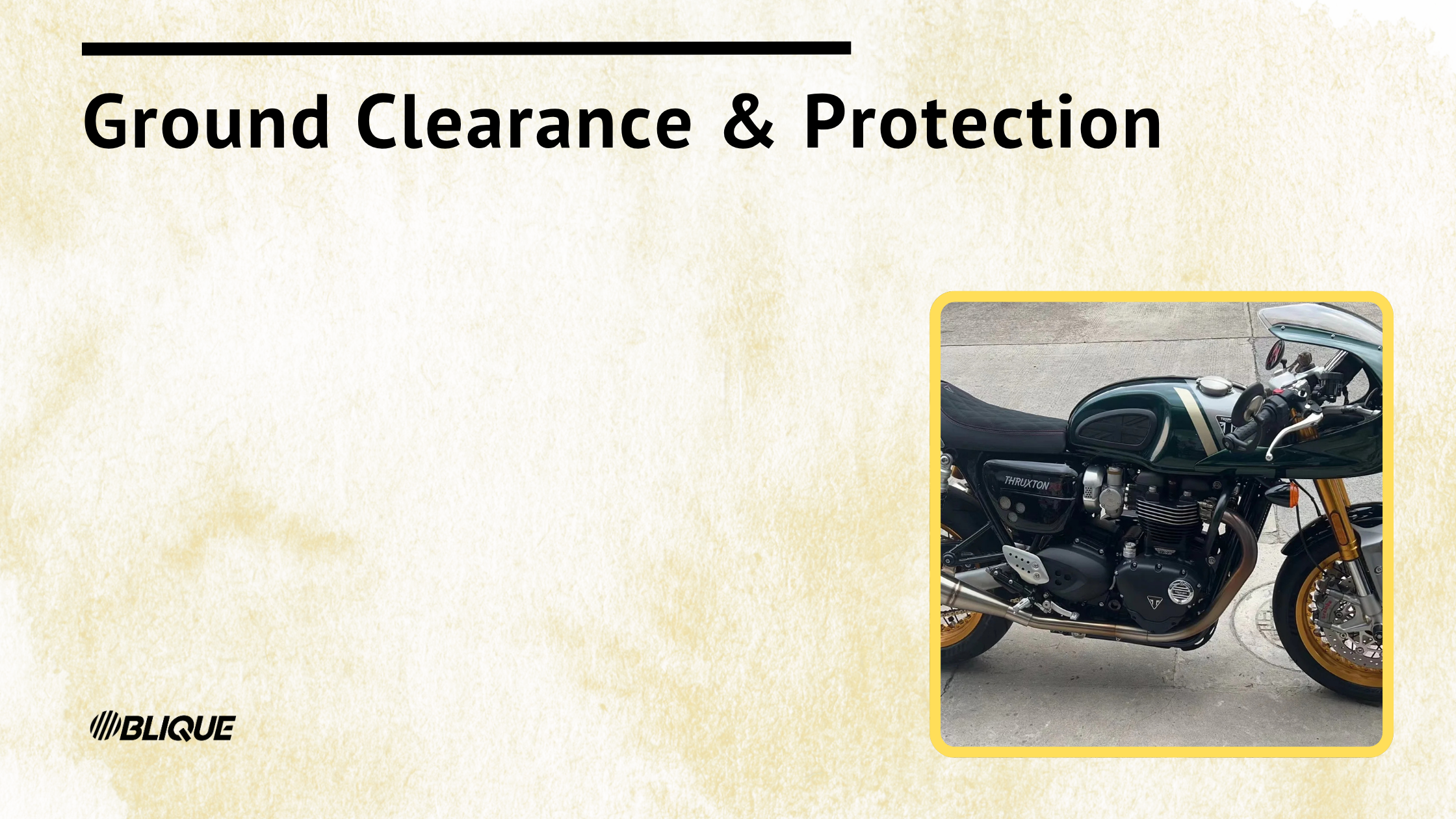
21/18 provides more ground clearance. Typically 9-11 inches depending on the specific motorcycle. Better for technical terrain where chassis protection matters. Reduces bottoming risk on obstacles.
19/17 offers less clearance. Usually 7-9 inches. Still adequate for most adventure riding. Gravel roads and light trails don’t demand maximum ground clearance.
The 18-inch rear wheel’s taller sidewalls provide a cushioning advantage over 17-inch rubber. More air volume means more compliance over rough surfaces.
For serious off-road work, 21/18 clearance advantages matter. For road-focused riding with occasional dirt, 19/17 clearance suffices.
Maintenance & Practical Considerations
Both configurations require similar maintenance schedules.
21/18 tire changes can be more challenging. Larger, stiffer tires require more effort to mount. Fewer shops are equipped for adventure tire work at this size. Finding roadside assistance with appropriate equipment gets harder in remote areas.
19/17 benefits from more shops being familiar with 17-inch sizing. Standard sport bike size means standard equipment handles it. Easier to find help when needed.
Tubeless Kineo wheels make maintenance easier for both configurations. Plug-and-play tire repairs work trailside. No tubes to patch or replace. Just plug, inflate, and continue riding.
Switching Between Wheel Setups: Is It Possible?
Some riders want both configurations. Different wheels for different seasons or trip types. This is possible but requires consideration.
Purchasing a second wheelset creates flexibility. 21/18 for the summer adventure trip. 19/17 for sport-touring the rest of the year. Swap wheels when needs change.
Fitment considerations matter. Brake clearance must work for both setups. Suspension geometry changes with wheel diameter. Speedometer calibration shifts with different wheel circumferences. ABS sensors need proper compatibility.
Not every motorcycle accommodates both configurations easily. Some frames have clearance limitations. Some suspension designs don’t tolerate the geometry changes well.
Kineo offers custom wheel builds for specific motorcycle models with proper fitment guaranteed. The engineering work happens upfront so installation works seamlessly.
What to Consider When Switching
Bike compatibility comes first. Does your specific motorcycle have frame and swingarm clearance for both wheel sizes? Not all do.
Suspension adjustments may be needed. Larger wheels raise the bike. Suspension sag settings change. Preload and damping may need recalibration.
Brake caliper fitment must work. Rotor diameters often change between configurations. Calipers need proper positioning.
ABS sensor compatibility requires attention. Different wheel speeds affect sensor readings. Some systems adapt automatically. Others need recalibration.
Geometry changes are unavoidable. Rake and trail shift with wheel diameter. Steering characteristics change. The motorcycle behaves differently. Not necessarily worse. Just different.
Cost of a second wheelset versus tire compromises presents the financial question. Quality wheels aren’t cheap. But riding on compromise tires isn’t cheap either. Performance suffers. Tire life suffers. Safety margins shrink.
Kineo provides fitment expertise and plug-and-play solutions for riders wanting multiple configurations. Professional guidance prevents expensive mistakes.
How Wheel Size Affects Motorcycle Geometry
Wheel diameter changes more than just appearance. Fundamental geometry shifts.
Rake angle increases with larger front wheels. The steering head angle becomes more relaxed. Steering slows down. The motorcycle wants to go straight more insistently.
Trail dimension changes too. Larger wheels increase trail, adding stability but reducing agility. The motorcycle tracks more predictably but requires more effort to turn.
Ride height rises with larger diameter wheels. Seat height increases. Ground reach at stops changes. For shorter riders, this matters significantly.
Weight distribution shifts slightly. Center of gravity moves. The feel under braking and acceleration adjusts.
None of this means larger wheels are worse. Different geometry serves different purposes. Stable, predictable, resistant to deflection. These characteristics help on rough terrain. They’re less helpful on twisty pavement.
Understanding these relationships helps explain why different wheel configurations feel so distinct. It’s not imagination. The physics are real.
The Kineo Advantage: Tubeless Spoked Wheels for Both Configurations
Here’s the solution to the wheel configuration dilemma: don’t compromise on wheel quality regardless of which size you choose.
Kineo produces truly tubeless spoked wheels in both 21/18 and 19/17 configurations. Classic spoked wheel aesthetics. Modern tubeless tire performance. The best of both worlds.
Benefits worth noting. TÜV approved for safety certification. Custom sizing available for specific applications. Plug-and-play installation on supported motorcycle models. Lighter than some OEM cast wheel options despite being spoked construction.
Whether you choose off-road focused 21/18 or road-biased 19/17, Kineo wheels enhance the experience.
Why Choose Tubeless Spoked Wheels?
No inner tubes required. This changes everything for adventure riding.
Flat tire repairs become plug-and-play simple. Carry a plug kit and mini compressor. Fix punctures trailside in minutes. No tube removal, patching, and reinstallation.
Modern high-performance tires become accessible. Contemporary rubber technology is designed for tubeless application. Running tubes in tubeless tires compromises their engineering advantages.
Better heat dissipation compared to tubed setups. Tires run cooler. Compounds maintain optimal operating characteristics longer.
Weight savings versus tube setups add up. Eliminate tube weight and the extra tire beading required for tube retention. Meaningful reduction in rotating mass.
Classic adventure bike aesthetics remain intact. Spoked wheels look right on adventure machines. Cast wheels work functionally but lack visual appeal.
Improved safety through controlled air loss. Tubeless tires losing air deflate slowly rather than suddenly. More time to react. More control maintained.
Tire pressure monitoring systems work properly. TPMS sensors mount cleanly. Accurate pressure readings during rides.
Kineo Wheel Options for Adventure Bikes
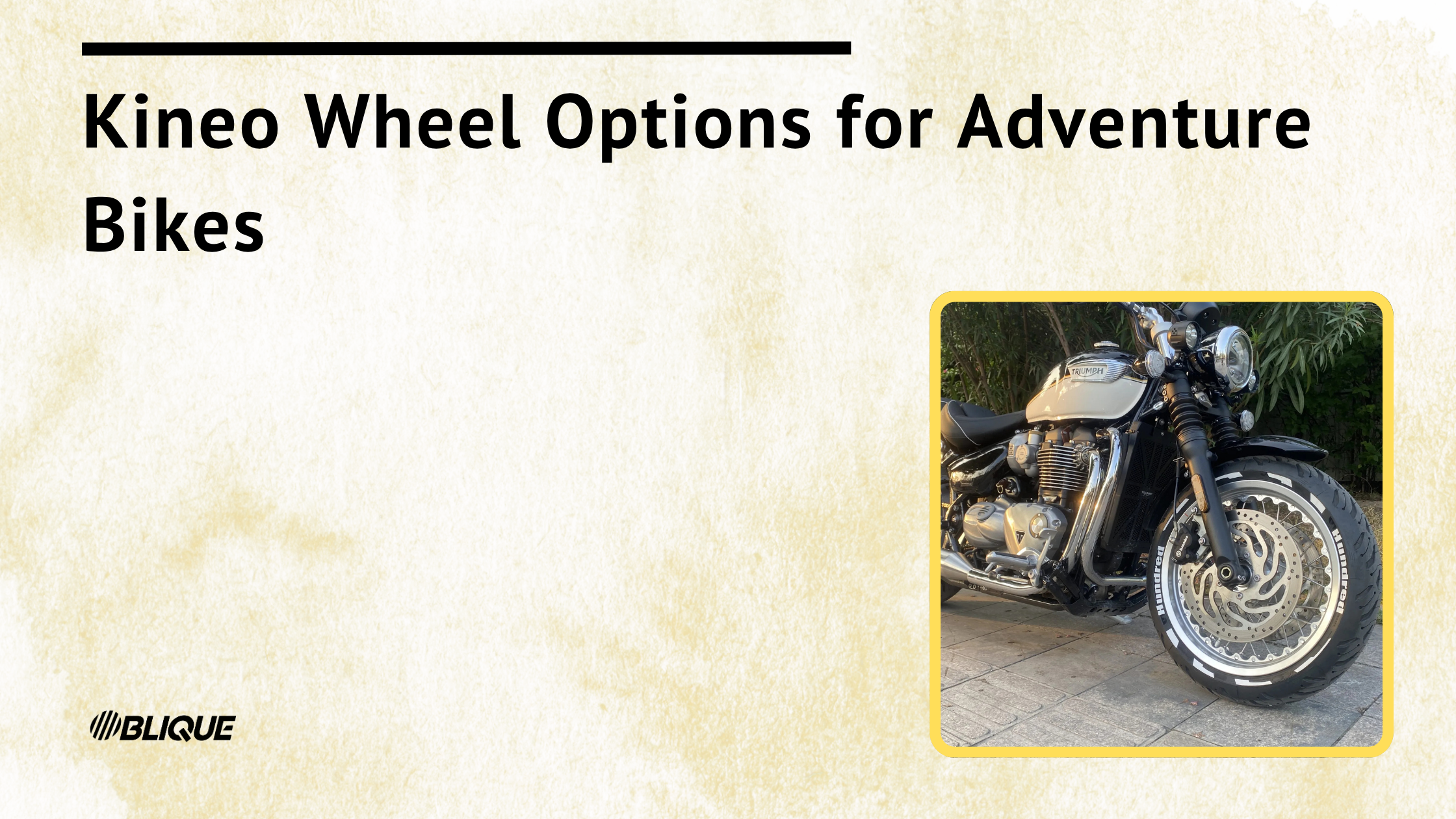
Kineo builds wheels for major adventure motorcycle manufacturers. BMW. KTM. Honda. Yamaha. Ducati. Triumph. Coverage spans the adventure bike market.
Custom builds address specific requirements. Non-standard applications can be accommodated with proper engineering.
Multiple finish options exist. Colors. Textures. Match your motorcycle’s aesthetic or create contrast.
Spoke colors are customizable. Personalization beyond standard offerings.
Rim width options allow optimization for preferred tire sizes.
Both 21/18 and 19/17 configurations are available depending on motorcycle model fitment. Check compatibility for your specific bike.
Built-to-order process takes 3-4 weeks typically. Quality manufacturing requires appropriate time.
Worldwide shipping from Paris via Oblique Racing. International delivery handled professionally.
Frequently Asked Questions
Can I fit 21/18 wheels on a bike designed for 19/17?
Depends entirely on your specific motorcycle.
Some bikes have clearance issues that prevent larger wheels. Others can accommodate the change with geometry adjustments.
Consultation with Kineo fitment specialists provides definitive answers for your application. Or check manufacturer specifications directly.
Suspension modifications may be required. The geometry changes significantly between configurations. Not all bikes were designed with multiple wheel size options in mind.
Do larger wheels make the bike taller?
Yes. Larger diameter wheels raise seat height and overall motorcycle height.
A 21-inch front wheel adds approximately 1-2 inches of height compared to a 19-inch front wheel. Not insignificant for riders with shorter inseams.
Suspension lowering can offset some of this increase, but it affects geometry. Trade-offs cascade.
Consider your comfort at stops when evaluating wheel configurations. Test ride before committing if possible. Standing on tiptoes at every traffic light gets old quickly.
Which setup is better for adventure touring?
Depends on your tour type.
Pavement-heavy tours favor 19/17. Europe on paved scenic routes. Coastal highway riding. Mountain passes with good asphalt. The sportier handling makes these miles more enjoyable.
Off-road heavy tours favor 21/18. Trans-America Trail. African overland routes. South American adventure circuits. Places where pavement disappears regularly. The off-road capability becomes essential rather than optional.
Mixed touring? Choose based on which terrain is more challenging and more important to your experience. Many adventure tourers complete amazing journeys successfully using either configuration.
How does wheel size affect fuel economy?
Larger wheels create more rotational mass and aerodynamic drag. Potentially reducing fuel economy 2-5% compared to smaller wheel configurations.
However. Tire choice affects economy more than wheel size. Knobby tires create more rolling resistance than street-focused rubber. Riding style matters enormously. Wind conditions, elevation changes, and payload all factor in.
The wheel size difference is real but minimal in the context of real-world adventure riding. Don’t choose your configuration based on fuel economy concerns.
Are tubeless spoked wheels worth the investment?
For serious adventure riders, yes.
Easier flat repairs justify the investment alone. Plug kit versus tube patching. Minutes versus an hour or more. Cleaner hands versus tire tool wrestling.
Modern tire compatibility matters. Contemporary tire technology assumes tubeless application. Full performance access.
Safety improvements from controlled air loss provide peace of mind. Weight savings improve handling. Long-term reliability without spoke tension maintenance hassles.
Premium investment, yes. But one that enhances riding experience and supports resale value. Quality wheels retain value better than budget alternatives.
What are the best tires for 21/18 setup?
Depends on your terrain split.
Heavy off-road focus: Continental TKC 80, Dunlop D606, Shinko 804/805. Aggressive tread patterns. Serious dirt capability.
Balanced 50/50 use: Heidenau K60 Scout, Mitas E-07, Pirelli Scorpion Rally. Competent off-road. Acceptable on-road.
More road-biased: Michelin Anakee Adventure, Continental Trail Attack. Smooth tread patterns with some off-road capability.
Choose based on actual riding conditions. Not theoretical preferences. Match rubber to reality.
What are the best tires for 19/17 setup?
Road-focused options excel here.
Pavement priority: Michelin Road 5 Trail, Pirelli Scorpion Trail II, Bridgestone Battlax Adventure. Sport-touring performance with light off-road tolerance.
Balanced 50/50 use: Dunlop Trailmax Mission, Continental TKC 70, Metzeler Karoo Street. More off-road capability while retaining good road manners.
The 19/17 setup offers the widest performance tire selection in the adventure category. Whatever your riding emphasis, options exist.