Don't miss our new customer offer - up to 8% OFF! ( Code: kineo8off )

Motorcycle Wheel Sizes Explained: Everything from 12″ to 21″

Wheel size changes everything on a motorcycle. Not just how it looks. How it rides. How it handles. How confident you feel when you tip into a corner or blast down a highway.
Most riders don’t think about wheel size until they’re shopping for a new bike or considering a custom build. But here’s the thing. The difference between a 17-inch wheel and a 19-inch wheel? It’s not just three inches. It’s a completely different riding experience.
I’ve seen riders obsess over engine specs while ignoring the wheels underneath them. That’s backwards. Your wheels are where rubber meets road. They affect your contact patch, your stability, your ability to dodge potholes or power through gravel.
Motorcycle wheels range from tiny 12-inch setups on pit bikes to massive 21-inch hoops on serious off-road machines. Sport bikes almost always run 17s. Adventure bikes mix sizes. Cruisers do their own thing. And scooters? All over the map.
The size you need depends on what you ride and how you ride it. There’s no universal answer. But once you understand why wheel sizes matter, picking the right setup gets a lot easier.
What Are Motorcycle Wheel Sizes?
When someone says “17-inch wheel,” they’re talking about rim diameter. Not the overall tire size. Not the width. Just the diameter of the metal wheel itself, measured in inches across the center.
This trips people up constantly. Your tire might be 180mm wide with a 55 aspect ratio mounted on a 17-inch wheel. The wheel size is still just 17 inches. Everything else is tire specification.
Front and rear wheels usually aren’t the same size. Sport bikes might run 17/17. Adventure bikes often go 19 front, 17 rear. Or 21 front, 18 rear. Cruisers like 16s or 15s in back sometimes. The combination matters for balance.
Wheel size directly affects your contact patch. Smaller wheels create sharper contact angles. Larger wheels spread things out differently. This changes stability, steering response, and how much rubber actually touches pavement at any moment.
It also affects maneuverability. Smaller wheels pivot faster. Larger wheels resist direction changes. Neither is better. Just different tools for different jobs.
Why Motorcycle Wheel Size Matters
Choosing the right wheel size isn’t about following trends. It’s about matching your wheels to your riding style.
Wheel size impacts five main areas. Handling. Comfort. Acceleration and braking. Ground clearance. And tire selection. Each one deserves attention.
1. Impact on Handling and Maneuverability
Smaller wheels turn faster. That’s physics. Less gyroscopic force to overcome. Quicker tip-in. More responsive steering.
This is why sport bikes run 17s. When you’re flicking a Panigale through chicanes, you want immediate response. The wheel follows your input without fighting back.
Larger wheels provide stability instead. A 21-inch front wheel on an adventure bike resists getting knocked off line by rocks and ruts. It tracks straighter. Takes more effort to turn, sure. But that’s the trade-off.
Real world example. Ride a supermoto through traffic. That 17-inch front wheel makes lane splitting feel natural. Quick inputs, quick responses. Now picture the same traffic on a big ADV bike with a 21-inch front. Workable, but noticeably different. More planning. Less darting.
The gyroscopic effect scales with wheel size and speed. Bigger wheels spinning fast create more angular momentum. Harder to turn but also harder to destabilize accidentally.
2. Effect on Ride Comfort and Stability
Larger wheels roll over bumps better. Simple geometry. A 21-inch wheel doesn’t drop as deeply into a pothole as a 17-inch wheel does. The angle of attack is shallower.
This matters a lot on rough roads. Adventure riders know this instinctively. That big front wheel just floats over stuff that would upset a smaller wheel.
But there’s a catch. Tire sidewall height plays into comfort too. Larger wheels often run lower-profile tires to fit the same overall diameter. Less sidewall means less cushion. Less flex.
Smaller wheels respond more to road imperfections. You feel more through the bars and seat. Some riders like this feedback. Others find it exhausting on long rides.
Touring riders typically prefer 18-inch setups or similar mid-sized wheels. Good stability without giving up too much comfort. The tire sidewall does real work absorbing vibration over hundreds of miles.
3. Acceleration and Braking Performance
Rotational mass is real. It takes energy to spin a wheel up. And energy to slow it down.
Smaller wheels have less rotational mass. They accelerate faster. Not dramatically. But measurably. Track riders care about this stuff.
Larger wheels carry more momentum once spinning. They want to keep rolling. This helps highway cruising but hurts quick stops.
Unsprung weight factors in too. Your wheels are unsprung mass. The suspension has to control them over bumps without the chassis to help dampen things. Lighter wheels improve suspension response regardless of size.
This is why performance wheels matter beyond just looks. A heavy cast 17-inch wheel and a light spoked 17-inch wheel are both 17 inches. But they don’t perform the same under hard acceleration or threshold braking.
4. Ground Clearance and Lean Angle
Wheel size affects where the bike sits relative to the ground. But not as simply as you’d think.
Larger wheels can provide more ground clearance in off-road situations. That 21-inch front wheel lifts the bike’s nose, helping clear obstacles. Essential for serious trail riding.
But for lean angle? It’s more about overall tire diameter and suspension geometry than wheel size alone. A sport bike with 17-inch wheels and proper suspension can achieve extreme lean angles. The packaging just works differently.
Where wheel size really shows up is when you’re leaned over AND hitting imperfections. A small wheel can get deflected more easily mid-corner. Larger wheels stay planted better when the road surface gets sketchy.
5. Tire Availability and Options
This is practical stuff that matters more than people realize.
17-inch wheels have the most tire options. Period. Every major tire manufacturer makes multiple sport, sport-touring, and street tires in 17-inch fitments. Competition drives quality and keeps prices reasonable.
Step outside that common size and options shrink. 21-inch tires exist, but you’re mostly looking at knobby or dual-sport patterns. Want a sticky sport tire in 21 inches? Good luck.
15-inch, 16-inch, 18-inch sizes fall somewhere in between. Decent selection but not infinite. You might find the perfect tire for your riding style or might have to compromise.
Specialty sizes like 13-inch or 14-inch can be challenging. Fewer manufacturers, fewer compounds, fewer tread patterns. Works fine for scooter commuting. Gets tricky for performance applications.
Complete Guide to Motorcycle Wheel Sizes (12″ to 21″)
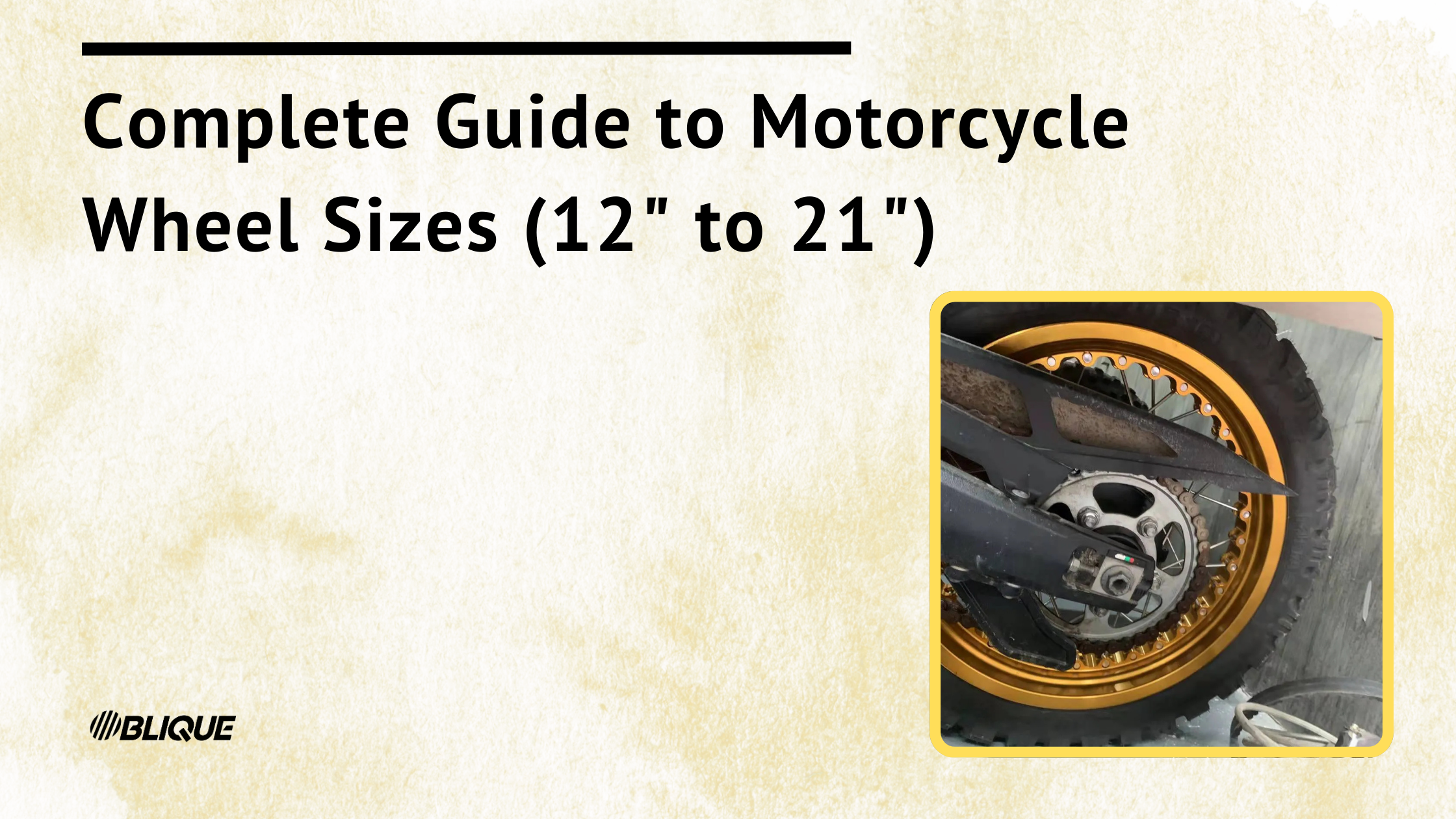
Different bikes need different wheels. A pit bike and a touring cruiser have nothing in common except two wheels.
Here’s what each common size actually does and where you’ll find it.
12-Inch Motorcycle Wheels
These are small. Like, really small.
You’ll see 12-inch wheels on pit bikes, mini motos, some small scooters, and kids’ bikes. Honda Grom originally ran 12s before going to 14s. Some Vespa scooters use 12-inch wheels.
Why they work: Super lightweight. Extremely maneuverable. Park anywhere. Fun in tight spaces. Great for teaching new riders.
Why they don’t: Limited stability. Rough ride on anything but smooth pavement. Highway speeds are sketchy or impossible. You feel every crack and bump.
For what they’re designed for, 12-inch wheels are perfect. Just don’t expect them to do things they weren’t built for.
13-Inch Motorcycle Wheels
A step up from 12s. Still small scooter territory mostly.
You’ll find 13-inch wheels on smaller scooters, some vintage European mopeds, and specific custom builds. Not super common on modern motorcycles.
Advantages: Better stability than 12s. Still parkable and nimble. Works fine for urban commuting.
Disadvantages: Tire selection is limited. Not confidence-inspiring on highways. The jump to 14 inches makes more sense for most riders.
If your scooter came with 13s, they’re fine. Wouldn’t specifically choose this size for a custom build unless matching a specific vintage aesthetic.
14-Inch Motorcycle Wheels
Now we’re getting somewhere. 14-inch wheels appear on larger scooters, some modern mini bikes, and custom builds.
The current Honda Grom runs 14s. So does the Kawasaki Z125. These bikes prove you can have real fun on smaller wheels without feeling completely unstable.
Why riders like them: Better highway capability than 12s or 13s. Still agile enough for city work. Starting to see decent tire options.
Why they’re limited: Still not ideal for extended highway riding. Performance tire selection remains sparse compared to larger sizes.
For urban machines and mini-bike fun, 14s hit a sweet spot. Not trying to be something they’re not.
15-Inch Motorcycle Wheels
This size sits in interesting territory. Maxi scooters, some cruisers, vintage Japanese bikes, and custom choppers run 15-inch wheels.
Honda PCX uses 15-inch wheels. Some Harley models too, particularly older ones. Classic Triumph and BSA bikes often had 15-inch rears.
What works: Versatile size. Adequate for highway cruising. Good tire availability across various styles. Classic look on custom builds.
What doesn’t: Neither fish nor fowl for performance applications. Won’t find modern sport tires in this size.
Kineo makes some beautiful spoked options in 15-inch sizing. Popular with custom builders who want classic aesthetics without sacrificing quality.
16-Inch Motorcycle Wheels
Cruiser country. Also sport touring territory and some adventure bikes.
Lots of Harley-Davidsons run 16-inch wheels, front or rear or both depending on model. Some BMWs. Various touring machines. Custom baggers.
Advantages: Excellent balance point between agility and stability. Wide tire selection in cruiser-appropriate sizes. Good for relaxed riding at any speed.
Disadvantages: Less common on pure performance machines. Won’t find track-focused tires typically.
16-inch wheels handle beautifully for touring and cruising. The size just works for bikes meant to cover distance comfortably rather than attack corners.
17-Inch Motorcycle Wheels
The standard. The default. The size that dominates modern sport and street motorcycles.
Yamaha R1. Kawasaki ZX-10R. Ducati Panigale. Suzuki GSX-R. Honda CBR. Pretty much every supersport runs 17-inch front and rear. Naked bikes too. Most modern supermotos.
Why it became standard: Best handling balance for street and track performance. Massive tire selection. Racing development drives constant improvement. Every major tire maker optimizes for this size.
Any downsides: Not ideal for off-road work. Limited ground clearance on rough terrain. But for pavement? Hard to argue against 17s.
This is where Kineo really shines with tubeless spoked wheels. Combining the aesthetics and durability of spokes with the convenience of tubeless tires. Riders want 17-inch performance without the cast wheel look.
18-Inch Motorcycle Wheels
The touring and adventure rear wheel size. Also shows up on some cruisers.
BMW R1250GS runs an 18-inch rear. Honda Gold Wing. Various touring bikes designed for serious distance.
Why it works: Excellent high-speed stability. Tire choices geared toward longevity and comfort. Larger air volume for smoother ride.
Trade-offs: Slightly heavier feel than 17s. Not as quick handling. But touring bikes aren’t meant to be flickable anyway.
18-inch rear paired with 19 or 21-inch front creates that adventure bike stance. The combination handles pavement competently while still tackling trails.
19-Inch Motorcycle Wheels
Adventure bike front wheel territory. Also some cruisers and dual-sports.
BMW GS series uses 19-inch fronts. So does the Honda Africa Twin. KTM Adventure models. Triumph Tiger. You get the idea.
Why riders want them: Better off-road capability than 17s without going full dirt bike. Reasonable on-road manners. Good compromise between surfaces.
The reality: Noticeably different steering than 17-inch sport bikes. You adapt. Most adventure riders prefer the stability on unpredictable surfaces.
For dual-purpose riding, 19 inches makes sense. You’re accepting slower steering for better rough-road composure. Fair trade for how these bikes get used.
Kineo builds excellent 19-inch spoked wheels for adventure applications. Strong enough for serious off-road while maintaining tubeless capability.
21-Inch Motorcycle Wheels
Full off-road. Enduro. Serious adventure front wheels.
KTM EXC series runs 21-inch fronts. Yamaha WR bikes. The hardcore adventure machines like Ténéré 700 and KTM 890 Adventure R.
Why dirt riders need them: Superior obstacle clearance. The wheel rolls up and over rocks and roots that would stop smaller wheels. Better traction angle on loose surfaces. Essential for real trail riding.
Why street riders avoid them: Slow steering on pavement. Heavy gyroscopic effect. Limited tire options unless you want knobs.
21-inch wheels are purpose-built tools. They do specific things extremely well. Asking them to act like sport bike wheels misses the point entirely.
Kineo’s off-road spoked wheels in 21-inch sizing offer serious durability with weight savings compared to heavy OEM wheels. Important when you’re picking the bike up after drops.
What is the most common motorcycle wheel size?
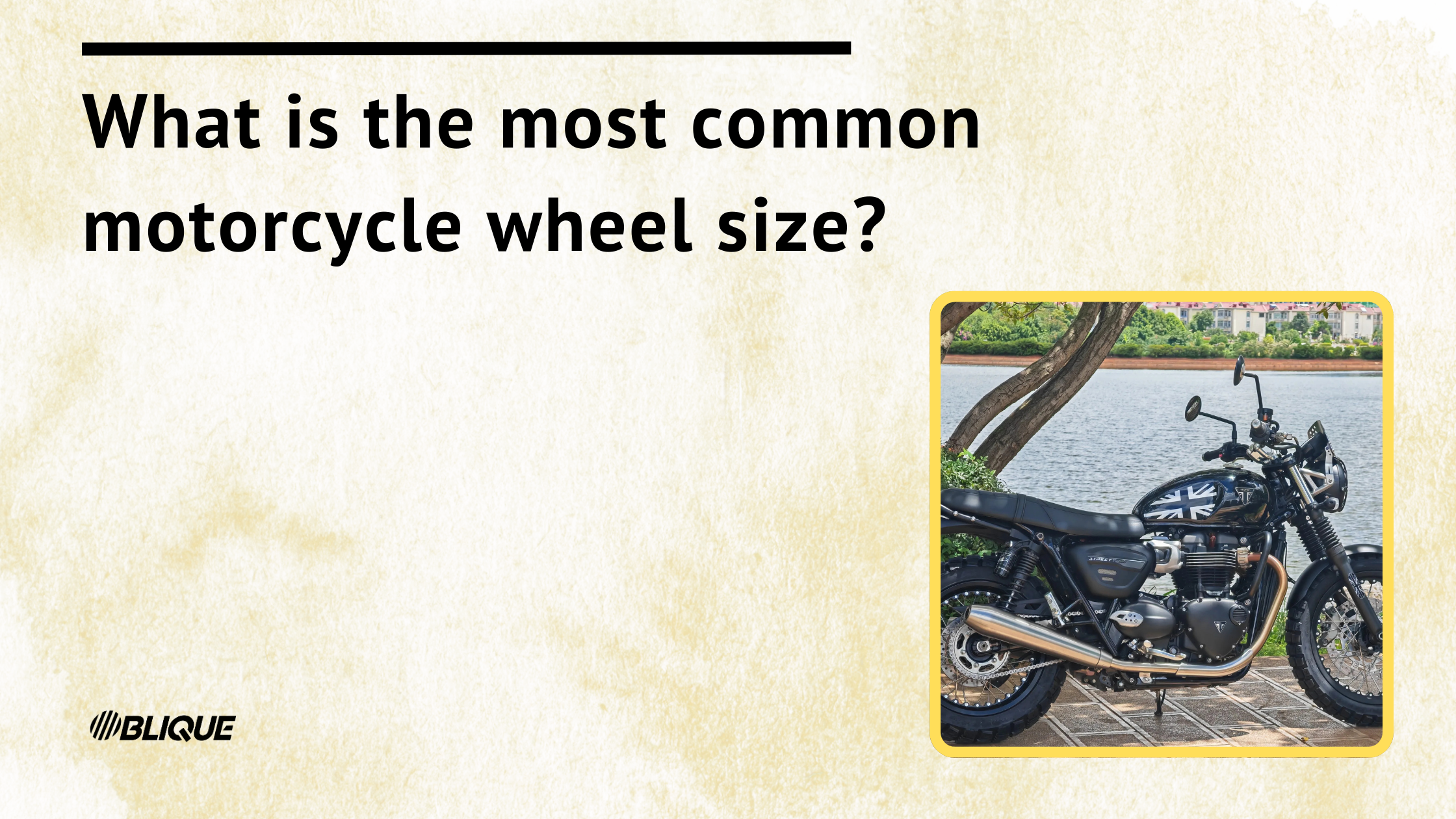
17 inches. Both front and rear on most modern sport bikes, naked bikes, and street machines.
It became standard because racers and engineers found it optimal for pavement performance. Tire companies built their best rubber for this size. Success bred more success.
If you’re buying a modern sport or street bike, expect 17-inch wheels. They’re the baseline for good reason.
Does wheel size affect motorcycle insurance?
Potentially, yes. If you modify your wheels from OEM specs, insurers may consider it a modification worth noting.
Non-stock changes can affect coverage or claims. Some insurers don’t care about wheels specifically. Others want to know about any modifications.
Best practice: Tell your insurance company what you’ve changed. Let them decide if it matters for your policy. Don’t find out the hard way after an incident.
Can I put larger tires on the same size wheel?
Technically, yes. Practically, be careful.
You can often go slightly wider or adjust aspect ratio within the same wheel size. A 180/55-17 instead of a 180/60-17. That kind of thing.
But clearance matters. Chain clearance. Swingarm clearance. Fender clearance. Suspension travel. Too wide or too tall and things start rubbing.
Handling changes too. Different tire profiles affect how the bike steers and how quickly it transitions. Sometimes better. Sometimes worse.
Stick within manufacturer recommendations when possible. Push limits carefully when you know what you’re doing.
How do I know what size wheels fit my motorcycle?
Start with your owner’s manual. It lists OEM specifications including wheel sizes.
Check your existing wheels directly. Size is stamped or printed on the rim. Front and rear separately.
Manufacturer specifications available online work too. Forums often have detailed fitment information from riders who’ve actually done the work.
For custom applications, measure your swingarm width, fork spacing, and brake caliper positions. Axle diameter matters. Bearing sizes matter. Rotor mounting matters.
When in doubt, consult professionals. Kineo offers fitting services to ensure proper wheel selection for your specific motorcycle.
Are spoked wheels available in all sizes?
Yes. Kineo builds spoked wheels covering essentially the entire range from small scooter wheels to large off-road sizes.
Benefits of spoked wheels include classic aesthetics, impact absorption characteristics, and repairability. Bend a spoke, replace the spoke. Bend a cast wheel, replace the wheel.
Modern tubeless spoked wheel technology eliminates the old tube requirement. Run performance tires designed for tubeless application on traditionally styled wheels.
Weight savings are possible too. Well-designed spoked wheels can be lighter than cast alternatives. Reduces unsprung mass, improves suspension response.
What’s better: 17-inch or 19-inch front wheel for adventure bikes?
Depends entirely on how you ride.
Choose 17-inch front if: Most riding is pavement. You want sportier handling. Rarely venture onto serious trails. Prioritize tire selection and performance rubber options.
Choose 19-inch front if: You actually ride off-road regularly. Trail stability matters more than street agility. You accept slightly slower steering for better rough-surface composure.
The 19/17 or 21/18 combinations exist because adventure riders need off-road capability without completely abandoning street performance. It’s always a compromise. Just pick the compromise that matches your reality.