Don't miss our new customer offer - up to 8% OFF! ( Code: kineo8off )

Tubeless Conversion vs True Tubeless Spoked Wheels: What’s the Difference?

This confuses a lot of riders. And honestly, it should. The terminology gets thrown around interchangeably when these are actually two very different things.
You’ve got tubeless conversion. Sealing up existing wheels that were never designed for tubeless use. DIY kits, professional services, various levels of success.
Then you’ve got true tubeless spoked wheels. Purpose-built from scratch. Engineered specifically to hold air without tubes. Different animal entirely.
For adventure riders, dual-sport enthusiasts, and touring motorcyclists, this distinction matters. A lot. You’re potentially putting serious miles on these wheels. Remote locations. Far from help. The reliability difference between a conversion that might leak and a factory-built system that won’t? That’s not academic. That’s getting home versus being stranded.
I’ve seen riders spend money on conversions that failed within months. I’ve also seen conversions that worked for years. The unpredictability is the problem. True tubeless eliminates that uncertainty. But it costs more. A lot more.
So which makes sense for you? Depends on your budget, your tolerance for risk, and how you actually ride.
What Are Tubeless Spoked Wheels?
Tubeless spoked wheels combine the flexibility and strength of traditional spoked construction with the convenience of running tubeless tires. Best of both worlds, theoretically.
The fundamental concept is simple. Normal spoked wheels have nipples that poke through the rim bed. Air escapes through those holes. That’s why you need tubes.
Tubeless spoked wheels seal that rim bed somehow. The nipples don’t penetrate the air chamber. Either they mount externally, or the chamber is sealed separately from where the spokes attach.
This lets you run tubeless tires directly on a spoked wheel. No tube. Plug repairs on the roadside. Gradual deflation instead of instant blowouts.
How Do True Tubeless Spoked Wheels Work?
True tubeless is factory-built technology. Not a retrofit. These wheels are designed from the ground up to hold air.
The engineering varies by manufacturer. Kineo uses a proprietary system where spokes can be adjusted from the hub side using a Torx wrench. The nipples never touch the air chamber. BMW’s cross-spoke design mounts spokes to the rim edge rather than through the rim bed. Alpina has their own sealed rim approach developed over decades.
Common elements across true tubeless designs: sealed rim bed construction, airtight chambers that are separate from spoke attachment points, special valve stems, CNC-machined components built to tight tolerances.
These aren’t aftermarket modifications. They’re purpose-built systems. The rim, spokes, hub interface—everything is engineered to work together for tubeless operation.
Kineo wheels, for example, use 7000 series aerospace-grade aluminum for rims, stainless steel spokes, and machining precision that ensures consistent sealing across every wheel they build. Each wheel gets individually tested before shipping.
BMW, Alpina, and other manufacturers take similar approaches with their own proprietary technologies. The common thread: engineering the solution rather than patching around a limitation.
What Is Tubeless Conversion for Spoked Wheels?
Tubeless conversion is the DIY or aftermarket process of sealing existing tube-type spoked wheels to make them tubeless-compatible.
Basic principle: you’ve got spoke nipples poking through the rim bed. Air leaks out those holes. Seal the holes, seal the air.
Sounds simple. Sometimes it is. Sometimes it absolutely isn’t.
Conversion takes a wheel that was designed for tubes and tries to make it do something it wasn’t built for. You’re working against the original engineering rather than with purpose-built design.
Some conversions work great. Others leak constantly. The variance is the issue.
Types of Tubeless Conversion Methods
Multiple approaches exist for converting tube-type wheels to tubeless. They range from cheap DIY experiments to professional services costing hundreds of dollars.
Each method has different reliability levels and cost implications. What works for one rider might fail for another on the same wheel type.
1. DIY Sealant Method
The cheapest approach. Also the least consistent.
Process: remove tire and tube, clean the rim bed thoroughly, apply sealant over all spoke nipples, let it cure, install a tubeless valve stem.
Common sealants include 3M Marine Sealant 5200, Seal-All, or various silicone caulks. Cost runs $10-50 per wheel depending on materials.
Important reality check: this requires your rim to have a safety bead. Many tube-type rims don’t. Without that safety bead, the tire can unseat from the rim during a blowout. Dangerous.
Results vary wildly. Some riders report thousands of trouble-free miles. Others can’t get the thing to hold air for a week. Application technique matters enormously. So does rim condition, environmental factors, and probably some luck.
Critical limitation: you can’t adjust spoke tension after sealing without breaking the seal. So your spokes better be perfectly tensioned before you start. Any future truing or maintenance means doing the whole conversion again.
2. Professional Conversion Kits (Outex, BARTubeless, etc.)
Proprietary systems like Outex from Japan represent the more reliable end of conversions. Still conversions. But engineered for the purpose.
Outex uses multiple tape layers, protective sheets, and pre-cut nipple covers. Systematic application process designed to create consistent seals.
Cost runs $130-150+ per wheel for the kit alone. Professional installation from services like Woody’s Wheel Works adds labor costs.
These are more reliable than DIY sealant methods. But they’re still conversions of wheels not designed for tubeless use. You’re still sealing holes that exist because the original design assumed tubes.
Best results come from grinding spoke nipples flat before applying the kit. Smoother surface, better seal. Extra step that matters.
3. Commercial Conversion Services
Professional wheel sealing services take the process out of your hands entirely.
Woody’s Wheel Works, Haan Wheels tubeless service, and similar operations use specialized sealants and application techniques developed through experience with hundreds of wheels.
They’ll typically refuse to convert wheels without safety beads. That’s actually a good sign. Means they’re thinking about your safety, not just taking your money.
Cost runs $150+ per wheel. Don’t always guarantee the seal works. Because they can’t. Conversions are inherently variable.
When these services work, they really work. Professional application quality makes a difference. But the fundamental limitation remains: you’re sealing a design that wasn’t meant to be sealed.
The Key Differences: Tubeless Conversion vs True Tubeless
Understanding the distinction requires looking at multiple factors. Not just “does it hold air?” but how reliably, how maintainable, how safe.
Engineering and Design
True Tubeless: Purpose-built from the ground up. Sealed rim beds designed that way from the start. Spokes engineered to not penetrate the air chamber. Manufactured to tight tolerances. No holes where air can escape because holes were never created there.
Many true tubeless wheels use cross-spoke or external nipple mounting systems. The spokes attach at the rim edge or through sealed passages. The air chamber remains uncompromised by design.
Conversion: Retrofit solution. Sealing existing holes using adhesives, tapes, or sealants. Working against the original design of the rim. The engineering created holes. You’re covering them up.
Relies on sealant integrity rather than mechanical engineering. The seal is added, not intrinsic.
Reliability and Air Retention
True Tubeless: Factory-tested seals. Consistent performance wheel to wheel. Minimal air loss during normal use. Designed to maintain pressure long-term without constant monitoring.
Backed by manufacturer warranties. TÜV certification or equivalent testing. Kineo individually tests every wheel before it ships. That consistency matters when you’re 200 miles from the nearest shop.
Conversion: Variable results. Even with identical wheels and identical kits, one conversion might seal perfectly while another leaks slowly.
Application quality affects everything. Temperature fluctuations can affect seal integrity. Sealant degrades over time. Some conversions fail completely within months. Others last for years without issues.
TPMS monitoring recommended for conversions. You need to know if pressure is dropping before it becomes a problem.
Spoke Maintenance and Adjustability
True Tubeless: Many designs allow spoke adjustment without breaking any seals. Kineo wheels can be trued using a Torx wrench from the hub side. Some designs allow spoke replacement without removing the tire.
Engineered for ongoing maintenance. The wheels will need truing eventually. The design accounts for that.
Conversion: Adjusting spoke tension typically breaks the seal. Any maintenance to the spokes means re-doing the conversion.
This forces a decision: tension your spokes perfectly BEFORE conversion and hope nothing changes. Or accept that any future maintenance costs time and money to re-seal.
Limits your options significantly over the wheel’s lifespan.
Weight Considerations
True Tubeless: Eliminates tube weight. Tubes weigh 675-785g or more. That’s real weight savings, especially as unsprung rotating mass.
However, some true tubeless wheels actually weigh more than tube-type due to the sealing mechanisms and stronger construction required. The tube weight savings can be offset by heavier rim construction.
Better designs use aerospace-grade materials to minimize this trade-off. But it exists.
Conversion: Removes tube weight but adds sealant weight. Net savings, typically. But less than you might expect, and less than purpose-built systems optimized for weight.
Cost Analysis
True Tubeless: High upfront investment. Kineo wheels run $1,200-2,500+ per set. Alpina similar range. Premium pricing for Italian and European manufacturing.
Custom-built to your specific motorcycle. Not cheap. But you’re paying for engineering, materials, and reliability.
Conversion: Budget-friendly entry point. DIY methods cost $10-50 per wheel. Professional kits $130-150+. Full services $150-300 per wheel.
Can reuse your existing wheels and hubs. Lower initial cost by a huge margin.
But factor in potential for repeated repairs, re-sealing, or complete failure requiring replacement anyway. The math gets complicated over time.
Safety Features
True Tubeless: Include safety beads as standard. Precision bead seats for proper tire mounting. Designed to tubeless tire specifications. Meet established safety certifications.
The safety bead keeps the tire on the rim during a blowout. Critical feature. Non-negotiable for tubeless operation.
Conversion: Depends entirely on whether your original rim has a safety bead. Many tube-type rims don’t have one.
Converting a rim without a safety bead creates real risk. During a blowout, the tire can unseat completely. Instant loss of control. This is why professional services refuse these conversions.
Puncture Repair
Both approaches allow roadside plug repairs. This is the main practical advantage of tubeless operation. Five to ten minutes with a plug kit versus twenty-plus minutes wrestling with a tube change.
Gradual air loss rather than instant deflation gives you time to react. Carry a plug kit instead of spare tubes. Less bulk, faster repairs.
Conversion caveat: May experience seal failure around nipples in addition to tread punctures. TPMS monitoring recommended so you know the difference between a pluggable tread hole and a failing conversion seal.
Advantages of True Tubeless Spoked Wheels
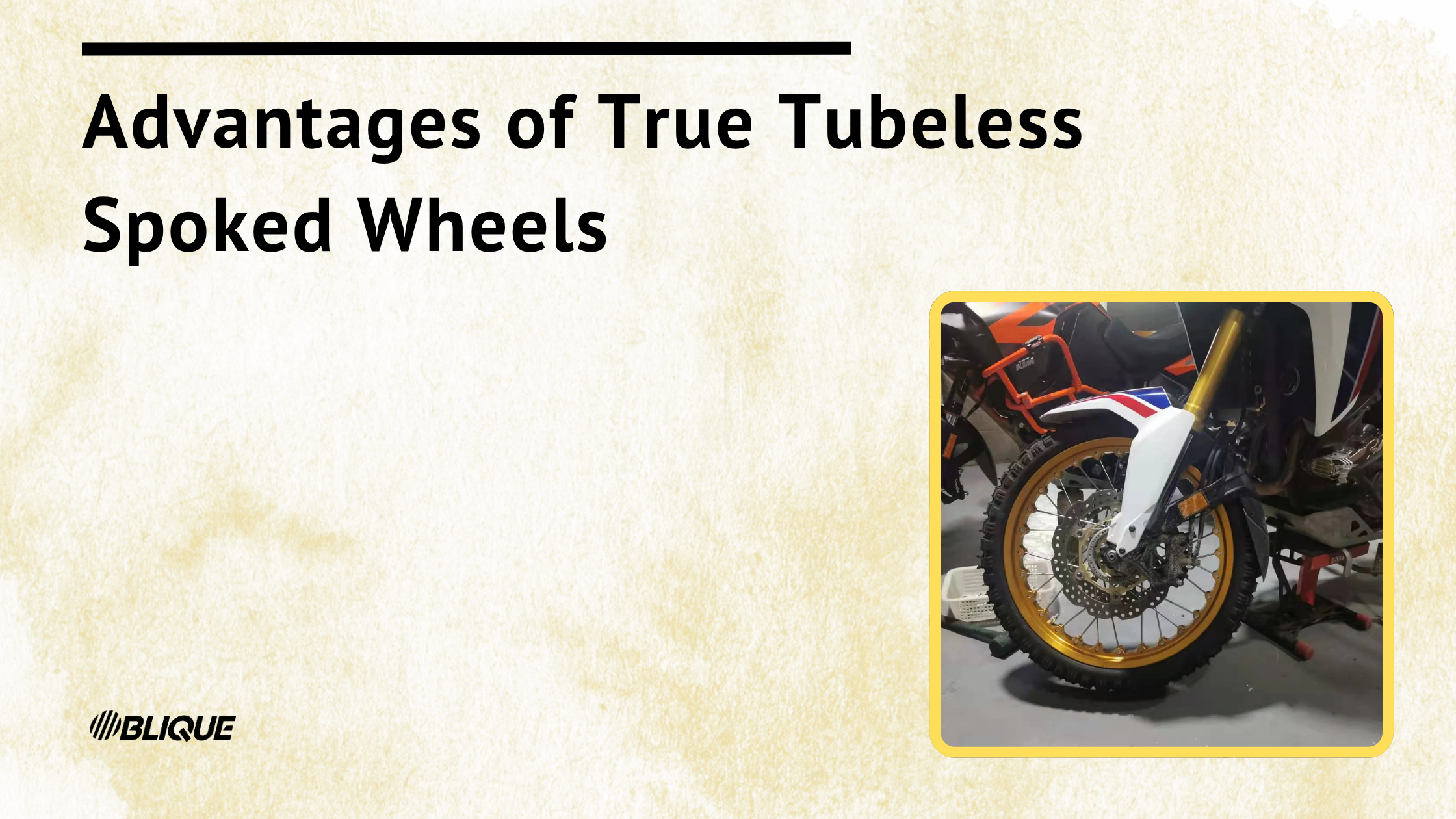
Factory reliability. Consistent seals across every wheel. No guessing whether yours will work.
Purpose-built design. Engineered for tubeless from the start, not retrofitted.
Retained spoke flexibility. You still get the impact absorption benefits of spoked construction for off-road riding.
Faster puncture repairs. Plug kits work. Five minutes on the side of the road instead of a major operation.
Gradual deflation. Punctures let air out slowly. You notice before it’s critical. No sudden tube blowouts.
Weight savings. Tubes are heavy. Eliminating them improves handling and suspension performance.
Spoke adjustability maintained. Design-dependent, but good systems like Kineo allow truing without breaking seals.
Cooler running temperatures. Tubes generate heat through friction. Tubeless runs cooler.
Customization options. Kineo offers custom finishes including matte and gloss black, anthracite grey, white, polished aluminum. Spoke bushings in multiple colors. Build wheels that match your bike’s aesthetic.
Manufacturer warranties and certifications. TÜV testing. Real accountability. Someone stands behind the product.
Advantages of Tubeless Conversion
Cost-effective. A fraction of true tubeless wheel prices. Significant for budget-conscious riders.
Retain existing wheels and hubs. No need to replace perfectly functional components. Just seal them.
Achieve many tubeless benefits without major investment. Plug repairs, gradual deflation, no tubes to carry.
Convert gradually. Do the rear wheel first, test it, then convert the front if satisfied. Spread the risk.
Reversible. If conversion fails, reinstall tubes and you’re back where you started. Nothing lost except time and the conversion cost.
Accessibility. Kits available worldwide. Don’t need to wait months for custom wheels. Start riding tubeless now.
Suitable for testing. Not sure tubeless is right for you? Convert first. If you love it, invest in true tubeless later. If not, minimal loss.
Disadvantages and Limitations
Both approaches have downsides. Honest assessment matters before committing.
True Tubeless Limitations
High initial cost. $1,500-2,500+ for quality sets from Kineo, Alpina, or similar. Not a casual purchase.
Longer lead times. Kineo wheels take 12-16 weeks for custom builds. Planning required.
Not available for all motorcycle models. Custom builds cover most popular bikes, but obscure or older models might not have options.
Potentially heavier than tubed setups. Depends on the specific brand and construction. Some true tubeless wheels weigh more than the tube-type wheels plus tubes they replace.
Limited local repair support. Your local shop might not have experience with these wheels. Specialized knowledge required for some maintenance.
Requires tubeless-specific tires. Common for modern bikes. But worth confirming availability in your preferred tire brands.
Initial setup can be tricky. Seating tubeless beads requires proper technique. Some tires seat easier than others.
Conversion Limitations
Inconsistent results. The fundamental problem. Seal quality varies greatly even with identical setups.
Safety bead requirement. Not all tube-type rims have safety beads. Without one, conversion is dangerous. Check your specific rims before attempting.
Spoke adjustment breaks seal. Major maintenance limitation. Any truing or spoke work means re-doing the conversion.
Gradual air loss common. Many conversions leak slowly. Functional, but requires monitoring. TPMS strongly recommended.
Sealant degradation. Time and environmental factors break down seals. May need re-sealing after a year or two. Or sooner.
DIY failures waste resources. Failed conversions cost time and money. Sometimes multiple attempts before success or giving up.
Tubeless tires harder to mount on converted rims. Stiffer beads fighting against rims not optimized for them. More wrestling during tire changes.
Certain rims not recommended. 21-inch front wheels on some bikes like Yamaha Ténéré 700 and BMW F800GS lack safety beads or have other characteristics making conversion inadvisable.
Repair logistics. If your conversion fails mid-trip, you’re either installing tubes as backup or shipping wheels back to a service provider. Neither is convenient.
Which Brands Offer True Tubeless Spoked Wheels?
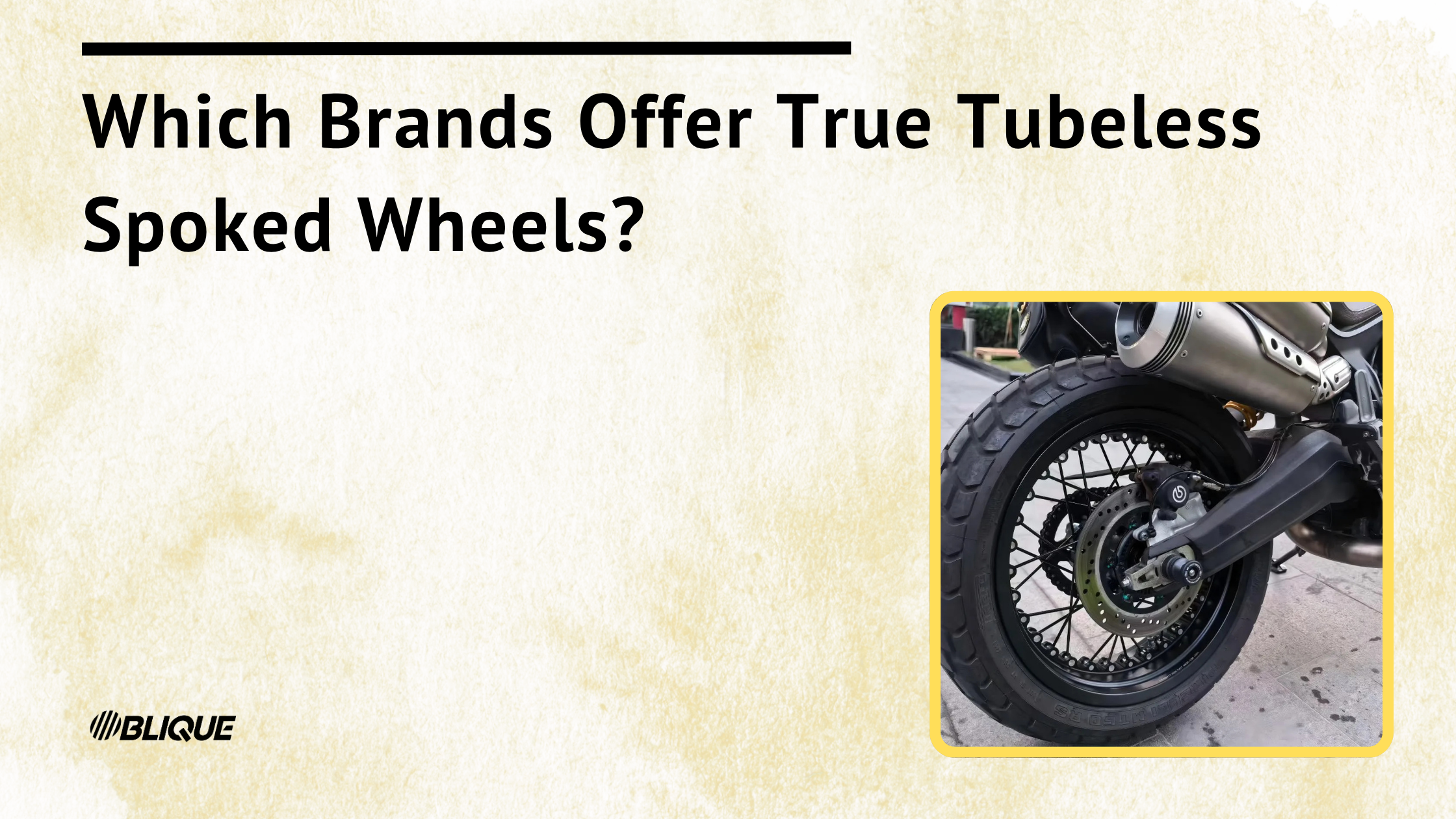
Several manufacturers produce genuine tubeless spoked wheels. Quality and features vary. Here’s the landscape.
Kineo Wheels
Industry leader for aftermarket true tubeless spoked wheels. Italian manufacturing with proprietary sealing technology.
The key Kineo advantage: spoke adjustability. Their design allows truing from the hub side using a Torx wrench. You can maintain proper spoke tension over the wheel’s lifetime without compromising the tubeless seal.
Materials are aerospace-grade. 7000 series aluminum alloy rims. Stainless steel spokes. CNC machining throughout. Not cutting corners on construction.
Every wheel is hand-built and individually tested before shipping. That testing matters. Consistent quality control means consistent results.
Wide motorcycle compatibility covers BMW, KTM, Honda, Yamaha, Ducati, Triumph, and more. Most popular adventure and dual-sport platforms have Kineo options available.
Customization goes beyond just fit. Choose rim finishes in matte black, gloss black, anthracite grey, white, or polished aluminum. Spoke bushings come in multiple colors. Build wheels that look exactly how you want them.
TÜV certified. Real testing and approval, not just marketing claims.
Individual spoke replacement without tire removal is possible on some configurations. When you need maintenance, it’s actually maintainable.
Kineoshop.com is an authorized retailer for these wheels.
Alpina Wheels
Italian manufacturer with history stretching back to the 1930s. OEM supplier to European motorcycle brands. When manufacturers need spoked wheels, Alpina often builds them.
Proven factory-level technology. These aren’t aftermarket parts trying to match OEM quality. This is where OEM quality comes from.
Polished forged rims with stainless spokes. Classic aesthetic. Built tough.
Available for KTM, BMW, Japanese brands. Coverage is broad.
Competitive pricing starts around $1,550+ per set. Not cheap, but positioned below some competitors.
Direct purchase options from Italy available for some configurations.
Woody’s Wheel Works
American company taking a different approach. They offer both conversions and custom-built tubeless spoked wheels.
Reputation built on durability. Off-road and desert racing put equipment through punishment. Woody’s wheels survive that environment. Baja veterans and expedition riders trust them.
Hand-laced to custom specifications. Work with multiple rim suppliers depending on application requirements.
Not the lightest option. But extremely tough. If you’re planning to abuse your wheels in harsh conditions, strength matters more than grams saved.
OEM Factory Options
Some motorcycle manufacturers offer tubeless spoked wheels as stock equipment. Not aftermarket. Factory original.
BMW R1200GS and GS models come with cross-spoke tubeless wheels. The design mounts spokes to the rim edge, keeping the air chamber sealed.
Triumph adventure bikes offer similar technology on some models.
KTM premium adventure motorcycles include tubeless spoked options.
Yamaha Super Ténéré uses external-mounted spokes achieving tubeless capability.
Suzuki V-Strom models offer tubeless spoked configurations.
Worth noting: 19-inch tubeless fronts are more common than 21-inch on Japanese bikes. The 21-inch size presents engineering challenges that some manufacturers avoid.
Can I convert any spoked wheel to tubeless?
Not safely. The wheel must have a safety bead on the rim.
Many 21-inch front wheels and some other configurations lack this critical feature. The safety bead keeps the tire seated on the rim during a blowout. Without it, tire can unseat completely. Very bad outcome at speed.
Check your specific rim before attempting any conversion. Look for the raised ridge that prevents the tire bead from falling into the rim center during deflation.
Professional services like Woody’s Wheel Works refuse to convert rims without safety beads. That tells you something about the risk involved.
How long does a tubeless conversion last?
Highly variable. This is the honest answer that conversion enthusiasts sometimes don’t want to hear.
Some riders report years of reliable service. Thousands of miles, no issues. Conversions can absolutely work long-term.
Others experience failures within months. Seals degrade. Temperature changes stress the sealant. Application quality wasn’t quite good enough.
Success depends on installation quality, environmental factors, riding conditions, and probably some factors nobody fully understands.
True tubeless wheels, by comparison, last the lifetime of the rim with proper maintenance. The seal is engineered, not hoped for.
Can I install a tube in true tubeless wheels if needed?
Yes. This is actually an advantage of true tubeless wheels.
If you damage a rim severely, or find yourself somewhere without plug repair capability, you can install a tube as emergency backup.
Remove the tubeless valve and install a tube-type valve stem. Mount tire with tube inside. Ride home.
Options are good. True tubeless gives you options.
Do I need special tires for tubeless spoked wheels?
Tubeless-spec tires are recommended for both conversions and true tubeless wheels.
Tubeless tires have stiffer construction for better air retention. Proper bead design that seats correctly. Built for the application.
Can you technically run tubes in tubeless tires? Yes. Common on retro bikes with spoked wheels. Tubes go inside tubeless tires without issues.
But tubeless-in-tubeless is the optimal setup. Using the system as designed.
Will tubeless wheels work for off-road riding?
Yes. Excellently, actually.
Benefits multiply off-road: easier puncture repair when you’re miles from pavement, gradual deflation gives you time to react, reduced rotating weight improves handling over rough terrain.
Spoked construction maintains flexibility for impact absorption. You’re not giving that up by going tubeless. You’re adding convenience to existing capability.
One caveat: extreme rim damage scenarios might favor tubes. A badly bent rim with cracked seals won’t hold air tubeless. A tube inside that bent rim might still work enough to limp out.
But for normal off-road use including rocks, roots, and desert conditions, tubeless is preferred by many adventure and enduro riders. The convenience factor wins.
How much weight do tubeless wheels save?
Eliminating tubes saves approximately 675-785g per tube. That’s 1.5-1.7 lbs each. Total around 3-4 lbs for front and rear combined.
Some true tubeless wheels add weight back through heavier construction. The sealing systems and stronger rims needed add mass. Net savings varies by brand.
Real-world reports show 6-8 lbs total savings possible with optimized setups. Triumph T120 owners have documented savings in that range switching to quality tubeless spoked wheels.
The weight matters because it’s unsprung rotating mass. Every gram saved at the wheel improves handling and suspension performance more than the same gram saved elsewhere on the bike. Physics works in your favor here.
naturally like your web site but you need to test the spelling on several of your posts.
Several of them are rife with spelling problems and I find it very bothersome to tell the reality on the other hand I will certainly come back again.
I’m really inspired with your writing skills as well as with the format in your blog.
Is this a paid subject or did you modify it your
self? Anyway stay up the excellent high quality
writing, it’s rare to see a nice blog like this
one nowadays..
Hey would you mind letting me know which web host you’re working with?
I’ve loaded your blog in 3 different browsers and I must say this blog loads a lot faster
then most. Can you recommend a good internet hosting provider at a
reasonable price? Thanks, I appreciate it!