Don't miss our new customer offer - up to 8% OFF! ( Code: kineo8off )

Can You Run Tubeless Tires on Spoked Rims?

Yes. You can run tubeless tires on spoked rims. But only under specific conditions.
Here’s the problem. Traditional spoked wheels leak air through the spoke nipples. Air just escapes right through the holes where spokes attach to the rim. That’s why spoked wheels have always needed inner tubes.
But modern technology solved this. Factory tubeless spoked wheels exist now. So do conversion methods for existing wheels.
BMW does it. KTM does it. Kineo builds entire product lines around it. The old belief that spokes always require tubes? Outdated.
This guide covers everything. Factory tubeless spoked wheel technology. DIY conversion methods. What works, what doesn’t. Safety considerations you can’t ignore. And whether the whole thing is worth the hassle for your specific situation.
What Are Spoked Rims and Why Do They Traditionally Require Tubes?
Spoked wheels have been around forever. Simple concept. Metal spokes connect the hub to the rim, creating a wheel that’s strong, repairable, and absorbs impacts beautifully.
The construction creates a problem though. Each spoke attaches to the rim through a hole. A nipple threads onto the spoke end, pulling it tight against the rim. These holes penetrate the air chamber where the tire holds pressure.
Air finds those holes. Every single time.
Understanding the Air Leak Problem
The leak happens at the spoke-rim interface. Specifically through the holes drilled in the rim where spokes attach via nipples.
Picture it. Rim has holes. Nipples thread through holes. Air escapes around nipples. No seal exists because the wheel wasn’t designed for one.
With tubed tires, the inner tube solves this completely. The tube creates a barrier between the rim and tire. Air stays in the tube. Doesn’t matter that the rim has holes because the tube doesn’t touch them directly. Rim strip covers the nipples, protecting the tube from puncture.
Cast wheels work differently. No holes. The wheel is one solid piece of metal. Naturally airtight. That’s why tubeless tires became standard on cast wheels decades ago.
Advantages of Spoked Wheels
So why bother with spoked wheels at all if they have this air leak problem?
Because they do things cast wheels can’t.
Better shock absorption for off-road. Spokes flex slightly on impact. They distribute forces across the entire wheel structure. Hit a rock or root and the wheel absorbs it rather than transmitting everything straight to the chassis.
Repairable. Bend a spoke? Replace that spoke. Break a nipple? New nipple. Cast wheel gets damaged? Buy a new wheel. Big difference when you’re 500 miles from the nearest dealer.
Lighter weight in many applications. Quality spoked wheels can be lighter than cast alternatives. Less unsprung mass means better suspension performance.
Durability on rough terrain. The flexibility that absorbs shocks also prevents cracking. Cast wheels can crack from impacts that spoked wheels shrug off.
Aesthetic appeal. Let’s be honest. Spoked wheels look right on adventure bikes, scramblers, classic motorcycles. The wire wheel aesthetic matters to people.
This is why the adventure touring community prefers spoked wheels. BMW GS riders, Africa Twin owners, Ténéré enthusiasts. They want wheels that handle trail abuse and can be repaired in remote locations.
How Tubeless Tires Work on Standard (Cast) Rims
Understanding tubeless technology on cast wheels helps explain what’s needed for spoked applications.
Tubeless tires use a special bead design that seals against the rim. The bead is stiffer and shaped to lock into the rim’s bead seat. Creates an airtight seal between tire and metal.
The tire’s inner surface has a butyl coating. Airtight layer that holds pressure without a separate tube. Air goes in, stays in.
Valve stem integrates directly into the rim. Just a hole with a rubber-sealed valve. No tube involved.
Here’s the clever part. Tubeless tires seal around punctures. Nail goes through the tread? The tire material grips the nail. Air escapes slowly if at all. Pull the nail, plug the hole, keep riding. Five minute fix.
Tube-type tires fail catastrophically with punctures. The tube is a balloon. Puncture the balloon and it deflates almost instantly. That’s dangerous at highway speeds.
Tubeless is genuinely safer. Slow deflation versus instant failure. You have time to recognize the problem and pull over safely.
The Tubeless Revolution for Spoked Wheels
This isn’t new technology. People forget that.
Honda built the XL600M back in the 1980s with tubeless spoked wheels. The engineering existed decades ago. Just wasn’t common.
BMW changed everything with the R1200GS. Brought tubeless spoked wheels mainstream on a bike that sold in massive numbers. Suddenly adventure riders experienced tubeless convenience without giving up spoked wheel benefits.
Now it’s standard on premium adventure bikes. BMW GS series. KTM Adventure models. Triumph Tiger. Yamaha Ténéré. Factory tubeless spoked wheels from manufacturers who figured out the engineering.
The “old belief” that spokes always need tubes? Dead. Manufacturers killed it by proving otherwise.
Factory Tubeless Spoked Wheels: How They Work
Two main approaches exist for factory tubeless spoked wheels. Both solve the air leak problem. Just differently.
Spoke Attachment Outside the Air Chamber
This is the key innovation on many factory wheels.
Instead of spokes attaching through the rim’s inner surface, they attach to the rim flange or edge. Outside the air chamber entirely. The part of the rim holding air has no holes. Nothing to leak.
Creates a completely sealed air cavity. Functions like a cast wheel internally while maintaining spoked wheel benefits externally.
Terms you’ll hear: “outboard spoke attachment” or “cross-spoked” design. Same concept, different marketing language.
BMW GS series uses this approach. Yamaha Ténéré. Most modern adventure tourers with factory tubeless spoked wheels.
Sealed Nipple Technology
Alternative approach. Keep traditional spoke placement but seal each nipple individually.
Kineo wheels use this method. Proprietary sealing system at every spoke nipple that maintains an airtight seal while allowing full spoke adjustability.
This matters. With outboard spoke designs, adjusting tension or truing the wheel can be limited. Sealed nipple technology preserves traditional serviceability.
Kineo’s wheels carry German TÜV certification. That’s serious validation. TÜV doesn’t certify products that don’t meet rigorous safety standards.
Italian craftsmanship with aerospace-grade materials. Hand-built construction. Not mass-produced components from the lowest bidder.
Premium Tubeless Spoked Wheel Manufacturers
Kineo stands out as the primary example for premium tubeless spoked wheels.
CNC-machined 7000-grade aluminum rims. Hand-built in Italy. Proprietary sealing technology that actually works long-term. These aren’t cheap wheels, but they’re built to standards that justify the cost.
Customization options include various rim widths, spoke colors, and finishes. You’re not stuck with whatever the factory offers.
TÜV certification. Four-year warranties. Fitment available for BMW, KTM, Honda, Yamaha, Ducati, Triumph, and more.
KineoShop.com specializes in these wheels. Fitment guides for specific motorcycles. Custom build options for riders wanting particular specifications.
Other manufacturers worth knowing:
Alpina uses rubber O-rings at nipples for sealing. Solid reputation in the adventure market.
Woody’s Wheel Works is the American option. Quality builds, good customer service.
Haan Wheels operates from the Netherlands. Popular in Europe.
Converting Traditional Spoked Wheels to Tubeless
Don’t want to buy new wheels? Conversion is possible.
Riders convert existing tube-type spoked wheels to tubeless regularly. Africa Twin and Ténéré 700 owners do this constantly. Forums are full of conversion threads.
But it requires the right rim type. Correct technique. And ongoing attention.
Understanding Rim Types: MT vs WM
This is critical safety information. Don’t skip it.
MT rims (Metric Type) have a safety bead. A ridge or lip that prevents the tire from coming off the rim when deflated. The bead seat has a specific 5-degree angle that locks the tire in place.
WM rims (Wire Mount or Well Mount) lack this safety feature. Flat profile. No ridge keeping the tire seated.
MT rims are essential for safe tubeless conversion. That safety bead exists specifically for tubeless applications. Lose pressure on an MT rim and the tire stays on. Lose pressure on a WM rim and the tire can come completely off at speed.
That’s not a “might happen” scenario. It happens.
Some bikes have MT rear but WM front. Africa Twin, for example. The rear is safe for tubeless conversion. The front requires more caution or different solutions.
Look for the ridge or hump on MT rims. It’s visible when you examine the bead area. WM rims are smooth and flat where MT rims have that safety lip.
DIY Conversion Methods
The goal is simple: make the spoke nipple area airtight.
How you achieve that varies. Multiple approaches exist, all targeting the same problem.
Common thread across all methods: thorough cleaning matters enormously. Wire brush the nipples. Clean with acetone or alcohol. Remove all dirt, grease, and oxidation. Sealant won’t stick to contaminated surfaces.
Sealant Method
Products that work: 3M Marine Adhesive Sealant 5200, Seal-All, Loctite 290, Permatex 2900, silicone RTV, Sikaflex 221. Some people use truck bed liner or Flex Seal.
Process:
Remove tire, tube, and rim strip. Clean everything thoroughly. Wire brush the spoke nipples and surrounding rim surface. Wipe with acetone or isopropyl alcohol.
Apply sealant over each spoke nipple and across the rim dish. Some people fill the entire nipple cavity. Others just coat the surface. Install a tubeless valve stem.
Let cure 24-48 hours minimum. Rushing this causes failures.
Install tire, inflate, check for leaks with soapy water.
Pros: Low cost. $10-20 in materials. Accessible products from any hardware store.
Cons: Variable results. May require maintenance or reapplication. Adjusting spokes later can break the seal.
Tape Method
Products: 3M 4411N or 4412N sealing tape, Gorilla tape, Nashua 324A foil tape, fish pond liner tape.
Process:
Seal nipples first with sealant (as above). Let cure. Then cover with adhesive tape layer for redundant protection.
The tape stays flexible, conforms to the rim surface, and provides backup sealing.
Thicker tape like 4412N is more durable but makes mounting tires harder. The tire bead has to slide over that tape layer.
Many experienced converters use both: sealant first, tape over top. Belt and suspenders approach.
Proprietary Conversion Kits
Outex Kit is the most recognized name.
Includes pre-cut nipple tapes, seal tape, protection sheet, valve, and instructions. Designed for DIY installation by someone willing to follow directions carefully.
Requires MT rim with safety bead. Different valve options for WM versus MT rims.
Cost runs around $140-150 per wheel. Not cheap, but not outrageous either.
Professional services offer more reliable sealing at higher cost:
Woody’s Wheel Works provides sealing service at roughly $150 per wheel. Requires safety bead rims. No guarantee offered, which tells you something about the inherent variability.
BARTubeless in Italy applies polymer sealing with a 4-year guarantee. Around £420 per wheel. The guarantee suggests confidence in their method.
CWC in the UK uses vulcanizing band seals. Another European option.
Haan Wheels builds sealed wheels from scratch. Around £1500 per set. You’re buying new wheels at that point, not converting existing ones.
Tubliss and Alternative Systems
Tubliss is different. Not sealing the rim at all.
A high-pressure bladder (110 PSI) creates a 360-degree rim lock. The bladder presses the tire bead against the rim, sealing it even without MT rim safety bead. Tire holds low pressure while bladder holds high pressure.
Works on dirt bikes with narrow rims (2.15 inches or less). Available in 18-inch, 19-inch, and 21-inch sizes only.
Not ideal for adventure touring though. The bladder requires maintenance to keep at proper pressure. Wide adventure bike rims don’t fit the system well. It’s designed for motocross and enduro, not loaded-up GS bikes.
Nuetech Prolock appeared in 2025 as an alternative. Aluminum clamps with rubber backing. Similar concept, different execution.
Important note: these systems are NOT street legal in the US for on-road use. Off-road applications only.
Can You Use Tubeless Tires with Tubes on Spoked Rims?
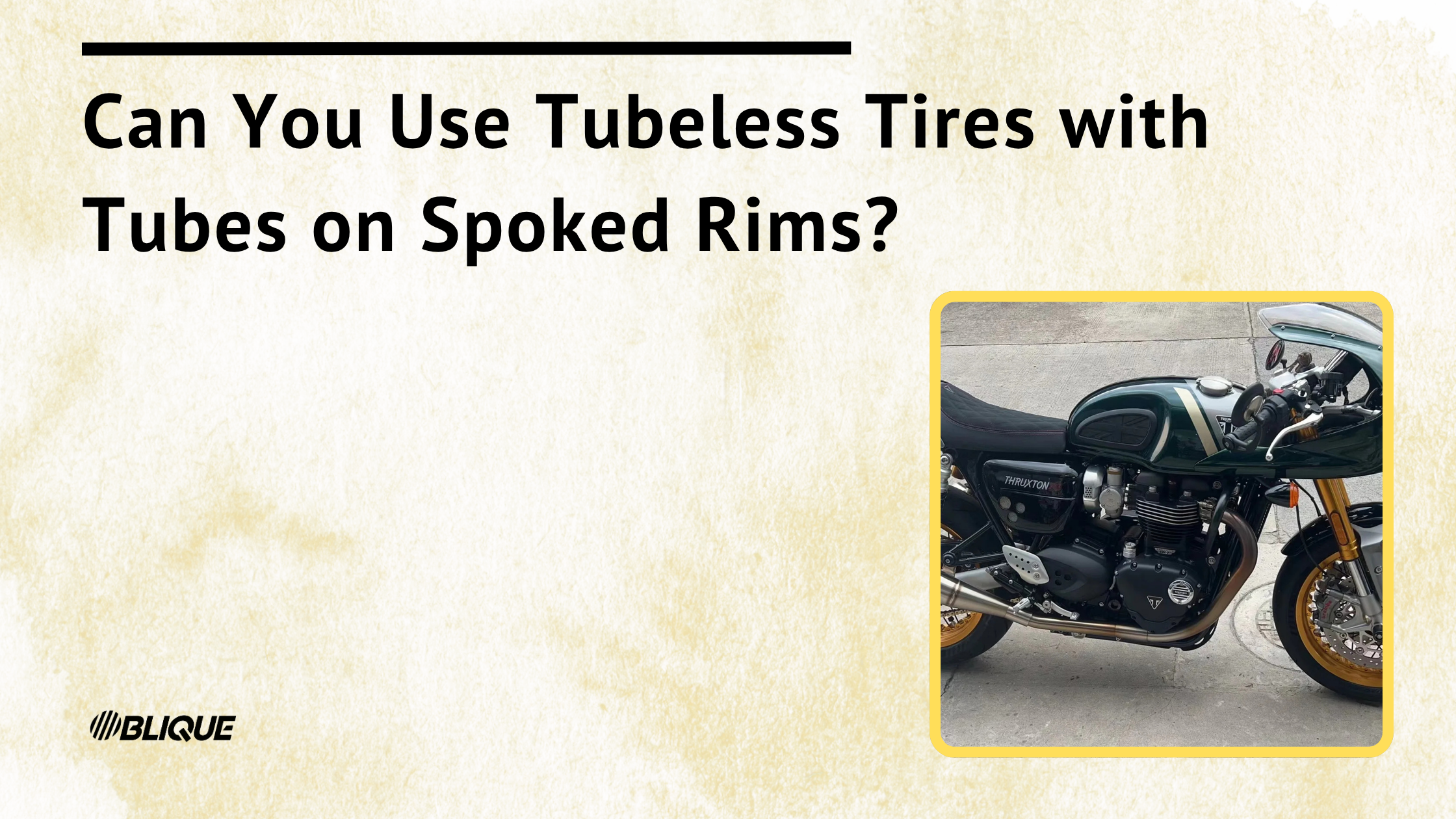
Yes. Completely common and safe practice.
Tubeless tires accept tubes just fine. Many riders do exactly this on spoked bikes. Run a tubeless tire because that’s what’s available in their size, but install a tube because their rim isn’t set up for tubeless.
Important distinction: tubeless tire on spoked rim WITH tube is different from tubeless tire on spoked rim WITHOUT tube. The first is standard practice. The second requires sealed rims.
Some considerations when running tubes in tubeless tires:
Friction between tube and tire generates extra heat. The tube moves slightly against the tire’s inner surface. This reduces the tire’s speed rating by approximately one level. A W-rated tire effectively becomes V-rated.
The inner surface of tubeless tires can be rougher than tube-type tires. It’s designed for airtightness, not tube compatibility. Some riders apply talcum powder to reduce friction.
These are minor concerns for most riders. Running tubes in tubeless tires works fine for the vast majority of applications.
Advantages of Running Tubeless on Spoked Rims
Why bother with all this conversion hassle? Because the benefits are real.
Easy Roadside Puncture Repair
Main advantage. Nail in your tire? Plug kit fixes it in 5-10 minutes. Don’t even remove the wheel.
Compare to tube repair. Remove the wheel from the bike. Break the bead. Pull out the tube. Find the hole. Patch or replace the tube. Reinstall tube without pinching it. Reseat the bead. Remount the wheel. 30-60 minutes if everything goes smoothly.
And that assumes you don’t pinch the new tube during installation. Which happens constantly. Ask anyone who’s done it roadside.
For solo riders in remote locations, tubeless convenience is massive. Pull over, plug, ride. No assistance needed. No lengthy roadside repair session.
You can still carry a tube as backup for sidewall damage. Plugs only work for tread punctures.
Slower Air Loss During Punctures
Tubeless deflates slowly because air only escapes around the penetrating object. Nail goes through, sits in the hole, partially seals itself. Pressure drops gradually.
Tube-type suffers catastrophic instant deflation. The tube is an inflated balloon. Puncture anywhere and the whole thing goes flat almost immediately.
That gradual deflation provides crucial time. You feel the handling change. You slow down safely. You pull over under control.
At highway speeds, instant deflation is dangerous. Really dangerous. Gradual deflation is manageable.
Major safety advantage that’s hard to overstate.
Reduced Weight and Heat
Eliminating the inner tube saves weight. Less rotating mass. Less unsprung mass.
This improves suspension response and handling feel. Small difference, but real.
Lower friction means cooler running temperatures. Tube moving against tire generates heat. No tube, no friction, less heat.
Cooler tires last longer. The rubber doesn’t degrade as quickly from heat cycling.
Better Performance Characteristics
Tubeless tires can run at more precise pressures. Tubes add a variable. The tube has its own characteristics that affect how the tire performs.
Improved fuel efficiency from reduced rolling resistance. Again, small but measurable.
Better grip and traction on pavement. Tubeless tires were developed for performance applications and it shows.
Higher speed ratings typically available in tubeless designs. Manufacturers put their best technology into tubeless tires.
Disadvantages and Limitations of Tubeless Spoked Wheels
Honesty time. This isn’t all upside.
Initial Cost
Premium factory tubeless spoked wheels are expensive. Kineo wheels run $1000+ per wheel. Quality costs money.
Conversion costs vary:
- DIY sealant/tape: $20-50 per wheel
- Proprietary kits: $140-150 per wheel
- Professional sealing: $150-500 per wheel
Long-term value argument exists. No repeated tube replacements. Fewer roadside emergencies. Less time spent on repairs. But the upfront hit is real.
Installation Complexity
DIY conversions require patience. Proper technique. Attention to detail. Miss a step and you’re chasing leaks.
Mounting tubeless tires on spoked rims is harder than cast wheels. Stiffer beads. Need a powerful compressor to seat the bead properly. Home compressors often can’t do it.
First-timers face a learning curve. Expect frustration.
Professional installation makes sense for those lacking experience or tools.
Not Ideal for Extreme Off-Road
Tubeless can unseat at very low pressures. Under 15 PSI during hard impacts and the tire might come off the bead.
Reseating a bead without a powerful compressor is difficult. Out on the trail, you probably don’t have a shop compressor.
Bent rim creates sealing challenges. The rim needs to be true for tubeless to work. Bend it on a rock and you’ve got problems.
Hardcore off-road riders may prefer tubes or Tubliss for extreme conditions. When you’re airing down to 12 PSI for sand or rock crawling, tubeless risks make less sense.
For 70/30 or 60/40 adventure riding? Tubeless works fine. For 90/10 dirt riding? Consider your options more carefully.
Maintenance Considerations
Monitor pressure regularly. Install TPMS sensors if possible, especially for DIY conversions. Slow leaks happen and you need to catch them early.
Adjusting spoke tension on DIY sealed wheels may break the seal. True a wheel and you might have to reseal it.
Sealants can degrade. May require inspection and refresh over years.
DIY results vary. A lot. “Your mileage may vary” definitely applies here. Some riders report years without issues. Others chase leaks constantly.
Rim Compatibility Requirements
MT rims with safety bead are strongly recommended. Already covered this, but it’s important enough to repeat.
WM rims without the safety lip are risky. The tire could come off the rim if deflated at speed. Not theoretical. It happens.
Front 21-inch MT rims are harder to find than rear 18-inch MT rims. Front wheel conversions often face more challenges.
Some bikes have MT rear but WM front from factory. Know what you’re working with before starting a conversion.
Can any spoked rim be converted to tubeless?
No.
Only rims with MT safety bead are recommended for safe conversion. The safety bead prevents tire separation when deflated. Without it, conversion is risky.
Some professional services refuse to seal WM rims entirely. They know the liability.
Rim must also be true, undamaged, and appropriate width for the chosen conversion method. Bent or damaged rims won’t seal properly.
Do I need special tires for tubeless spoked wheels?
Yes. Use tires marked “TL” or “Tubeless.” Not “TT” or “Tube Type.”
Tubeless tires have proper bead profile for sealing against the rim. They have butyl inner coating that holds air.
Tube-type tires lack these features. They’re designed assuming a tube handles the air retention.
However, you CAN install a tube inside a tubeless tire if needed. Emergency repair or certain WM rim applications. The tire works with or without tubes. You just can’t run a tube-type tire tubeless.
How long does a DIY tubeless conversion last?
Varies wildly.
Some riders report 2-3 tire changes spanning multiple years with zero issues. Same seal, no leaks, no problems.
Others experience leaks within weeks.
Quality of preparation and application determines longevity. Thorough cleaning, proper sealant, adequate cure time, good technique. Skip any of these and expect problems.
Professional sealing typically lasts the life of the rim. They have better processes and materials.
Adjusting spoke tension may compromise DIY seals. Keep that in mind for long-term maintenance.
Are factory tubeless spoked wheels better than conversions?
Generally yes.
Factory wheels like Kineo are designed from the ground up for tubeless use. Proprietary sealing technology developed specifically for this application. Warranties backing the product. TÜV certification validating the safety.
Quality professional conversions can also be reliable. The BARTubeless 4-year guarantee suggests confidence in their method.
DIY conversions are most variable. Best case, they work great for years. Worst case, constant headaches.
For riders who value reliability and are willing to pay for it, factory tubeless spoked wheels make the most sense.
What happens if my tubeless spoked wheel goes flat?
Tire plug kit handles tread punctures. Five-minute fix maximum. Plug the hole, reinflate, ride.
Larger damage or sidewall tears need a tube. Carry a spare tube as backup for serious damage. Tubeless isn’t magic. It handles most punctures but not catastrophic damage.
Factory tubeless spoked wheels can accept tubes. The sealed rim doesn’t prevent tube installation. You just don’t need tubes for normal operation.
Safety bead on MT rims prevents tire from coming completely off even when fully flat. You lose pressure but maintain basic tire position on the rim.
Can I run lower tire pressures with tubeless spoked wheels?
Factory tubeless spoked wheels with MT rims can run moderate low pressures safely. 18-22 PSI for off-road sections. The safety bead keeps everything in place.
DIY conversions on WM rims should not air down significantly. Stay at 25+ PSI minimum. No safety bead means higher risk of tire separation at low pressures.
Tubliss systems are specifically designed for low pressure off-road use. That’s their whole purpose.
Adventure bikes are heavy though. Too heavy to safely run very low pressures regardless of wheel type. Risk of rim damage increases dramatically when you’re running 15 PSI on a 550-pound loaded bike hitting rocks.
Is professional sealing worth the cost?
Depends on your priorities.
Professional sealing runs $150-500 per wheel. You get reliability. Time savings. Often some warranty coverage.
Compare to $1000+ per wheel for factory tubeless spoked wheels like Kineo. Professional sealing looks affordable by comparison.
DIY saves money. $20-50 in materials. But requires your time and effort. Results vary from perfect to frustrating.
For riders doing serious adventure touring where reliability matters, professional sealing or factory wheels make sense. For riders willing to tinker and troubleshoot, DIY can work fine.
Consider how you’ll feel when you’re 200 miles from pavement and questioning your conversion. Worth the savings? Only you can answer that.
Why Choose Kineo Tubeless Spoked Wheels?
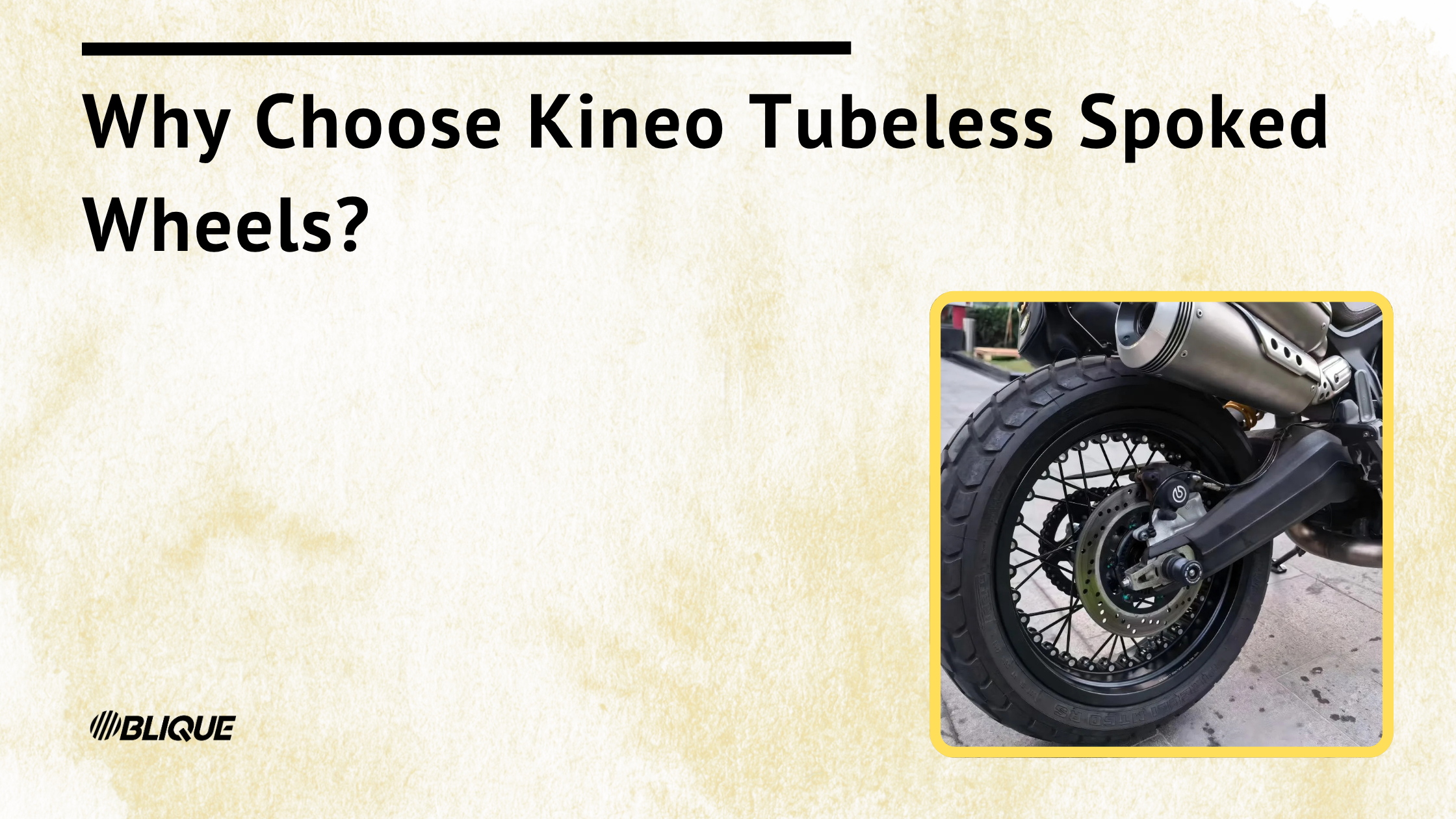
Kineo represents the premium option in tubeless spoked wheels. Not the only option. But arguably the best.
Engineering quality. CNC-machined 7000-grade aluminum rims. Not cast. Not welded. Precision machined from solid aluminum. The material and manufacturing process matter for long-term durability and weight optimization.
Italian craftsmanship. Hand-built construction. Someone actually assembles these wheels with skill and attention. Not a robot on an assembly line cutting corners.
Proprietary sealing technology. The sealed nipple approach maintains full spoke adjustability while holding air indefinitely. Other brands compromise on serviceability. Kineo doesn’t.
TÜV certification. German safety certification. These wheels met testing standards that many products fail. Independent validation that the engineering actually works.
Four-year warranty. Kineo stands behind the product. That confidence reflects build quality.
Fitment range. BMW, KTM, Honda, Yamaha, Ducati, Triumph. Major adventure and sport bikes covered. Custom builds available for specific applications.
Customization. Rim widths, spoke colors, finishes. Build the wheel you actually want rather than accepting factory limitations.
Are they expensive? Yes. Quality costs money. But you’re buying wheels that perform, last, and actually work as advertised.
KineoShop.com provides fitment guides for specific motorcycles and handles custom build requests. Know what you need or need help figuring it out? Either way works.