Don't miss our new customer offer - up to 8% OFF! ( Code: kineo8off )

Triumph Bonneville Bobber Wheels & Rims: Complete Upgrade Guide

The Bonneville Bobber is one of those bikes that gets the aesthetic right from the factory. Triumph nailed it. That hardtail look, the fat rear tire, the stripped-down attitude. But the stock wheels? They’re good. Not great. And if you’re serious about either performance or building something truly unique, you’re eventually going to think about upgrading.
This guide covers everything. Stock specifications so you know what you’re working with. Why upgrades make sense for different types of riders. And specific options, especially Kineo tubeless spoked wheels, that let you keep that classic bobber look while adding genuinely modern performance.
Whether you’re chasing weight savings, want tubeless convenience, or you’re building a show bike that needs to stand out, we’ll walk through the decisions that matter.
Understanding Triumph Bonneville Bobber Stock Wheel Specifications
Before you upgrade anything, you need to understand what Triumph shipped from the factory. The Bobber comes with traditional wire-spoked wheels. 16-inch front and rear on the standard model. The Bobber Black changes things up with a fatter front wheel for a more aggressive stance.
These are tube-type wheels. Classic construction. Spokes penetrate the rim, which means you need inner tubes. That’s fine for some riders. Annoying for others. More on that later.
Triumph worked with Avon to develop Cobra tires specifically for the Bobber. They suit the bike’s character. But tire selection is limited compared to what’s available in more common sizes.
Let’s break down front and rear separately.
Stock Front Wheel Specifications
The standard Bobber runs a 16-inch front wheel with classic wire spokes and black-finished rims. Traditional tube-type construction, which means the spoke nipples sit inside the rim cavity.
Rim width on the standard model is 2.5 inches. The Bobber Black gets the “fat” front wheel treatment with a 3.0-inch rim. Looks chunkier. Changes the stance noticeably. Some riders love it. Some prefer the slimmer standard look.
Standard tire fitment is 130/90-16. The Avon Cobra Chrome comes stock. Good tire, developed for this specific application. But you’re somewhat locked into that sizing if you want to maintain proper clearance and handling geometry.
Weight-wise, the stock front wheel isn’t terrible. But wire-spoked wheels with tubes and traditional nipple construction tend to be heavier than they need to be.
Stock Rear Wheel Specifications
The rear is where the Bobber makes its statement. 16-inch diameter with a 3.5-inch width. That wide rear tire defines the bobber aesthetic.
Wire-spoked design with a hub that nods to classic drum brake styling. Even though it’s actually disc brake. Triumph paid attention to the details that matter for looks.
Stock tire is typically 150/80-16. Again, the Avon Cobra developed for this bike. The wide rear tire with substantial sidewall creates that planted, low-slung look the Bobber is known for.
Sprocket carrier mounts to the hub in traditional fashion. Important to know because any aftermarket wheel needs to accept the same carrier or provide its own compatible solution.
Why Upgrade Your Triumph Bobber Wheels?
Stock wheels work. They’re fine for most riders who bought the Bobber, ride it occasionally, and don’t push hard. But once you start putting real miles on the bike, or you want to customize it seriously, the limitations become apparent.
Tubeless conversion is the big one for practical riders. Weight reduction matters if you care about handling dynamics. Aesthetics matter if you’re building something personal.
The maintenance argument is real too. Premium wheel systems like Kineo don’t require spoke tensioning because the engineering eliminates that need entirely. Less upkeep over time.
Performance Benefits
Lighter wheels make motorcycles feel better. Not just faster. Better.
With quality aftermarket wheels, you’re looking at 1.5 to 2.5 kg savings per wheel compared to stock. That’s unsprung weight. The stuff your suspension has to control directly without help from the chassis mass above.
Reduce unsprung weight and suspension response improves immediately. Wheels follow the road surface more accurately. Less kickback through the bars. Better feedback through the seat.
Acceleration benefits from lighter rotating mass too. Less energy required to spin the wheels up. The Bobber isn’t a sport bike, sure. But it still feels more responsive when you drop weight from the wheels.
Braking feel improves because there’s less rotational momentum to overcome. The bike slows with less effort. More confidence in the brakes.
At highway speeds, lighter wheels contribute to stability. Less gyroscopic disturbance. Sounds minor until you’re cruising at 80 mph and everything just feels more settled.
Tubeless Conversion Advantages
Tube-type wheels are old technology. They work, but tubeless is objectively better for most applications.
With tubes, a puncture means deflation. Maybe rapid deflation. That’s dangerous at speed. Tubeless tires deflate more gradually when punctured. You often feel the handling change before the tire goes flat. Time to react.
On the road, tubeless tires can be plugged. Carry a simple plug kit, fix the puncture, air up, keep riding. Try that with a tube-type tire. You can’t. You’re either carrying a spare tube or you’re calling for a trailer.
Tire pressure adjustments happen on the fly with tubeless. No concern about pinching tubes when you drop pressure for different conditions.
Modern high-performance tires are designed for tubeless operation. You want access to the best rubber available? Tubeless opens that door.
For touring and long-distance riding, tubeless is almost mandatory for peace of mind. Getting stranded 200 miles from anywhere because of a nail is avoidable.
Kineo’s approach to tubeless is worth noting here. True tubeless construction. No sealant tape. No secondary seals that can fail. The rim is airtight by design. That’s different from conversion kits that try to make tube-type wheels hold air.
Aesthetic & Customization Options
Bobber culture is about personal expression. Your bike shouldn’t look exactly like the next guy’s.
Aftermarket wheels, especially options like Kineo, let you maintain the classic spoked appearance while differentiating your build. Rim colors. Hub finishes. Spoke nipple accents. These details add up.
Match your frame color. Contrast with your tank. Pick something completely unexpected. The options exist if you choose wheels that offer them.
Beyond personal satisfaction, quality custom wheels enhance resale value. Buyers recognize premium components. A Bobber with Kineo wheels is worth more than one with worn-out stock wheels. Full stop.
The Instagram factor is real too. Not ashamed to say it. Builds with carefully chosen wheel customization photograph better. Details pop. Colors work together. The bike looks intentional rather than assembled from whatever was available.
Kineo Tubeless Spoked Wheels for Triumph Bonneville Bobber
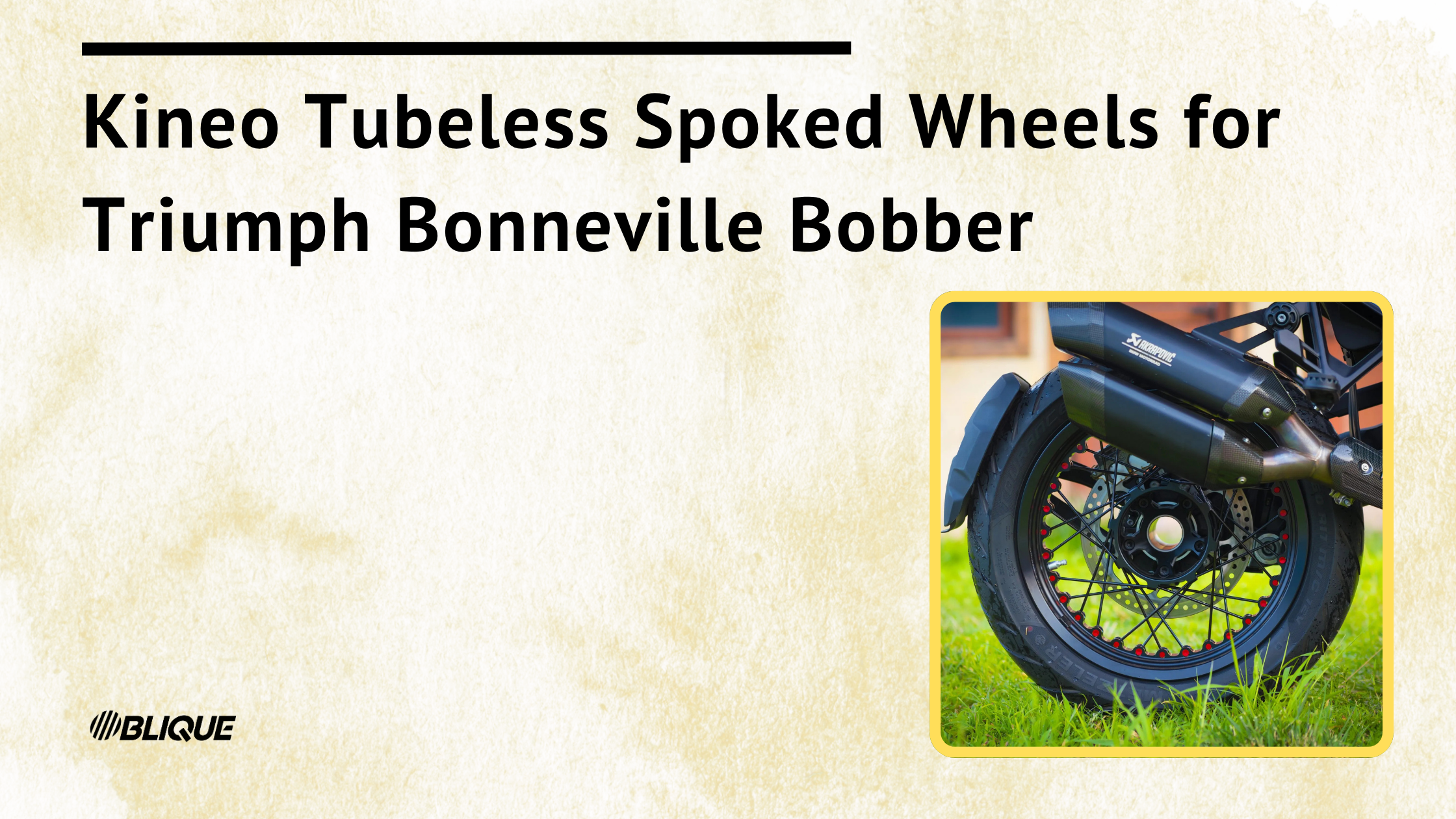
Kineo wheels represent the premium tier for spoked wheel applications. Italian engineering and manufacturing. TÜV approved for street use in EU markets. Designed as true plug-and-play replacements for stock wheels.
The core proposition is simple: classic spoked aesthetics with modern tubeless tire technology. No compromises. No conversion kits. No tape and sealant that might fail. Actual tubeless construction from scratch.
For Bobber owners who want both the look and the performance, Kineo makes a compelling argument.
How Kineo Wheels Work
The technology sounds complicated but the concept is straightforward.
Kineo starts with CNC-machined billet aluminum rims. 7000-series aluminum. Strong and light. The rim is constructed so the air chamber is completely sealed. Spoke nipples don’t penetrate into the air cavity like traditional spoked wheels.
Instead, machined spoke bushings slide into slots in the rim. The spokes mate to full CNC-machined hubs. The connection between spoke and rim happens outside the air chamber. Nothing breaks the seal.
The result: an airtight rim bed that holds air like a cast wheel but flexes and absorbs impacts like a spoked wheel. You get tubeless convenience without giving up the compliance characteristics that make spoked wheels feel good on rough roads.
This isn’t a retrofit or a workaround. It’s engineered from the ground up to be tubeless. Different approach than adding seals to a traditional spoked wheel design.
Kineo Wheel Specifications for Bobber
Kineo offers direct fitment for the Triumph Bonneville Bobber. Standard sizes matching OEM dimensions available. Custom dimensions possible for specific builds.
Weight savings versus stock typically run 1.5 to 2.5 kg per wheel depending on size and configuration. That’s significant unsprung mass reduction.
Bearing positions are identical to OEM specifications. This matters because it means true plug-and-play installation. Your stock brake discs bolt directly to Kineo hubs. No adapters. No modifications to your motorcycle.
Compatible with stock brake hardware, stock spacers (though Kineo supplies their own where needed), and stock sprocket carrier on the rear.
TÜV certification means these wheels meet European safety standards for street use. Not just cosmetic approval. Actual load testing and engineering validation.
Customization Options & Finishes
This is where Kineo gets interesting for custom builders.
Rim finishes: Matte black, gloss black, anthracite grey, white, polished aluminum. The matte black is popular. Classic. But the polished aluminum on a well-detailed Bobber? Striking.
Hub finishes: Matte black, gloss black, matte silver, polished. Coordinate with your rim choice or contrast intentionally.
Spoke bushing colors: Black, silver, titanium, red, blue, green, gold, orange. These small accents make a big visual difference. Contrasting bushing colors highlight the spoke pattern. Gold bushings on matte black rims with a polished hub? That’s a look.
Spoke options: Silver, gloss black, or black and silver combination. Gloss black spokes disappear into black rims for a sleek appearance. Silver spokes pop against darker finishes.
The combinations are extensive. You can match exactly what you’re envisioning or work with Kineo to figure out what works best with your bike’s color scheme.
Choosing the Right Wheel Size for Your Bobber
What you’re doing with the bike determines what wheels make sense. Street cruiser priorities differ from performance setups which differ from show builds.
For Street & Touring Riders
Stick with 16-inch wheels. That’s what the Bobber was designed around. The geometry works. The aesthetic is right. Changing wheel diameter changes the whole character of the bike in ways you might not want.
Prioritize tubeless conversion. For riders putting real miles on their Bobber, the safety and convenience benefits outweigh everything else. A flat 150 miles from home with tube-type wheels is a bad day. Tubeless gives you options.
Consider tire availability in your region before committing to anything. 16-inch tires exist but selection varies by market. Make sure you can actually get the rubber you want locally or shipped reasonably.
Kineo 16-inch tubeless spoked wheels are ideal for this use case. Maintain the look. Add the tubeless benefit. Reduce weight slightly. Done.
For Performance & Sport Riding
The Bobber isn’t a sport bike, obviously. But some riders push their Bobbers harder than Triumph probably intended. Nothing wrong with that.
Consider 17-inch conversion if tire selection is your priority. Michelin Road 5, Pirelli Angel GT, Bridgestone Battlax. The serious sport-touring tires come in 17-inch sizing. Moving to 17s opens that entire category.
Weight reduction matters more for spirited riding. Kineo or carbon options like Rotobox make real differences in how the bike responds.
Accept that geometry changes with wheel size. Trail, rake, and overall feel shift when you change diameter. Some riders prefer the handling with 17s. Others miss the original character. Test ride if possible before committing.
Factor in speedometer recalibration if changing tire diameter significantly. Modern bikes use wheel speed sensors. Different size means inaccurate readings without correction.
For Custom Builders & Show Bikes
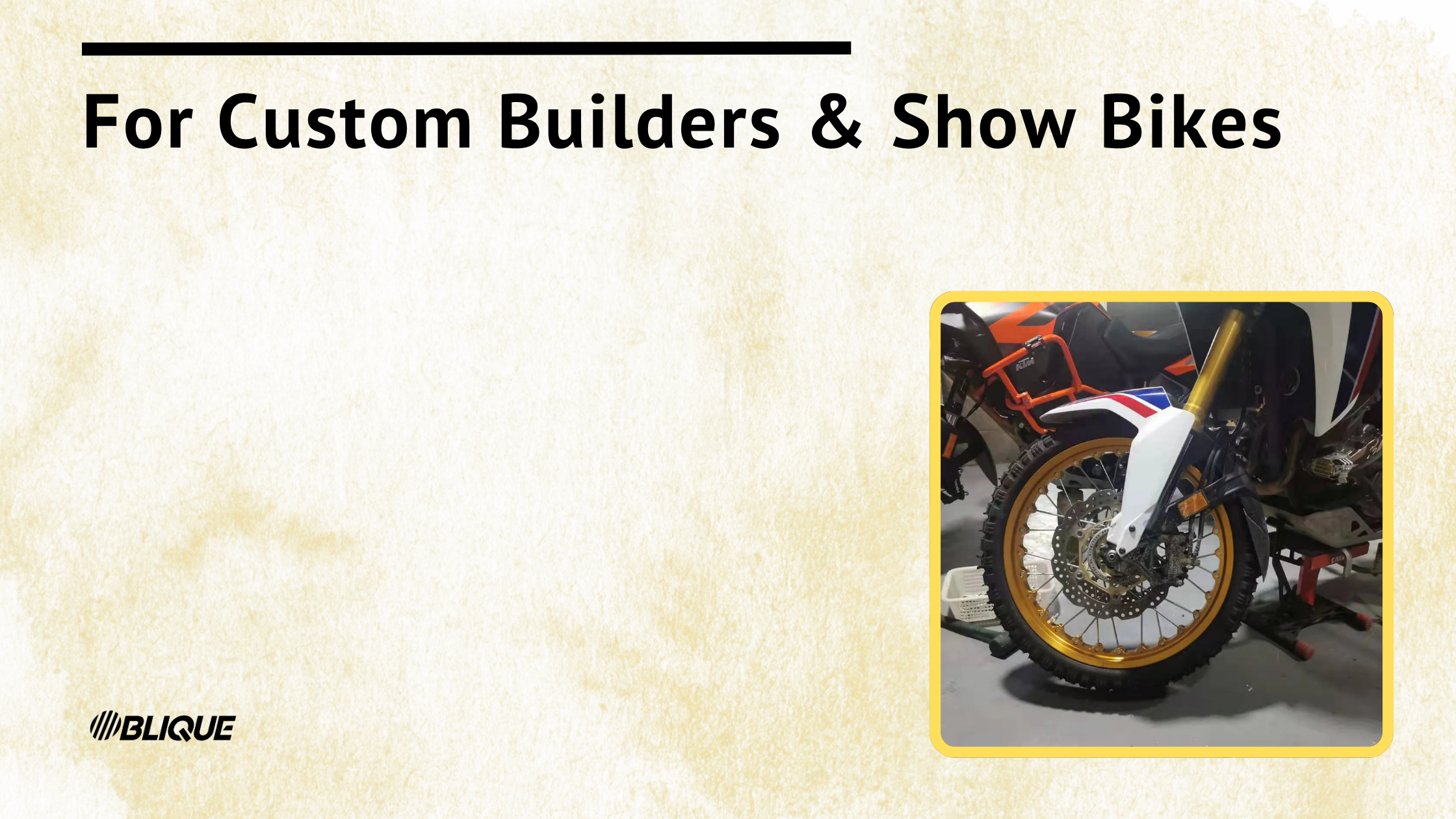
Aesthetic customization drives decisions here. Performance matters less than how the finished bike looks and how it photographs.
Kineo’s color matching capabilities are valuable for show builds. Match the wheels to your paint scheme. Or create deliberate contrasts that draw the eye.
Maintaining the classic spoked appearance matters for bobber builds. Cast wheels look wrong on a bike trying to evoke vintage style. Kineo lets you keep spokes while upgrading everything else.
Think about unique combinations. What does nobody else have? Gold spoke bushings. Polished rims. Contrasting hub colors. The details that show up in close-up photos.
Quality and finish matter when bikes are being judged or displayed. CNC-machined hubs photograph differently than cast components. The precision shows.
Are Kineo wheels compatible with ABS-equipped Bobbers?
Yes. Fully compatible.
The phonic rings and ABS sensors from your stock wheels transfer directly to Kineo wheels. Bearing positions are identical to OEM specifications, so sensor positioning stays correct.
All safety systems remain fully functional. ABS works exactly as it did with stock wheels.
TÜV approval includes ABS-equipped motorcycle applications. This isn’t a gray area or something you’re hoping works. It’s engineered and tested for this exact use.
Can I reuse my stock brake discs and sprocket?
Absolutely.
Front brake discs bolt directly to Kineo hubs using the same mounting pattern as stock. No adapters. Your existing rotors move straight over.
Rear brake disc mounts identically. Same deal.
The sprocket carrier from your stock wheel fits the Kineo rear hub. Your chain, sprocket, and entire final drive setup stays the same.
Original hardware reuses where applicable. Kineo supplies spacers where their specifications differ from stock, but the core components—rotors, carrier, fasteners—all transfer.
Stock brake performance is maintained. Nothing changes except the wheel itself.
Will upgrading wheels affect my warranty?
This concern comes up constantly. The short answer: quality aftermarket parts typically don’t void warranties. But there are nuances.
Kineo wheels are TÜV-approved in EU markets. This demonstrates they meet safety and engineering standards. Not some random eBay parts.
No frame or suspension modifications are required. You’re not altering core systems. You’re replacing a bolt-on component with another bolt-on component.
If warranty matters to you, document professional installation. Keep records. A dealer can’t claim wheel-related issues if the wheels were installed correctly.
Discuss with your Triumph dealer before purchase if warranty is critical to you. Most dealers understand that owners upgrade parts. Some are more cooperative than others. Better to know the policy upfront.
What if I want to return to stock wheels later?
Keep your stock wheels. Store them properly. This isn’t complicated.
Stock wheels maintain resale value for the motorcycle. Future buyers might want original equipment. Having them available matters.
Kineo wheels can move to your next bike if you upgrade to another Bobber or compatible model. Popular wheel sizes have applications across multiple motorcycles. Your investment isn’t locked to one bike.
Strong used market exists for premium wheels. Kineo resale value holds reasonably well. If you sell them separately, you’ll recover significant value.
Stock components remain untouched during the wheel swap. Restoration to factory configuration is simple. Remove Kineo wheels. Transfer brake components back. Install stock wheels. Done.
How do Kineo wheels compare to factory Thruxton R wheels?
Some Bobber owners consider swapping to Thruxton R cast wheels as an upgrade path. Fair option. Worth understanding the comparison.
Thruxton R wheels are excellent cast wheels. Aluminum. Tubeless ready. Good quality from Triumph. But they’re cast wheels. No spokes. Completely different aesthetic.
Kineo maintains the classic bobber spoked look. For riders who chose the Bobber partly because of those wire wheels, cast alternatives miss the point.
Weight is comparable or Kineo edges lighter depending on configuration. Both represent improvements over stock Bobber wheels.
Tubeless advantage is equal between the two approaches. Both give you tubeless tire capability.
Where Kineo pulls ahead: customization. Thruxton R wheels come in whatever color Triumph chose. Kineo offers the full palette of rims, hubs, bushings, and spoke finishes. No contest for custom builds.
Ultimately it’s spoked versus cast aesthetic preference. Both work. Depends what you want your Bobber to look like when you’re done.