Don't miss our new customer offer - up to 8% OFF! ( Code: kineo8off )

MOTORCYCLE WHEEL FITMENT GUIDE
How to Choose Tubeless Spoked Motorcycle Wheels: A Complete Fitment Guide
What to check before ordering a model-specific wheel set—from rim size, axles and bearings to brake discs, ABS equipment, tires and final-drive compatibility.
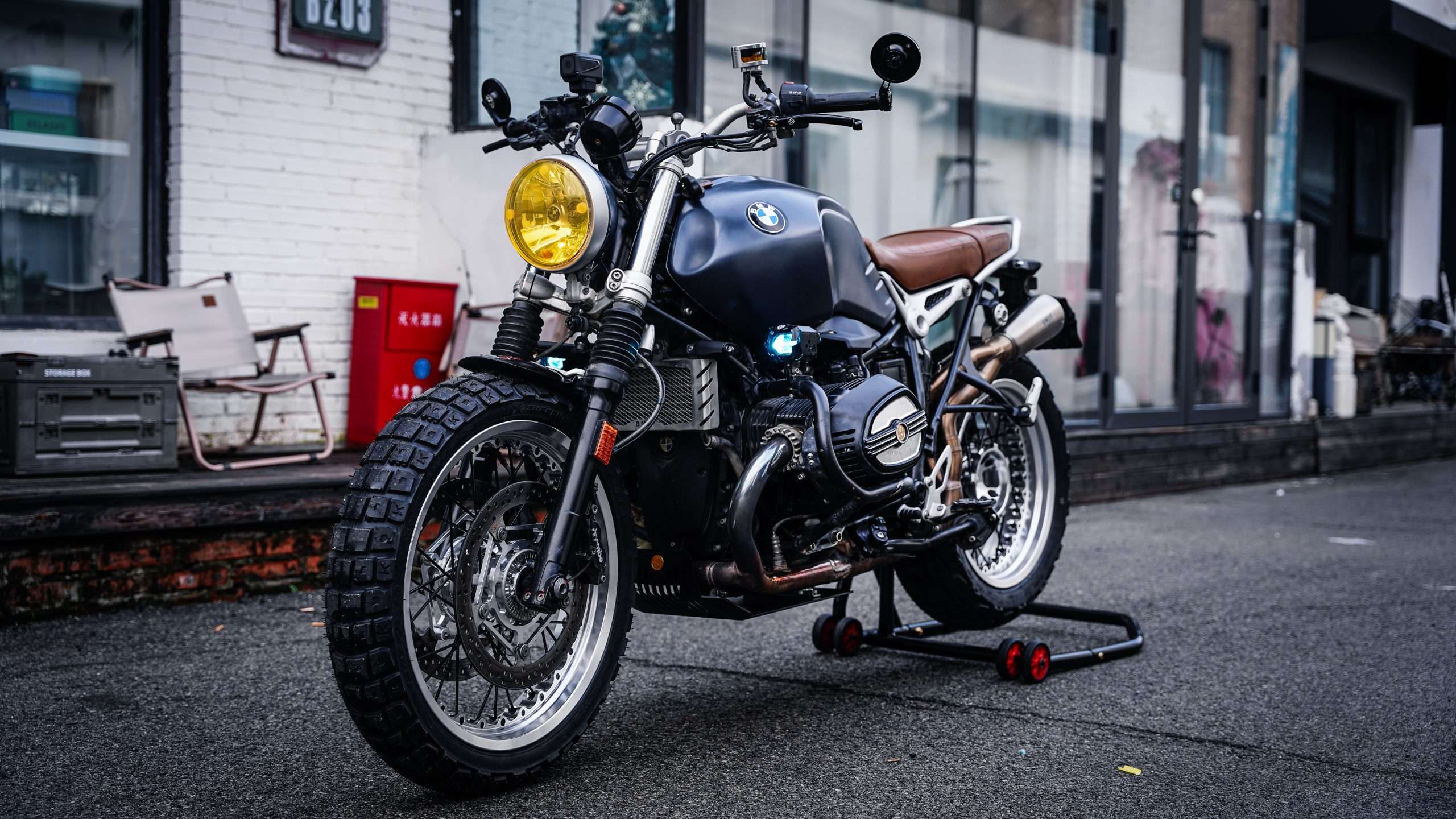
Choosing a new motorcycle wheel is not simply a matter of matching the diameter and selecting a color. A wheel may look perfect in a product photograph and still be completely unsuitable for a particular motorcycle.
Correct tubeless spoked motorcycle wheel fitment depends on the complete relationship between the wheel, axle, bearings, spacers, brakes, ABS equipment, tires, suspension and motorcycle chassis.
This becomes especially important when upgrading to custom or model-specific wheels. A carefully configured wheel set can preserve the character of a classic motorcycle, improve its visual balance and provide the convenience of a modern tubeless tire setup. An incorrectly selected wheel can create expensive installation and compatibility problems.
This guide explains the main details riders should confirm before ordering tubeless spoked motorcycle wheels.
Why Wheel Fitment Is More Than Rim Diameter
Motorcycle wheels are often described primarily by their diameter. Common sizes include 17-inch, 18-inch, 19-inch and 21-inch wheels. Diameter is important, but it does not determine compatibility by itself.
Two front wheels may both be described as 17-inch wheels while having completely different rim widths, hub dimensions, axle diameters, bearing specifications, brake disc positions, ABS arrangements and spacing requirements.
The key principle is simple: size does not equal fitment.
A wheel with the correct nominal diameter can still be too wide, incorrectly spaced or incompatible with the motorcycle’s brakes, sensors and drivetrain.
Start with the Exact Motorcycle Model and Production Year
The first step is identifying the motorcycle accurately. Riders should prepare the manufacturer, exact model, production year, regional version when relevant, ABS specification and details of any existing modifications.
Production year is especially important. A manufacturer may retain the same model name while changing the axle, brakes, wheel dimensions, ABS equipment or suspension during the model’s production life.
01
Make and Exact Model
Avoid relying on a broad family name. The complete model designation may identify a different frame, brake or wheel configuration.
02
Production Year
A wheel listed for one generation should not automatically be assumed to fit an earlier or later version of the motorcycle.
03
ABS or Non-ABS
ABS and non-ABS versions can require different wheel hardware, sensor positioning or tone-ring arrangements.
04
Existing Modifications
Suspension, brake, swingarm or drivetrain changes can affect whether a standard model-specific configuration remains suitable.
Best practice:
Choose model-specific motorcycle wheels configured for
the exact motorcycle rather than adapting a visually similar wheel from another model.
Confirm Front and Rear Wheel Dimensions
Once the motorcycle has been identified, confirm the original wheel and tire dimensions. The most important details include front and rear rim diameter, rim width and recommended tire size.
Rim width affects which tires can be installed correctly. A wider tire does not automatically improve appearance, grip or handling. The tire must remain appropriate for the rim, motorcycle and available clearance.
CHECK BEFORE ORDERING
Front and Rear Dimensions
- Front rim diameter and width
- Rear rim diameter and width
- Front tire size
- Rear tire size
- Recommended tire-width range
- Front fender clearance
- Fork and brake-caliper clearance
- Swingarm and chain clearance
Changing wheel dimensions can also affect the motorcycle’s stance and steering behavior. For a straightforward upgrade, retaining the intended wheel and tire dimensions is usually the most practical starting point unless the complete setup has been professionally evaluated.
Check Tire, Fork and Swingarm Clearance
A new wheel must fit within the physical space available on the motorcycle. Clearance should be considered with the motorcycle stationary and while the suspension moves through its operating range.
FRONT
Front-Wheel Clearance
- Fork legs
- Brake calipers
- Front fender
- ABS sensor
- Brake hoses and brackets
REAR
Rear-Wheel Clearance
- Swingarm
- Chain, belt or final drive
- Rear brake caliper
- Fender and bodywork
- Exhaust and suspension movement
A larger tire may appear to fit while the bike is parked but contact the fender, swingarm or another component during suspension compression. This is why motorcycle wheel size compatibility should never be judged by appearance alone.
Axles, Bearings and Spacers
The wheel hub must work correctly with the motorcycle’s axle and support system. The objective is not simply to make the axle pass through the wheel. The complete assembly must be properly located, supported and tightened.
Axle Diameter
The axle must correspond with the bearings and internal spacing arrangement used by the wheel assembly.
Wheel Bearings
Bearing dimensions and load requirements must suit both the wheel and the intended motorcycle application.
Internal Spacer
The internal spacer helps maintain the correct relationship between the bearings when the axle is tightened.
External Spacers
External spacers position the wheel laterally and influence brake, chain and chassis alignment.
Brake Disc and ABS Compatibility
Brake compatibility is one of the most important parts of motorcycle wheel fitment. A replacement wheel must position the brake discs correctly in relation to the calipers and provide the correct arrangement for any ABS or speed-sensing equipment.
BRAKE SYSTEM
Confirm the Disc Arrangement
- Single-disc or dual-disc configuration
- Brake disc diameter
- Mounting-hole pattern and bolt count
- Bolt-circle diameter
- Disc offset and left/right position
- Spoke and caliper clearance
ABS AND SENSORS
Confirm the Electronic Hardware
- ABS tone-ring mounting
- Speed-sensing ring compatibility
- Sensor position and clearance
- Correct sensor gap
- Original or dedicated hardware
- ABS versus non-ABS configuration
A front wheel designed for a single-disc motorcycle may not be suitable for a dual-disc application. Even when two wheels accept the same disc diameter, the disc mounting position may be different.
A wheel can physically fit between the forks and still be unsuitable for the braking or ABS system. Always confirm whether the original discs and ABS components can be reused or whether dedicated parts are required.
Chain, Belt or Shaft-Drive Compatibility
The rear wheel is part of the motorcycle’s complete drivetrain relationship. Its compatibility cannot be judged by rim size alone.
Chain Drive
The sprocket carrier, cush drive and sprocket position must maintain correct alignment with the front sprocket and chain path.
Belt Drive
Pulley position and belt alignment must remain correct while preserving the required clearance throughout suspension movement.
Shaft Drive
Shaft-drive motorcycles often use highly model-specific hub and final-drive interfaces that should not be selected by appearance alone.
Confirm Tubeless Tire Compatibility
A purpose-built tubeless spoked wheel is designed to support a compatible tubeless tire without using a conventional inner tube. The complete wheel and tire combination must still be appropriate for the motorcycle.
✓
A Complete Tubeless System
Confirm that the wheel is intended for tubeless use, the tire matches the rim dimensions, the valve arrangement is correct and the tire bead is installed according to the wheel and tire manufacturers’ requirements.
A purpose-built tubeless wheel should not be confused with an ordinary tube-type rim that has been modified using tape or sealant. Different wheel designs achieve air retention in different ways, but the important point is that the complete assembly is intended to function as a tubeless system.
Rim, Bare Wheel or Complete Wheel Set?
The terms “rim” and “wheel” are often used interchangeably, but they do not describe the same product. Buyers should confirm exactly what is included.
RIM
The Outer Component
The rim is the circular outer section on which the tire is installed. It is not normally a complete ready-to-install motorcycle wheel.
BARE WHEEL
The Wheel Assembly
A bare assembly may include the rim, hub, spokes and nipples, but not every model-specific component needed for final installation.
COMPLETE WHEEL
Configured for the Motorcycle
A complete wheel is generally assembled for a defined application, but the exact included hardware must still be confirmed before ordering.
Parts That May or May Not Be Included
Never assume that every installation component is included simply because a product is described as a complete wheel.
Front Wheel, Rear Wheel or Matched Pair?
Some riders replace only one wheel, while others purchase a complete front and rear set. Replacing both wheels together provides greater control over visual consistency, finishes and front-to-rear proportions.
A matched pair is usually the strongest choice when the goal is to transform the motorcycle’s appearance. A single-wheel replacement can still be appropriate when replacing a damaged component or completing a specific upgrade, provided the new wheel remains compatible with the wheel retained at the opposite end.
Choose the Finish Only After Fitment Is Confirmed
Once the technical configuration is correct, the visual design can be considered. Tubeless spoked motorcycle wheels may offer choices for rim, hub, spoke and nipple finishes.
01
Silver and Polished
Creates a traditional appearance and works naturally with polished engine cases, brushed metal and chrome details.
02
Black with Silver Spokes
Adds contrast and makes the spoke pattern more visible without making the wheel appear excessively decorative.
03
All Black
Creates a restrained, modern appearance and visually integrates the wheels with dark tires, frames and engine components.
04
Accent Colors
Colored hubs or nipples work best when they repeat an existing detail on the tank, brakes, suspension or graphics.
The best configuration is not necessarily the one with the most colors. It is the one in which every finish appears deliberate and connected to the motorcycle as a whole.
Common Motorcycle Wheel Fitment Mistakes
01
Choosing by Diameter Alone
A 17-inch wheel is not compatible with every motorcycle using a 17-inch wheel.
02
Ignoring the Production Year
The same model name may cover several generations with different specifications.
03
Forgetting ABS Equipment
ABS and non-ABS motorcycles may require different wheel configurations.
04
Assuming the Brake Discs Fit
Disc mounting patterns, spacing and offsets can differ between wheel designs.
05
Choosing an Oversized Rear Tire
A wider tire can create clearance, alignment and handling problems.
06
Confusing a Rim with a Wheel
A rim alone may require a hub, spokes, bearings and specialist assembly.
Information to Prepare Before Ordering
Clear information allows the wheel supplier to identify the correct configuration more accurately. Photographs can also be useful when the motorcycle has been modified.
ORDERING CHECKLIST
Prepare These Details
- Motorcycle make and exact model
- Production year
- ABS or non-ABS specification
- Front and rear tire sizes
- Original wheel dimensions
- Single-disc or dual-disc front brake
- Chain, belt or shaft drive
- Existing modifications
- Desired wheel finish
- Intended riding use
Should Installation Be Performed Professionally?
Motorcycle wheels are safety-critical components. Installation may involve axle torque, brake alignment, ABS sensor position, chain or belt alignment, bearing condition and tire mounting.
Riders without the correct tools, measurements or mechanical experience should use a qualified motorcycle technician. After installation, the wheel should rotate freely and remain correctly aligned. Brakes, sensors, tire pressure and fasteners should be checked according to the relevant manufacturers’ instructions.
Safety note:
This article is a general selection guide, not a substitute for the wheel,
tire and motorcycle manufacturers’ specifications or professional inspection.
Correct Fitment, Appropriate Function and Intentional Design
The appearance of a wheel may be what first attracts the buyer, but compatibility is what determines whether the upgrade succeeds.
A properly configured wheel set should match the exact motorcycle model and production year. It should work with the axle, bearings, spacers, brakes, ABS equipment, tires and final-drive system. Only after those details have been confirmed should colors and finishes become the deciding factors.
Model-specific tubeless spoked wheels allow riders to combine classic wire-wheel character with a modern tubeless tire arrangement. When selected carefully, they can make a motorcycle look more distinctive while preserving the functionality required for everyday road use.
BUILD YOUR WHEEL SET
Create a Configuration Around Your Motorcycle
Start with your motorcycle make, model and production year. Confirm the required dimensions, braking system and ABS specification, then select rim, hub, spoke and nipple finishes that complement the rest of the bike.
The best custom wheel is not simply the one that looks impressive on its own. It is the one that looks and functions as though it was designed for the motorcycle from the beginning.
Open the Kineo Wheel Builder