Don't miss our new customer offer - up to 8% OFF! ( Code: kineo8off )

Tubeless Spoked Motorcycle Wheels: Technology, Benefits & Top Brands

There’s this old belief in motorcycling that won’t die. Spoked wheels need tubes. Period. That’s just how it is.
Except it’s not. Not anymore.
Tubeless spoked wheels have been around for years now. And honestly? They’ve changed everything for adventure riders, dual-sport folks, and anyone who’s ever been stranded on a dirt road with a flat and a useless patch kit.
Here’s the thing. Traditional spoked wheels have holes drilled through the rim. Air escapes through those holes. So you need a tube to hold the air. Makes sense. But engineers figured out how to seal those holes. And once they did that, the whole game changed.
I remember when tubeless spoked wheels first started showing up on factory bikes. BMW did it with the R1200GS. People were skeptical. Really skeptical. Now? You can’t find a serious adventure bike without them as at least an option.
The shift happened because riders got tired of the same story. You’re 200 miles from anywhere. You pick up a nail. With a tube, that’s potentially a tow situation. With tubeless? You plug it and keep going. Same repair you’d do on your car.
If you ride off-road—or even just on sketchy pavement—this stuff matters. A lot.
What Are Tubeless Spoked Motorcycle Wheels?
Tubeless spoked wheels do exactly what the name says. They hold air without an inner tube. But they still have traditional wire spokes connecting the hub to the rim.
That second part is important. Cast wheels have been tubeless forever. They’re one solid piece. No holes, no air leaks, no problem. But cast wheels crack when you hit rocks. They’re heavy. They don’t absorb impacts the way spokes do.
Spoked wheels flex. They’re repairable. You can true them trailside. For off-road riding, they’re just better.
The problem was always the spoke nipples. On a traditional spoked wheel, those nipples poke through holes in the rim bed—right where the tire sits. Air leaks out. You can’t seal it. So you throw a tube in there and call it a day.
Tubeless spoked wheels solve this with sealed rim construction. The nipples don’t penetrate the air chamber. Different manufacturers do this differently, but the result is the same: an airtight rim bed that holds air like a cast wheel but flexes like a spoked wheel.
Best of both worlds. Took decades to figure out, but we’re there now.
Traditional Spoked Wheels vs. Tubeless Spoked Wheels
The difference comes down to where the spoke nipples sit.
Traditional wheels have nipples that poke through the rim. Look at the inside of any old dirt bike rim. You’ll see a line of small holes with brass nipples sticking through. Even with rim tape, air finds a way out. You need that inner tube to create a sealed air chamber.
The tube creates problems though. It adds weight. It can pinch during tire changes. It can rub against the rim and wear through. And when you get a puncture, that tube deflates fast. Sometimes instantly. You’re going from riding to walking in seconds.
Tubeless spoked wheels seal those nipple holes from the inside. Some designs weld the nipples to the rim. Others use special caps or gaskets. The nipple still adjusts the spoke tension, but air stays in. When you puncture the tire itself, air leaks slowly around the object. You’ve got time. Maybe enough time to get home.
The maintenance difference is real too. Tubed tires are a pain to change. You’re fighting the tube the whole time, trying not to pinch it. Tubeless? The tire just goes on. No tube to wrestle with.
How Do Tubeless Spoked Wheels Work?
The magic happens at the rim bed. That’s the flat surface inside the rim where the tire bead seats.
On a tubeless spoked wheel, this area is completely sealed. The spoke nipples either sit outside this sealed chamber or they’re welded and sealed from the air cavity. Some manufacturers create a two-layer rim design—the inner layer is airtight, the outer layer holds the nipples. Others use precision welding to seal each nipple individually.
The tire mounts just like on any tubeless wheel. The bead locks against the rim. The valve stem goes through a sealed hole. Air goes in, stays in.
When you hit a nail or thorn, the object often stays in the tire. Air leaks around it slowly. I’ve seen guys ride 50 miles on a slow leak to get to a shop. Try that with a tube and you’ll be on the rim in a mile.
The sealing technology has gotten really good. Early tubeless spoked wheels had issues—leaks around nipples, problems with heat, bead seating challenges. Modern designs mostly solved this. The good manufacturers have this dialed.
Key Components & Construction
Five things make a tubeless spoked wheel work:
1. Sealed rim bed design — The foundation of everything. This is what holds air. It needs to be perfectly smooth and completely airtight. Manufacturing tolerances are tight here.
2. Spoke nipple sealing — However the nipples attach, they can’t leak. Welding, gaskets, external mounting—different brands do this differently. But it has to be perfect.
3. Special valve stems — Standard rubber valve stems work on most designs. Some wheels use specific stems that integrate with the rim sealing system. Not complicated, but the fit matters.
4. Bead lock systems — Some wheels use special bead retention features to keep the tire seated at low pressures. This matters for off-road riding where you might air down significantly.
5. Rim material — Almost always aluminum alloy. Steel is too heavy. Aluminum can be welded, machined to tight tolerances, and it dissipates heat well. The specific alloy affects strength and weight.
Each component has to work with the others. A sealed rim with leaky nipples defeats the purpose. Great sealing with poor bead retention means problems off-road.
Sealed Rim Technology
The rim itself is where manufacturers earn their money.
Some companies create a two-piece rim with a sealed inner channel. The spoke nipples sit in the outer section, completely separated from the air chamber. This design is basically foolproof—there’s no way for air to reach the nipples.
Others use a single-piece rim with welded nipple seats. Each nipple hole is sealed during manufacturing. This is lighter but requires perfect welds on every single hole. Quality control matters a lot.
A few manufacturers use rim tape or sealant systems over standard spoke holes. I’m less excited about these. They work, but they feel like a retrofit rather than a purpose-built solution. Tape can peel. Sealant can fail.
The good manufacturers—and I’ll talk about specific brands later—build the sealing into the rim from the start. It’s not an afterthought. It’s the whole point.
Spoke Nipple Sealing Methods
There are basically four ways to seal spoke nipples:
Welded nipples — The nipple is permanently welded to the rim. Airtight by design. The downside? You can’t replace individual nipples easily. If one corrodes or strips, it’s a bigger repair.
Sealed nipple caps — The nipple sits in a sealed cup or cap that isolates it from the air chamber. The cap usually has an O-ring or gasket. Works well, allows nipple replacement, but adds a failure point.
External nipples — Some designs mount the nipples on the outside of the rim entirely. Air never touches them. This changes the wheel aesthetics and spoke angle, but it’s mechanically simple.
Adhesive sealants — The budget approach. Standard nipples with sealant applied around them. Can work. Can also fail. I’ve seen too many leak.
My preference? Either welded or external nipples. They’re engineered solutions, not band-aids. The sealed cap approach works too, but there’s more to go wrong over time.
Benefits of Tubeless Spoked Motorcycle Wheels

Okay, so they work. But why should you care? Why spend the money to upgrade—or specifically seek out a bike that has them?
I’ll be direct. If you ride adventure, off-road, or long-distance touring, tubeless spoked wheels make your life significantly better. They’re not just a nice-to-have. They change how you handle problems on the road.
Let me break this down.
1. Superior Puncture Resistance & Safety
This is the big one. The reason most people even consider tubeless spoked wheels.
With a tube, a puncture means rapid air loss. Sometimes instant. You’re riding along, hit something sharp, and suddenly your tire is flat. At highway speeds, that’s genuinely dangerous. The tire can come off the rim. The bike becomes unpredictable. People crash from this.
Tubeless tires leak slowly. The object stays in the tire, partially blocking the hole. Air seeps out around it. You feel the bike getting soft, pull over, and deal with it. No emergency. No drama.
I’ve talked to riders who’ve finished 100-mile days with nails in their tires. They knew it was there. They kept an eye on pressure. They fixed it that night at camp. With a tube? They’d have been stranded hour one.
Pinch flats disappear too. Those happen when a tube gets caught between the tire and rim during hard impacts. No tube, no pinch flats. For rocky terrain riding, this alone is worth the upgrade.
The safety margin is real. Especially for remote riding where help is hours away.
2. Easier Tire Repairs
Repairing a tubed tire sucks. You have to break the bead, pry the tire off at least one side, find the hole in the tube, patch it or replace it, wrestle everything back together, and hope you didn’t pinch the new tube during installation.
This takes forever. Especially roadside. Especially with cold hands and bad lighting.
Tubeless repair? Plug it. Seriously. Same sticky rope plugs you’d use on a car tire. You don’t remove the wheel. You don’t break the bead. You find the hole, ream it out, shove a plug in, inflate, and go.
I keep a plug kit in my tank bag. Weighs nothing. Takes up no space. I’ve used it twice in three years. Both times I was back riding in ten minutes.
The cost difference adds up too. Tubes aren’t cheap. Patches don’t always hold. Plugs cost almost nothing and they’re permanent repairs.
3. Weight Reduction
Inner tubes weigh between 2 and 4 pounds depending on size. That doesn’t sound like much. But it’s unsprung weight—mass that your suspension has to control.
Unsprung weight matters more than regular weight. The suspension works harder to keep the wheel following the terrain. Heavy unsprung components make the bike feel sluggish and reduce traction.
Drop a few pounds from each wheel and you’ll feel it. The bike responds faster. The suspension works better. Traction improves.
There’s a fuel economy argument too, but I think it’s marginal. You’re not going to notice it at the pump. But the handling difference? That’s real.
4. Better Heat Dissipation
Tubes trap heat. The tire generates heat from friction and flexing. Normally that heat transfers through the tire to the rim and dissipates. With a tube in there, that transfer is worse.
Hot tubes fail. The rubber breaks down. Long highway stints in summer, heavy loads, aggressive riding—all generate heat. I’ve heard of tubes blowing out from heat alone. No puncture, just thermal failure.
Tubeless setups run cooler. The tire can transfer heat directly to the rim. No insulating tube layer in between.
For touring riders carrying gear in hot climates, this matters. You’re already pushing heat limits with luggage and sustained speeds. Eliminating one heat-related failure mode is worth something.
5. Improved Ride Quality & Performance
Here’s one people don’t always think about. Tubeless tires let you run lower pressures safely.
With a tube, low pressure increases pinch flat risk. The tube can get caught between tire and rim during impacts. So you run higher pressures for protection.
Tubeless? No tube, no pinch flats. You can air down for off-road traction without worrying about rim strikes killing your tube.
Lower pressure means more tire flex. More contact patch. Better grip in dirt, sand, rocks, whatever. The tire conforms to terrain instead of bouncing off it.
Even on pavement, slightly lower pressures improve ride quality. The tire absorbs imperfections instead of transmitting them. The bike feels more planted.
This flexibility—pun intended—makes tubeless spoked wheels the adventure touring standard.
6. Lower Long-term Maintenance Costs
Tubes wear out. They rub against rims. They age and crack. You replace them during tire changes even if they’re not punctured. That’s $30-60 per tube, times two wheels, times however many tire changes you do.
Tubeless wheels have no tube to replace. Tire changes are easier so labor is often cheaper. Plugs cost a few bucks versus new tubes or patches.
There’s a real long-term savings here. Probably not enough to justify tubeless wheels purely on economics. But combined with everything else? It adds up.
Top Brands & Manufacturers of Tubeless Spoked Wheels
Not all tubeless spoked wheels are created equal. The sealing technology varies. Build quality varies. Some brands have been doing this for decades. Others are newer to the game.
I’ll cover the major players. Both OEM suppliers and aftermarket options.
1. Excel Rims
Excel has been making motorcycle rims forever. Seriously, they’re one of the biggest names in the industry. If you’ve ridden any serious dirt bike or adventure bike, there’s a good chance Excel made the rim.
They produce Takasago Excel rims—you’ll see that name on a lot of OEM wheels. Their tubeless spoked offerings use a sealed rim bed design. Proven technology. Nothing fancy or experimental.
Excel rims show up on factory adventure bikes from multiple manufacturers. They’re the safe, reliable choice. You know what you’re getting.
Price varies depending on whether you’re buying complete wheels or just rims. Figure mid-range for aftermarket pricing. Warranty is standard manufacturer coverage. They’re not the lightest option, but they’re built to last.
2. Kineo Wheels
Kineo is different. They’re not a parts supplier who happens to make tubeless rims. They’re specialists focused entirely on high-performance spoked wheels.
The company builds wheels in Italy. Real Italian manufacturing, not just assembly. They’ve developed their own sealing technology that’s become an industry benchmark. The nipples are sealed using a proprietary method that allows full spoke adjustability while maintaining completely airtight seals.
What sets Kineo apart? The customization. They offer wheels for a huge range of motorcycles—BMW, KTM, Honda, Yamaha, Ducati, Triumph, basically everyone. And you can customize finishes, spoke colors, rim widths. You’re not stuck with whatever the factory decided.
The construction is impressive. They use high-grade aluminum alloys for the rims and aerospace-quality stainless steel spokes. Everything is hand-built and individually tested. It’s not mass production. It’s craft manufacturing.
Kineo has TÜV certification, which means they meet German safety standards. That’s not easy to get for aftermarket wheels. It matters if you’re in Europe where insurance companies actually check this stuff.
Riders who’ve switched to Kineo wheels talk about the weight savings and the precision. These are noticeably lighter than most stock wheels. You feel it in the handling. The wheels are also true out of the box—no hunting for balance weights or dealing with slight wobbles.
They’ve built a strong reputation in the adventure touring community specifically. Their wheels handle the abuse of off-road riding while looking good enough for showroom display.
If you’re shopping for Kineo wheels, kineoshop.com is where you want to go. They have fitment guides for specific bikes and can help with custom builds.
Warranty coverage is comprehensive. Customer support is actually helpful—not just automated responses but real people who know wheels.
Are they cheap? No. These are premium wheels and priced accordingly. But if you’re serious about your adventure bike, they’re worth investigating.
3. Woody’s Wheel Works
Woody’s is an American company that’s been building wheels for decades. They started in off-road and motocross, then expanded into adventure and dual-sport applications.
They offer tubeless conversion and purpose-built tubeless spoked wheels. Their customer base tends toward serious off-road riders—desert racers, Baja veterans, expedition types.
The company builds wheels to order. You’re getting hand-laced, custom wheels built for your specific bike and riding style. They work with multiple rim suppliers and can spec wheels to your exact needs.
Woody’s reputation is for durability. These wheels get abused and keep working. Not the lightest option, not the prettiest, but tough.
4. Alpina Wheels
Alpina is another Italian manufacturer with a long history. They’ve been making spoked wheels since the 1930s. Let that sink in. These people know wheels.
They supply OEM to several European manufacturers. Their tubeless spoked technology is proven at the factory level. When you see tubeless spoked wheels on a new bike, there’s a decent chance Alpina made them.
Aftermarket, Alpina offers complete wheels for popular adventure and touring bikes. The manufacturing process emphasizes precision—CNC machined rims, carefully controlled spoke tension, thorough testing.
Their market position is mid-to-upper range. Not budget, but not ultra-premium either. Quality wheels at reasonable prices for what you get.
5. Dubya USA
Dubya specializes in complete wheel builds. They source rims, hubs, and spokes from quality manufacturers and assemble them to your specifications.
Their strength is customization and racing pedigree. A lot of their business comes from professional racers and teams. They understand what wheels need to survive in competition.
For tubeless spoked wheels, Dubya offers various rim options including Excel and others. You’re buying their expertise in wheel building as much as specific components.
They’re known for quick turnaround and good customer service. If you know exactly what you want, Dubya can build it.
Choosing the Right Tubeless Spoked Wheels for Your Motorcycle
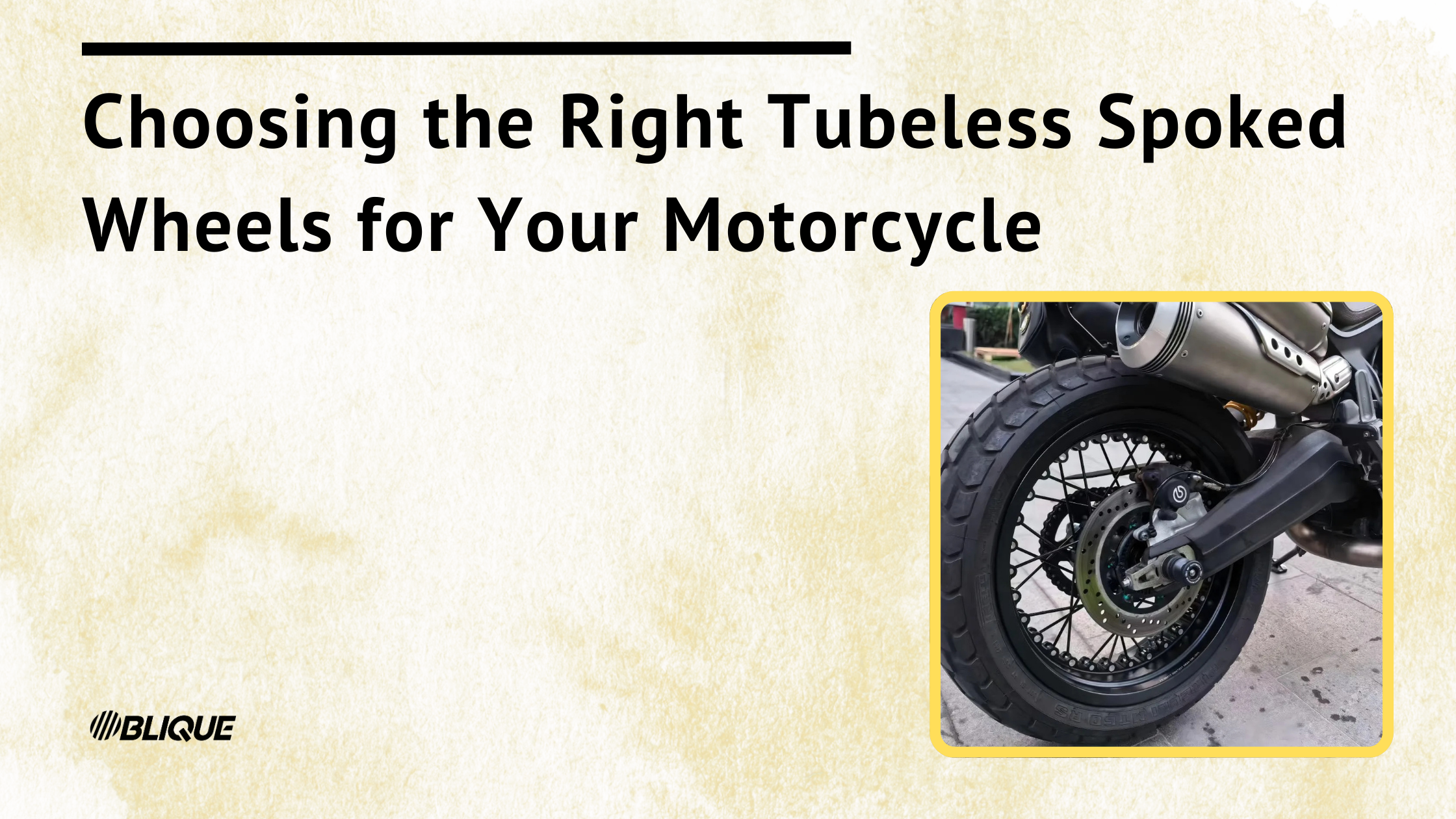
Buying wheels is a significant decision. They’re expensive. They affect safety. They’re not easy to return if you get it wrong.
Here’s how to think through the purchase.
Consider Your Riding Style
This matters more than anything else.
Adventure touring — You need durability for varied surfaces, good on-road manners, and reliable sealing for long distances. Weight savings are nice but don’t sacrifice strength.
Off-road predominant — Maximum strength and repairability matter most. You might want wider rims for bigger tires. Bead retention for low-pressure running is essential.
Street/highway focused — Lighter wheels improve handling. Aesthetics might matter more here. Sealing reliability is crucial since you’re moving fast.
Expedition travel — Durability first, second, and third. You need wheels that survive potholes in Mongolia and rocky trails in South America. Repairability matters—can you fix issues in remote areas?
Match the wheel to the job. A wheel perfect for weekend adventure rides might not survive a year-long around-the-world trip.
Compatibility & Fitment
Wheels have to fit your specific bike. This sounds obvious but gets complicated fast.
Axle sizes — Front and rear axles vary by manufacturer and model. Your wheels need matching bearing spacing.
Brake rotor mounts — Disc brake rotors bolt to the hub. Bolt patterns and rotor sizes vary.
ABS sensors — Modern bikes have ABS tone rings that the wheel sensors read. Your wheels need compatible rings in the right position.
Offset and width — Wheels position the tire relative to the swingarm and forks. Wrong offset causes clearance problems.
Load ratings — Wheels have weight limits. Heavy touring with luggage requires appropriate ratings.
Don’t guess on fitment. Quality manufacturers provide fitment guides for specific bikes. Use them. Or call and ask.
Quality & Certification Standards
Not all wheels are equal. How do you tell good from bad?
TÜV certification — German technical inspection standard. If a wheel passes TÜV testing, it meets serious safety requirements. Not all markets require this, but it’s a strong quality indicator.
DOT/ECE approval — Depending on your region, wheels might need specific certifications for road use. Check your local requirements.
Warranty length — Good manufacturers stand behind their products. Multi-year warranties suggest confidence in durability.
Manufacturing transparency — Can you find out where and how the wheels are made? Quality brands don’t hide this.
Reputation — What do other riders say? Long-term reviews matter more than first impressions.
Cheap wheels from unknown brands are a gamble. Your wheels keep you connected to the ground. This isn’t the place to save money.
Budget vs. Performance
Tubeless spoked wheels range from maybe $800-900 for basic options to $2500+ for premium builds.
Entry level ($800-1200) — Functional tubeless technology. Usually heavier. Fewer customization options. Adequate quality for typical riding.
Mid-range ($1200-1800) — Better materials. Weight savings. More finish options. Solid warranties. Where most riders land.
Premium ($1800+) — Lightest weights. Best materials. Full customization. Brand prestige. For riders who want the best and can afford it.
What you get for more money: lighter weight, better balance, superior finish, more customization, stronger warranties, better customer support.
Is cheap a “false economy”? Sometimes. Budget wheels that fail strand you. Budget wheels that need frequent truing cost time. Budget wheels that don’t seal properly defeat the entire purpose.
That said, mid-range options from reputable brands serve most riders well. You don’t need top-tier racing wheels for weekend adventure rides.
Think of it as an investment. Good wheels last years. Spread the cost over their lifespan and the daily cost of quality becomes trivial.
Can you use tire sealant in tubeless spoked wheels?
Yes, and a lot of riders do.
Tire sealant sits inside the tire and plugs small punctures automatically. It’s insurance against thorns, small nails, and other debris that would cause slow leaks.
Stan’s NoTubes, Slime, and similar products all work. Apply according to the manufacturer’s instructions—usually you pour it in through the removed valve core.
Pros: Automatic puncture sealing, additional peace of mind, relatively cheap.
Cons: Can unbalance the tire slightly, makes a mess during tire changes, doesn’t work on large punctures.
I run sealant in my rear tire because that’s where I pick up most punctures. Front tire I leave dry since punctures there are less common and I want maximum precision in the steering.
Are tubeless spoked wheels as strong as tubed spoked wheels?
Yes. The spoked wheel strength comes from the spokes and rim structure, not from whether there’s a tube inside.
Good tubeless spoked wheels are built to the same standards as quality tubed wheels. The sealing technology adds minimal weight and doesn’t compromise the rim’s structural integrity.
In fact, because tubeless wheels don’t need spoke holes drilled through the rim bed’s air chamber, some designs are actually stronger. There’s no row of stress-concentration points where holes weaken the rim.
Load capacity is determined by the rim material, spoke count, spoke gauge, and lacing pattern. These are the same regardless of tube or tubeless design.
Bottom line: buy quality wheels and strength is not a concern.
What happens if a spoke breaks?
This is a fair concern. A broken spoke means a hole in the wheel structure. Does it also mean air loss?
On quality tubeless spoked wheels, usually not immediately. The spoke nipple is sealed into the rim. The spoke attaches to the nipple. Breaking the spoke doesn’t break the seal between nipple and rim.
You’ll lose spoke tension, which means the wheel goes out of true. You might hear it rubbing the fender or forks. Handling will feel off. But you probably won’t lose air pressure.
That said, you need to stop and assess. A badly out-of-true wheel is dangerous. And if the spoke damaged other spokes or the nipple seal when it broke, you could develop a leak.
Can you continue riding? Maybe, slowly, to the next town. Should you? Only if you have no other option. Broken spokes should be replaced as soon as possible.
Can any tire be used on tubeless spoked wheels?
You should use tubeless or tubeless-ready tires. This matters.
Tube-type tires have slightly different bead construction. They’re designed to work with a tube pressing them against the rim. Some will seat and seal on tubeless rims. Others won’t.
Using tube-type tires on tubeless wheels creates risk. The bead might not seal properly. It might unseat at low pressures. You could end up with a sudden deflation that defeats the whole point of running tubeless.
Tubeless tires are marked on the sidewall—look for “tubeless” or “TL.” Use those.
Some dual-sport tires are tubeless-compatible but not ideal. Check manufacturer recommendations for your specific wheels.
How do you seat the bead on tubeless spoked wheels?
Seating the bead means getting the tire’s edge to snap into the rim’s bead lock groove. It requires a burst of air pressure.
Most of the time, a standard air compressor works. Remove the valve core for maximum airflow, hit it with pressure, and the bead pops into place. Reinstall the core and inflate to normal pressure.
If the bead won’t seat, a few tricks help:
Ratchet strap method — Wrap a ratchet strap around the tire’s circumference and tighten. This pushes the tire’s middle outward, forcing the beads against the rim. Add air while tightened.
Bead sealer — Soapy water or specific bead sealer lubricates the interface and helps the bead slide into position.
Tire mounting band — Some tires come with a rubber band that holds the bead in position during initial inflation.
Stubborn beads sometimes need a shop’s tire machine. No shame in that. Modern adventure tires can be tight.
Are tubeless spoked wheels worth the investment?
For the right rider, absolutely. For everyone, maybe not.
Worth it if you:
- Ride adventure or dual-sport
- Travel to remote areas
- Want the easiest possible puncture repairs
- Value the weight and performance benefits
- Plan to keep your bike long-term
Maybe not worth it if you:
- Rarely leave pavement
- Have easy access to roadside assistance
- Ride bikes where cast wheels work fine
- Are on a very tight budget
- Don’t do your own tire work anyway
The cost-benefit calculation depends on how much the benefits matter to your riding. A weekend warrior on local trails has different needs than someone crossing continents.
If you’ve ever been stranded with a flat tube, you already know the answer. If that’s never happened and never will, the premium might not make sense.
For serious adventure riding? I think they’re essentially mandatory now. The peace of mind alone is worth the money.
3 Comments
Comments are closed.
car hire tsaghkadzor
https://continent-telecom.com
virtual number azerbaijan