Don't miss our new customer offer - up to 8% OFF! ( Code: kineo8off )

Tubeless Spoked Wheels for Adventure Bikes: Why They Matter

For decades, adventure riders lived with a frustrating compromise. You wanted spoked wheels for off-road durability. But spoked wheels meant tubes. And tubes meant dealing with pinch flats, blowouts, and hour-long trailside repairs.
That’s changed.
Tubeless spoked wheel technology has finally caught up to what adventure riders actually need. The best of both worlds. Spoked wheel toughness with tubeless convenience. No more choosing between reliability off-road and peace of mind on the highway.
This isn’t some marginal upgrade. It’s a fundamental shift in how serious adventure bikes are built. BMW figured it out years ago. KTM followed. Now it’s becoming the expected standard on premium ADV machines.
If you’re riding long distances, exploring remote areas, or pushing into terrain where a flat tire means real problems, understanding tubeless spoked wheels matters. A lot.
What Are Tubeless Spoked Wheels?
Traditional spoked wheels have holes. Lots of them. That’s where the spokes attach to the rim. Every one of those holes is a potential air leak. So you need an inner tube to actually hold pressure.
Tubeless spoked wheels solve this problem with specialized sealing technology. The rim is made airtight despite the spokes. Different manufacturers do it different ways. Some seal the nipples. Some use offset spoke patterns with nipples on the outer edge. Some use entirely different rim constructions.
The result is the same. Air stays in. Tubes stay out.
Adventure bikes use spoked wheels for good reasons. Off-road capability. Flexibility when you hit rocks and ruts. Impact absorption that cast wheels can’t match. When you land hard off a jump or slam into an unexpected obstacle, spokes flex and distribute that shock across dozens of connection points. Cast alloy wheels are rigid. They crack.
Cast wheels are naturally tubeless. No spoke holes, no problem. But cast wheels and serious off-road riding don’t mix well. They’re fine for pavement. Fine for gravel roads. Start getting into technical terrain and their rigidity becomes a liability.
Tubeless spoked wheels give adventure riders what they actually need. The durability of spokes. The convenience of tubeless.
Why Adventure Bikes Need Spoked Wheels
Cast alloy wheels dominate sport bikes and street motorcycles. They’re cheaper to manufacture. Require no spoke tensioning. Look clean.
Adventure bikes are different.
Impact absorption and flexibility. This is the big one. Spokes flex. When you hit something hard, that energy distributes across 36 or 40 connection points. No single point takes the full impact. Cast wheels absorb impact by being rigid. Hit something hard enough and they crack. Sometimes they shatter. Spoked wheels bend. You can often ride home on a slightly bent spoked wheel. A cracked cast wheel ends your trip.
Repairability. Break a spoke on the trail? Annoying, but manageable. You can ride on a broken spoke to somewhere with tools. Or replace it yourself if you’re carrying spares. Break a cast wheel? You’re calling for a trailer.
Weight distribution. Proper spoke tension distributes stress evenly across the entire wheel structure. Every spoke shares the load. This is why hand-built wheels from quality builders often last longer than machine-laced alternatives. Tension matters.
Off-road performance. Rocks. Ruts. Roots. Drops. Jumps. Spoked wheels handle abuse that would destroy cast alternatives. This isn’t theoretical. It’s why every serious off-road motorcycle uses spoked wheels.
Large diameter compatibility. Adventure bikes commonly run 21-inch front wheels for off-road capability. Building a 21-inch cast wheel that’s strong enough and light enough is difficult. Spoked wheels handle large diameters naturally.
The Tubeless Advantage: Safety First
Here’s what actually happens when you get a puncture.
Tubed tire: The inner tube is basically a balloon. Puncture that balloon and air escapes from everywhere. Not just the hole. The tube collapses. Deflation is fast. Sometimes nearly instant.
Tubeless tire: Air only escapes around the puncture object itself. Nail in your tire? Air leaks slowly through the gap around that nail. Not through 40+ spoke holes. Not catastrophically.
This difference matters most at speed.
Riding highway speeds when your tubed rear tire blows out is genuinely dangerous. Sudden loss of pressure. Sudden loss of control. It doesn’t always cause crashes. But the risk is real.
Tubeless slow leaks give you time. You feel the bike handling differently. Steering gets heavier. Something’s wrong. You pull over safely. Check the tire. See the nail. Ride carefully to the next gas station or repair shop.
I’ve ridden 30 miles on a tubeless tire with a screw in it. Stopped to add air once. Made it to a shop. Fixed it properly. Inconvenient? Sure. Dangerous? Not really.
Try that with a tube. You’re not making it 30 feet.
Easier Puncture Repairs: Minutes vs. Hours
The repair process difference is dramatic.
Tubed tire repair:
- Remove wheel from motorcycle
- Break tire bead
- Remove entire tire from rim
- Extract tube
- Find the puncture (sometimes harder than you’d think)
- Patch tube or replace entirely
- Reassemble tire onto rim
- Remount wheel on bike
- Reinflate
Time required: 20 minutes if you’re experienced and have done this dozens of times. An hour or more for most riders. Longer if you’re tired, it’s raining, or you’re stressed about being stranded.
Tubeless repair:
- Find the puncture
- Insert tire plug (wheel stays on bike)
- Reinflate with portable compressor or CO2
Time required: 5-10 minutes. Sometimes less.
When you’re miles from help in remote areas, this matters enormously. The difference between a minor inconvenience and a trip-ending disaster.
Plug kits cost a few dollars. Fit in your pocket. Work reliably. Replacement tubes run $30-60 each. Take up space. Require tools.
And here’s something else. Tubeless tires with sealant can handle small punctures automatically. The sealant plugs the hole before you even know it happened. Check your tires and find a thorn that sealed itself. Pull it out, add a proper plug, keep riding.
Reduced Weight and Heat
Secondary benefits, but they add up.
No tube means less rotating mass. Tubes aren’t heavy, but they’re unsprung weight. Your suspension has to manage that weight over every bump. Lighter wheels improve suspension response. The difference is real, especially off-road.
Tubes create friction. They rub against the tire casing during rotation. This generates heat. At highway speeds on long rides, that heat builds up. Excessive heat degrades rubber. Can cause tube failure even without a puncture.
Tubeless eliminates this friction source entirely. Tires run cooler. Last longer. Perform more consistently.
Lighter overall weight improves fuel efficiency marginally. Reduces wheel inertia for better acceleration response. Better braking response too. Small improvements that compound over thousands of miles.
Key Benefits of Tubeless Spoked Wheels for Adventure Riding
- Versatility across terrain. Highway cruising to technical single-track on the same wheels. No compromise required.
- Quick roadside repairs. Plug and go. Minutes instead of hours. Keep riding instead of calling for help.
- Gradual deflation safety. Slow leaks instead of sudden blowouts. Time to react. Time to stop safely.
- Flexibility for pressure adjustments. Run lower pressures off-road for better traction without pinch-flat risk. Tubes pinch between tire and rim at low pressure. Tubeless doesn’t.
- Long-term cost savings. No tube replacements every time you change tires. Less labor cost at tire shops. Cheaper repairs on the road.
- Access to modern tire technology. Best adventure tires are designed for tubeless use. Latest compounds. Latest tread designs. Full selection available.
- Reduced maintenance. No tube deterioration over time. No cracking from age. No rubbing issues. Less to worry about.
- Adventure touring standard. Premium ADV bikes come with tubeless spoked wheels now. The industry has decided. This is the direction.
Which Adventure Bikes Come With Tubeless Spoked Wheels?
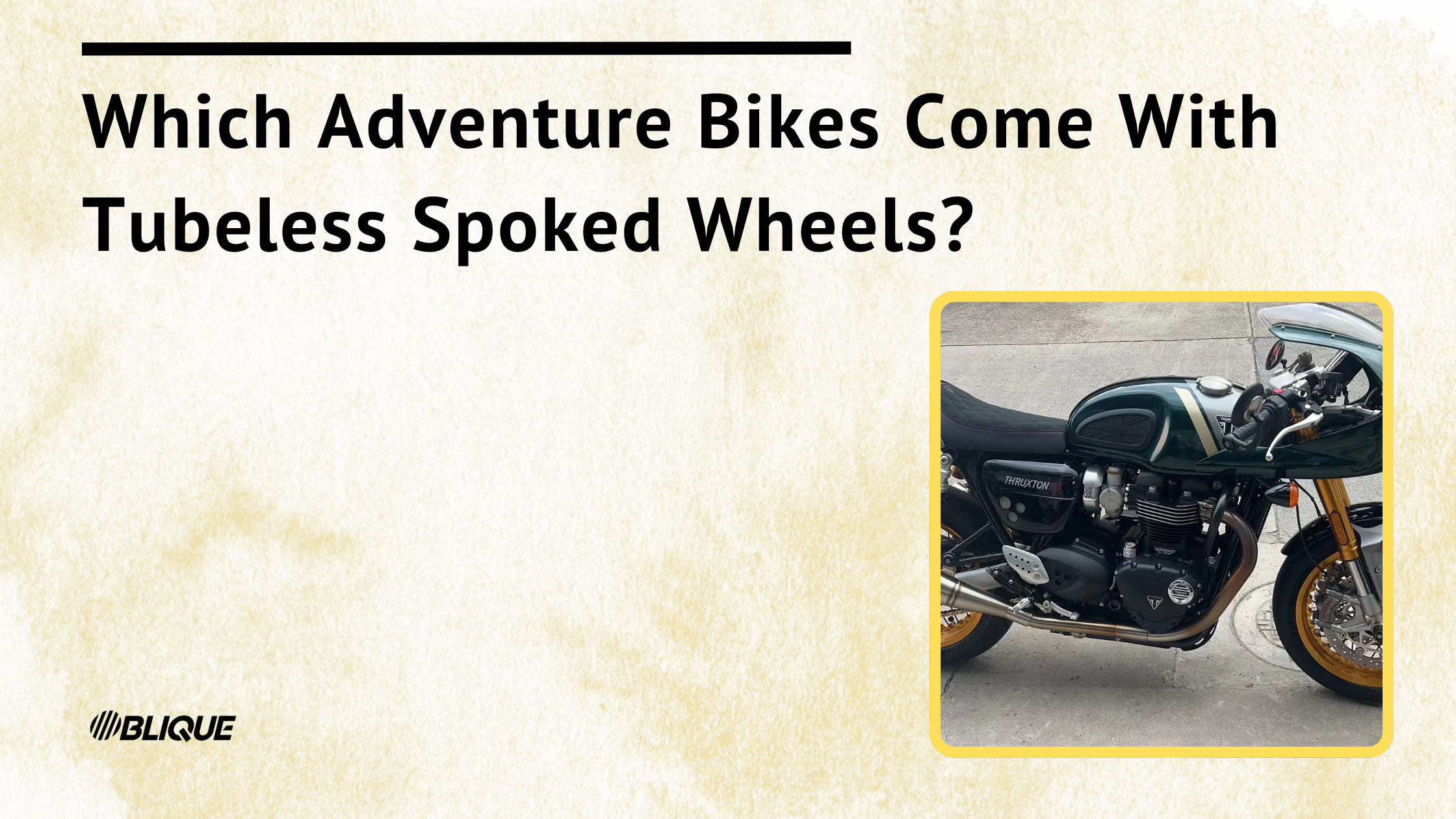
Factory tubeless spoked wheels are becoming common on premium adventure bikes. European manufacturers led the way. Japanese brands are catching up.
BMW: The R 1250 GS and its variants have run tubeless spoked wheels for years. This is probably the bike that normalized the technology for adventure riders.
KTM: The 1290 Super Adventure R uses tubeless spoked wheels. So does the 1190 Adventure. The 790 and 890 Adventure R models (specific variants) as well.
Triumph: Tiger models in higher-spec variants include tubeless spoked wheels. Check specific model years and trim levels.
Honda: Africa Twin Adventure Sports (2020+ 1100cc) comes with tubeless spoked wheels. The base model doesn’t.
Ducati: Multistrada V4 Rally runs tubeless spoked wheels. Appropriate for a bike positioned as Ducati’s serious adventure offering.
Yamaha: The Super Ténéré uses a unique flange design for tubeless spoked capability.
Notice the pattern. These are typically the higher-spec “adventure” or “R” variants. Not base models. You pay extra for the technology.
Also worth noting: 19-inch front wheels are more common for factory tubeless spoked than 21-inch. The larger diameter adds technical complexity and cost. Bikes with 21-inch tubeless spoked wheels tend to be the most expensive and most off-road-focused models.
Japanese manufacturers have been slower to adopt compared to European brands. BMW, KTM, and Triumph led this transition. Honda and Yamaha followed on specific models.
Aftermarket Tubeless Spoked Wheel Options
Your bike came with tube-type spoked wheels? You’re not stuck with them.
Aftermarket tubeless spoked wheels let you upgrade. Several manufacturers build quality options. The right choice depends on your priorities, budget, and how you ride.
Kineo Wheels: Italian Precision Engineering
Kineo specializes in high-performance tubeless spoked wheels. That’s all they do. Not a general parts supplier making wheels as a sideline. This is their entire focus.
Made in Italy with proprietary sealing technology. The design allows full spoke adjustability while maintaining an airtight seal. You can true the wheel, adjust tension, without compromising the tubeless function.
7000-grade aluminum rims. One-piece construction. CNC machined. Airtight from the factory.
Weight savings are noticeable. Lighter than stock wheels on most applications. The handling improvement is real, not marketing.
Compatibility is excellent. BMW, KTM, Honda, Yamaha, Ducati, Triumph, and more. Check kineoshop.com for specific fitment guides.
Customization options include hub colors, spoke end colors, and rim finishes. These are wheels you’ll want to show off.
Premium pricing. No way around that. Kineo wheels are investment pieces for serious riders. If budget is your primary concern, look elsewhere. If you want the best and are willing to pay for it, Kineo delivers.
Wheels come true from the factory with precise balance. Customer support available for fitment questions.
Lead time consideration: These are custom-built to order. Expect several weeks. Not grab-and-go inventory.
Excel Wheels: OEM Reliability
Excel supplies rims to multiple adventure bike manufacturers as original equipment. When you buy a new GS or Africa Twin, there’s a good chance Excel made those rims.
That OEM relationship means proven reliability. These aren’t experimental designs. They’re the same specification major manufacturers trust.
Available as complete wheel sets or just rims for custom builds. Mid-range aftermarket pricing. More accessible than premium boutique options.
Standard manufacturer warranty coverage. Widely available through dealers and distributors. Easy to source. Easy to get support for.
Not the lightest option available. Excel builds for durability and longevity first. Weight savings second. Fair trade-off for most adventure riders.
Good choice if you want OEM-quality replacement or upgrade without the premium pricing of Italian specialists.
Woody’s Wheel Works: American Durability
Woody’s Wheel Works is an American company with decades of experience. Started in off-road and motocross. Expanded into adventure and dual-sport applications as those markets grew.
Hand-laced custom wheels built to order. Spec’d for your specific bike and riding style. They work with multiple rim suppliers to get exactly what each rider needs.
Reputation for extreme durability. Desert racing. Baja. Expedition use. Riders who genuinely abuse their equipment trust Woody’s.
The customer base tells you something. These aren’t weekend warriors. Serious off-road riders who need equipment that survives punishment.
Not the lightest wheels available. Not the prettiest either. Woody’s focuses on function over aesthetics. Built tough.
They also offer tubeless conversion services. Sealing existing tube-type wheels runs around $150 per wheel. No guarantee it works perfectly. Requires the rim to have a safety bead. Worth considering if you want to try tubeless without full wheel replacement.
Build quality emphasizes durability and function. If you need wheels that survive the worst you can throw at them, Woody’s delivers.
Alpina Wheels: Heritage and Expertise
Alpina has been making wheels since the 1930s. Nearly a century of experience. Italian manufacturer supplying OEM to European brands.
Long history of tubeless spoked wheel development. They helped pioneer the technology that’s now becoming standard.
Available for KTMs, BMWs, and some Japanese brands. Heritage brand with proven reliability across thousands of adventure riders.
Sourcing can be challenging in North America. Limited availability compared to other options. Direct ordering through Alpina Italy website or specialty dealers is often necessary.
Price point around $1,550+ for complete sets. Competitive with other premium European options.
If you can find them, Alpina wheels are a solid choice backed by serious heritage.
DIY Tubeless Conversion: Is It Worth It?
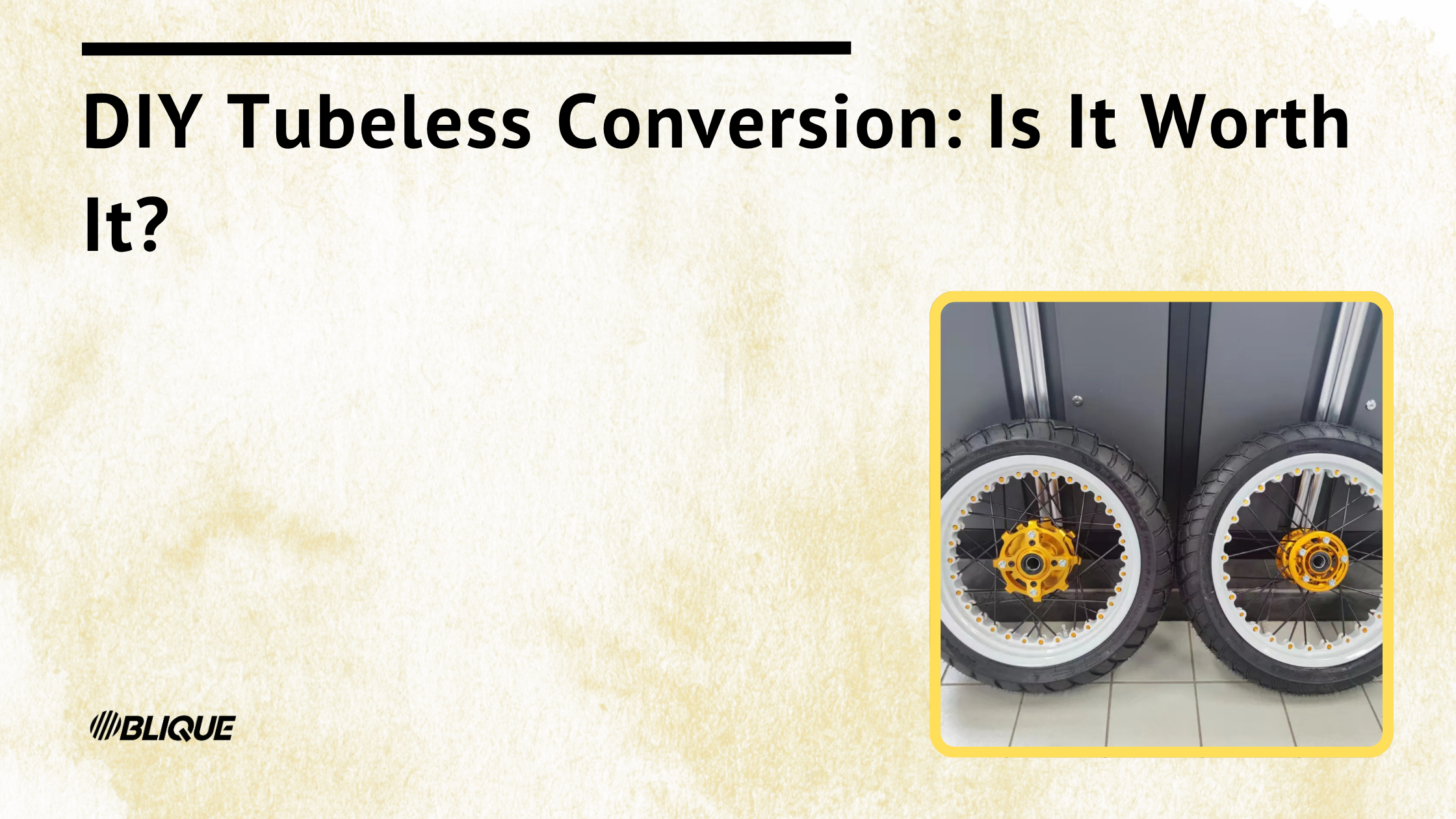
Maybe you don’t want to buy new wheels. Maybe you’re curious whether your existing tube-type wheels can be converted.
They can. Sometimes. Results vary.
The process: Remove tire, tube, and rim strip. Clean the wheel thoroughly. Seal the rim dish where spoke nipples penetrate using sealant (3M Marine 5200, Seal-All, silicone caulk are common choices). Let it cure completely. Install a tubeless valve. Mount tubeless tire.
Pros:
- Cheapest option by far. Materials under $50.
- You can do it yourself with patience.
- Enables tubeless tire use on existing wheels.
- Can work well if done properly on appropriate wheels.
Cons:
- Results vary widely. “Your mileage may vary” absolutely applies here.
- Some wheels leak despite careful sealing attempts.
- Adjusting spoke tension later can break the seal.
- Not all tube-type rims have safety beads. You need that safety bead to keep the tire seated during a blowout. Without it, the tire can come off the rim entirely.
- Tubeless tires can be harder to seat on rims not designed for them.
- May not hold up to serious off-road abuse. Hard impacts can break seals.
My recommendation: This is a compromise solution. It can work. It often does work for light adventure riding. Commuting. Occasional gravel roads. Easy trails.
If you’re doing serious adventure touring or real off-road riding, invest in purpose-built tubeless wheels. The peace of mind matters when you’re hundreds of miles from help.
DIY conversion makes sense for budget-conscious riders doing casual adventure riding. Expect potential issues. Be prepared to troubleshoot leaks. Carry a tube as backup.
For remote trips where reliability is critical, factory or quality aftermarket tubeless wheels are worth the investment.
Tubeless Spoked Wheels vs. Cast Alloy Wheels
Direct comparison for adventure bike buyers trying to decide.
Tubeless spoked wheel advantages:
- Impact absorption. Spokes flex rather than crack.
- Trailside repairability. Replace individual spokes instead of entire wheels.
- Better for off-road terrain. Designed for abuse.
- Classic adventure bike aesthetic. The look many riders want.
- Tubeless convenience. Best of both worlds.
- Available in larger diameters. 21-inch front wheels work better as spoked.
Cast alloy wheel advantages:
- Lower cost. Cheaper to manufacture.
- No spoke maintenance required. No tension checks. No truing.
- Lighter in some cases. Magnesium and carbon fiber options exist for serious weight savings.
- Better for high-speed road riding. More rigid means more stable at speed.
- Easier manufacturing. Lower production costs passed to buyers.
- More aerodynamic. Matters for some riders.
Choose tubeless spoked wheels if:
- Serious off-road riding is part of your plans.
- Adventure touring with mixed terrain.
- Remote area travel where repairability matters.
- You prefer the 21-inch front wheel setup.
- Traditional adventure bike look and capability matter to you.
Cast alloys work better if:
- Primarily on-road riding with occasional gravel.
- Track days or sport riding mixed in.
- Budget is the primary concern.
- You’re not doing technical off-road riding.
Bottom line: For true adventure riding, tubeless spoked wheels offer the best of both worlds. Spoked durability with tubeless convenience. The combination that actually makes sense for how these bikes get used.
Cast alloys are fine for adventure-styled bikes that stay mostly on pavement. Nothing wrong with that. Just be honest about how you ride.
2 Comments
Comments are closed.
Excellent article. I will be facing a few of these issues as well..
Take a look at my page E transfer payday loans Canada 24/7 instant approval
Have you ever considered about including a little bit more than just your articles?
I mean, what you say is valuable and everything. However just imagine if you added some great images or video clips to give your posts more, “pop”!
Your content is excellent but with pics and video clips,
this site could certainly be one of the best in its field.
Excellent blog!
My web page – PDEP no credit check loans